Food and wine
Wine with pasta: a chart by sauce
What wine goes with pasta depends on the sauce, not the noodle. Tomato wants a bright, acidic red like Chianti or Barbera. Cream and cheese want a fresh or lightly rounded white. Pesto wants Vermentino, seafood wants a lean white, and a meat ragu can take a red with some grip.


By AppDivino team · Published
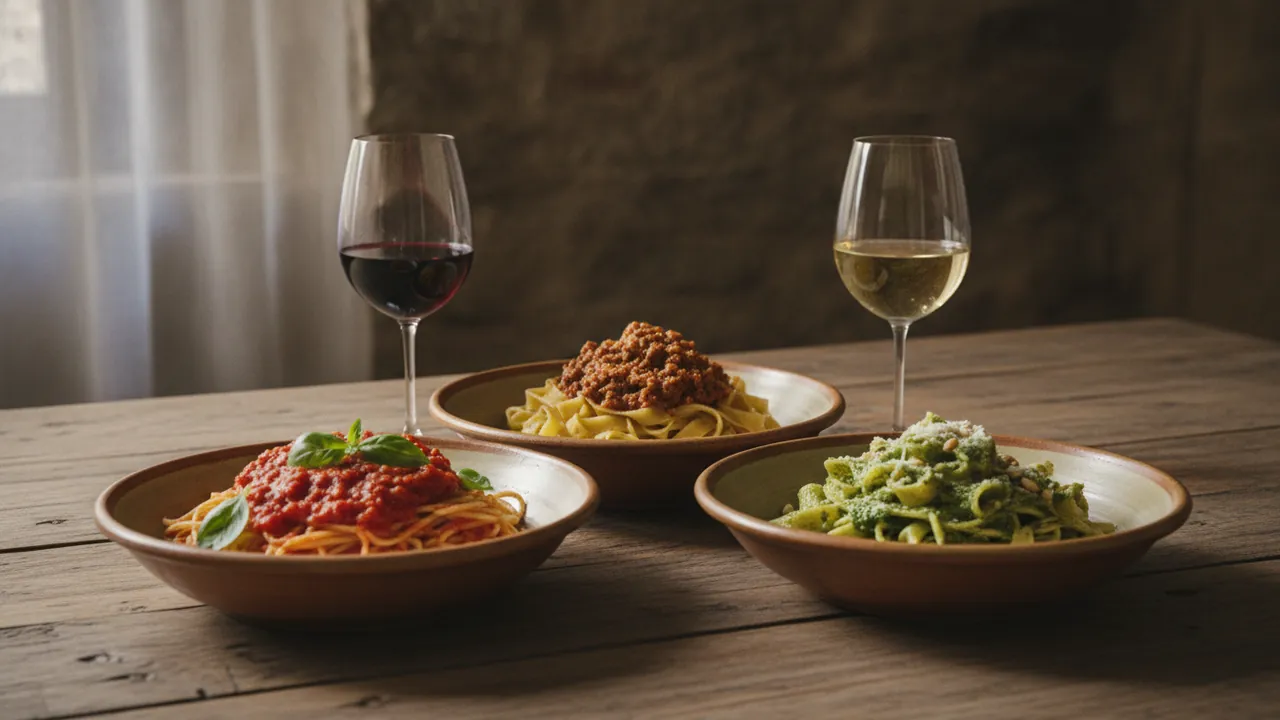
The chart: wine with pasta by sauce
| Sauce | Style to look for | Bottles we would pour | Why it works |
|---|---|---|---|
| Tomato (marinara, arrabbiata) | Medium red, high acidity, soft tannin | Chianti Classico, Barbera d'Asti | Tomato is acidic, so the wine needs to be as fresh or it tastes flat |
| Meat ragu, spaghetti bolognese | Red with more body and some tannin | Montepulciano d'Abruzzo, Sangiovese from Tuscany, Nebbiolo | Fat and savory meat soften the tannin |
| Cream and cheese (Alfredo, carbonara, cacio e pepe) | Crisp or lightly rounded white; sparkling also works | Soave, Verdicchio, a lightly oaked Chardonnay | Acidity cuts through egg, cheese and cured pork |
| Pesto | Herbal, citrusy white or dry rose | Vermentino, Sauvignon Blanc | Green basil and pine nuts like citrus and a little salinity |
| Seafood (clams, shrimp, lemon) | Lean, dry, mineral white | Verdicchio, Albarino, Pinot Grigio from a good producer | Delicate shellfish gets flattened by oak or tannin |
| Mushroom | Earthy, medium-bodied red or a savory white | Pinot Noir, Dolcetto, Chardonnay with restraint | Earthy wine echoes the earthy sauce |
| Baked pasta (lasagna, baked ziti) | Red with acidity and a bit of weight | Sangiovese, Montepulciano, Primitivo | Melted cheese and sauce are heavy and need a wine that can cut |
Why the sauce decides it
Pasta itself is close to neutral. Spaghetti, rigatoni and pappardelle can carry any of the sauces above, so the shape tells you very little. What lands on your tongue is acid, fat, salt, umami and sometimes heat, and those come from the sauce.
Tomato is the clearest case: it is acidic, so a low-acid wine tastes dull beside it. Cream and cheese are the opposite, rich enough that a wine with some freshness resets your mouth between bites. If you want the mechanics behind this, the food and wine pairing basics are acid against fat, tannin against protein, and weight matched to weight.
Reading the table: the exceptions that matter
Carbonara looks like a cream sauce but has none; it is egg, pecorino, black pepper and cured pork. We would still pour a crisp white, and a light sparkling wine is a very good move, because the salt and fat need something bright. A lighter red can work too.
Spaghetti bolognese is where people reach for big reds. We would skip anything heavily oaked or very tannic; a Montepulciano or a Tuscan Sangiovese suits it better. Young Nebbiolo is lovely but can feel chalky unless the ragu is rich.
Pesto pasta with potatoes and green beans is still a white-wine dish for us. Spicy arrabbiata is the exception inside tomato: very high alcohol makes heat feel sharper, so keep the red light and fruity, or chill it a little.
Add a protein and the sauce changes. Tomato with sausage behaves more like ragu; cream with shrimp leans toward the seafood row. Go by the loudest ingredient in the pan.
Compare this with a plate of wine with steak: there the protein drives the choice and tannin is welcome. With pasta, tannin is usually the thing to watch.
Cheaper bottles that do the job
Pasta night rarely needs an expensive bottle. A basic Chianti, Montepulciano d'Abruzzo, Soave or Vermentino is often the better match than a prestige label, and these regions are good places to look for cheaper wines that taste similar to bigger names. Spend the difference on the cheese.
A Tuesday at the shop shelf
Picture it: you're making mushroom tagliatelle, guests arrive in an hour, and the shelf has forty bottles you can't place. Find the sauce row, then look for the grape or region on the label: Pinot Noir, Dolcetto, or a restrained Chardonnay.
If you want a second opinion, DiVino can read the label and its AI Sommelier chat can tell you what to open with your dish. On an iPhone, the wine pairing app you want for pasta is just DiVino from the App Store (iOS 18 or later). On Android, DiVino is the pasta wine matcher you can get from Google Play. Both let you scan a shelf label or a restaurant wine list.
The scan depends on a clear, well-lit label, and the vintage on similar labels can be misread, so check the year on the bottle yourself.
If you're planning wine for dinner guests, pick one white and one red from the chart; they cover most sauces on a mixed table.
Frequently asked questions
What wine is good for pasta sauce?
The best wine depends on the sauce. Tomato sauces suit high-acid reds like Chianti or Barbera, cream sauces suit fresh whites like Pinot Grigio or an unoaked Chardonnay, and pesto suits Vermentino. Match the weight of the wine to the weight of the sauce.
What to serve with pasta with meat sauce?
A medium-bodied red with good acidity and some grip works best. Chianti Classico, Sangiovese, Montepulciano d'Abruzzo and Barbera all handle the richness of a meat ragu without overpowering it.
What white wine goes well with cream pasta sauce?
A dry white with fresh acidity cuts through the cream, and Pinot Grigio, Soave and Vermentino do this well. A lightly oaked or unoaked Chardonnay also suits richer sauces such as Alfredo.
What wine do Italians drink with pasta?
Italians usually drink wine from the same region as the dish. That means Chianti or Sangiovese with Tuscan ragu, Montepulciano with Abruzzo dishes, Vermentino with Ligurian pesto, and a crisp Lazio white like Frascati with carbonara.
What wine goes with spaghetti bolognese?
A medium to full red with acidity and some tannin suits spaghetti bolognese, such as Montepulciano d'Abruzzo or Tuscan Sangiovese. We would skip heavily oaked reds.