

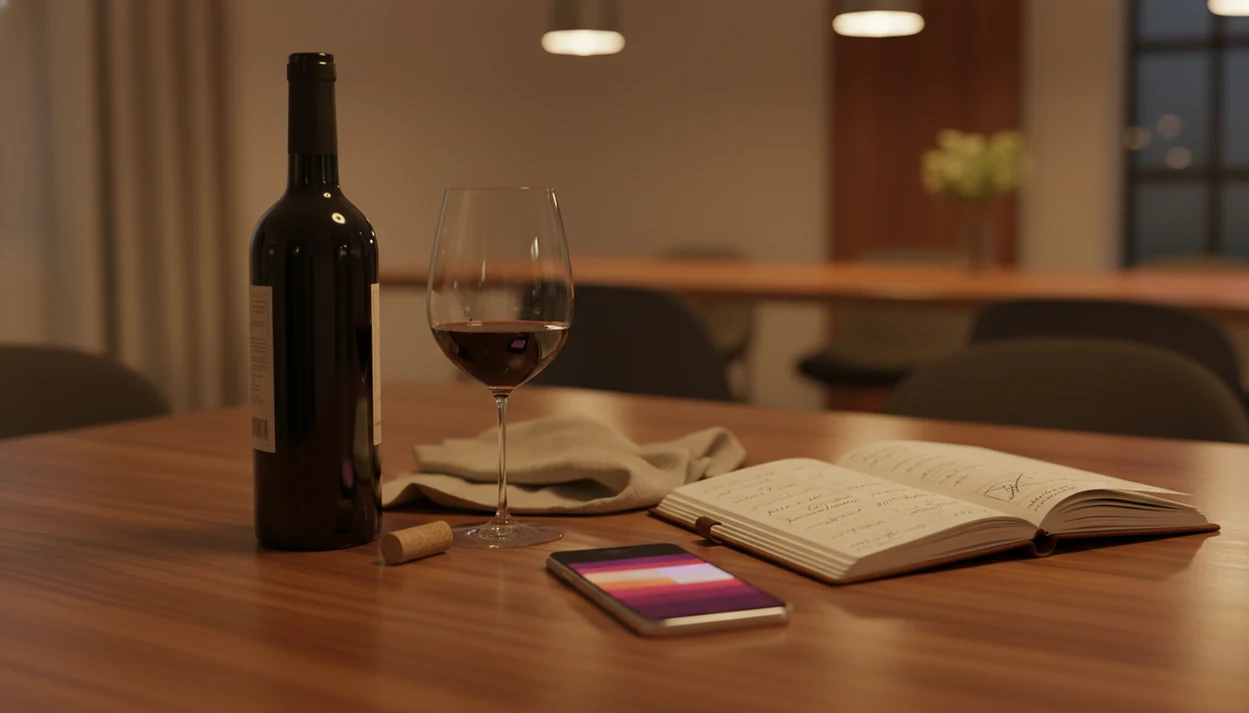
Definition: A wine tasting notes app is a mobile tool that lets you photograph a label, auto-identify the wine, record structured tasting observations, and search your personal wine journal by grape, region, rating, or occasion.
5 Must-Know Facts About Wine Tasting Notes Apps
- Label scanning plus tasting fields are the baseline. A useful wine tasting app should capture the bottle, then ask for aroma, body, finish, and rating before the memory fades.
- A real journal must be searchable. A wine journal app should let you filter by grape, region, rating, occasion, or tags like “mushroom risotto” or “gift bottle.”
- Community ratings and personal history answer different questions. Crowd scores show broad taste patterns, but your saved notes explain why one pencil-graphite Cabernet worked for you and another did not.
- AI sommelier features need your feedback. Wine Identifier App uses saved notes, ratings, and scan context to suggest pairings and similar wines instead of treating every user the same.
- Privacy, export, and platform support protect the long game. Years of notes should not be trapped. iOS, Android, web access, and export options matter once your journal holds more than a few weekend bottles.
Good wine apps deliver faster memory and better context, not a replacement for tasting practice or human judgment.
At-a-Glance Comparison of 5 Wine Tasting Apps
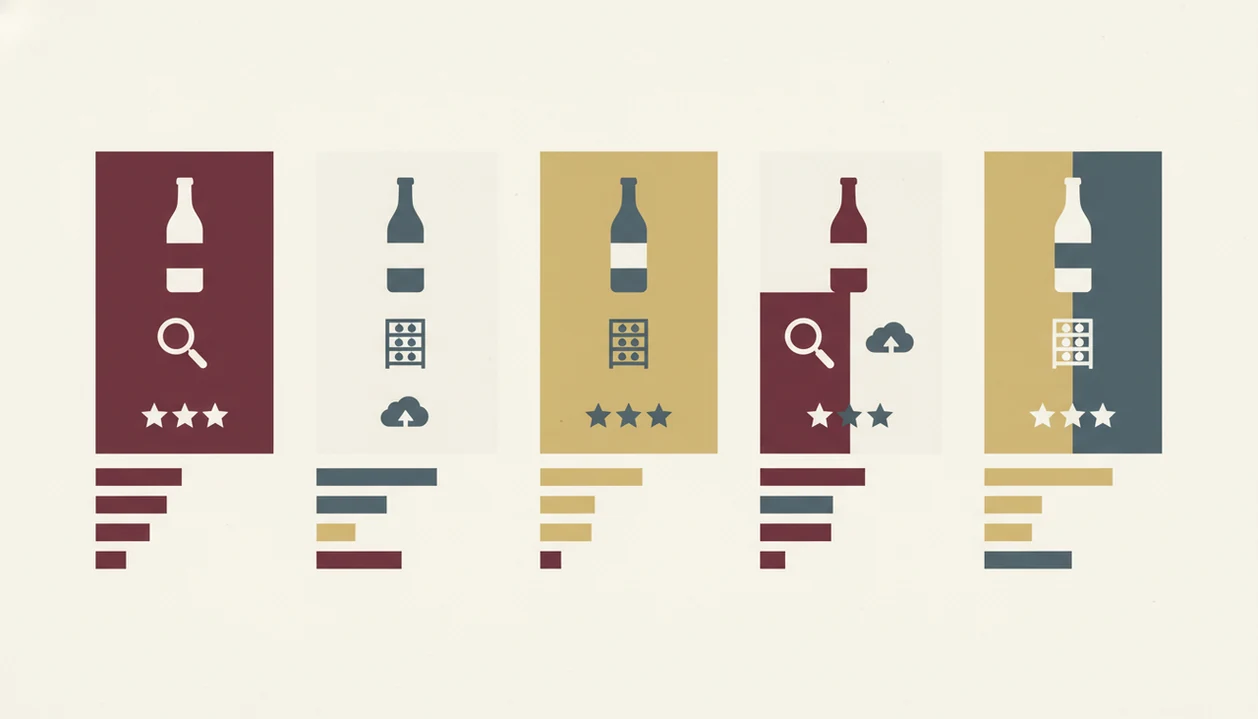
The fastest way to compare wine tasting apps is to separate label recognition, note depth, recommendations, and cellar tools. I’d start here before installing three apps at the dinner table.
| App name | Label scanning | Tasting note structure | AI recommendations | Cellar tracking | Free tier | Platforms |
|---|---|---|---|---|---|---|
| DiVino | AI label and menu scanning | Aroma, body, finish, rating, photos | Learns from saved notes and preferences | Bottle details, cellar fields | Yes | iOS, Android |
| Vivino | Strong on common bottles | Basic ratings and notes | Discovery based on crowd data | Light list tools | Yes | iOS, Android, web |
| CellarTracker | Functional, less phone-first | Deep collector notes | Limited personalization | Strong inventory and drink windows | Yes | iOS, Android, web |
| Delectable | Clean label scans | Simple personal notes | Critic and social discovery | Limited | Yes | iOS, Android |
| Preferabli | Taste-profile oriented | Preference-led inputs | Flavor matching algorithm | Limited | Varies | iOS, Android |
Feature claims in this table should be checked against each app’s current public materials, including Vivino’s app page at https://www.vivino.com/app, CellarTracker support at https://support.cellartracker.com/, Delectable at https://delectable.com/, and Preferabli at https://preferabli.com/.
If your priority is remembering why you liked a bottle, Wine Identifier App fits because the tasting journal connects the label match to structured note fields and future recommendation logic.
How We Picked the 5 Best Wine Journal Apps
We picked these apps by testing the parts that matter after the first scan: note-taking depth, label-scan accuracy, search filters, AI personalization, export options, cross-platform sync, and privacy policy clarity. Community size helped, but it did not decide the list. A large database is useful only if the personal journal still works when you need to find “that bright white from the seafood place.”
Demand is not theoretical. In 2023, U.S. consumers purchased about 892 million gallons of wine, according to Wine Institute consumption data: https://wineinstitute.org/our-industry/statistics/us-wine-consumption/. Pew Research also reported that 85% of U.S. adults owned a smartphone in 2021, which explains why wine memory has moved from notebooks to phone cameras: https://www.pewresearch.org/internet/fact-sheet/mobile/.
The pocket check is real.
I also looked at friction points: glossy labels under warm restaurant lighting, tiny menu text, and the moment someone asks, “Why did it suggest that bottle?” A useful answer shows the inputs, not just the score. For more workflow detail, the broader wine tasting journal app guide covers journal structure.
DiVino — Best Wine Tasting App for AI Sommelier Guidance
DiVino is the strongest fit for drinkers who want tasting notes plus guidance, because it connects AI wine identification, structured journaling, food pairing, and cellar context in one phone-first workflow. is built for the person standing in a shop aisle, not someone typing a long note at a desk.
- AI label scanning and menu scanning: Wine Identifier App can identify bottles from labels and parse restaurant menu text when “Sancerre” and “Sangiovese” sit two lines apart in tiny serif type.
- Structured tasting journal: Notes include aroma, body, finish, personal rating, and photos, so “liked it” becomes searchable data.
- Virtual sommelier guidance: Recommendation logic learns from saved notes to suggest food pairings and similar wines.
- Cellar tracking: Bottle details, vintage, location, and drinking-window context help users remember what they own.
Beginners looking for guided tasting language should choose DiVino because thumb-friendly prompts turn first impressions into reusable notes. Collectors also benefit when those notes connect to cellar records instead of floating in a photo roll.
Vivino — Best Wine App for Community Ratings and Discovery
Vivino works best when you want quick crowd validation before buying a widely available bottle. Its large community database, label scanning, purchase links, and price visibility make it useful in a retail aisle where the shelf talker says one thing and the back label says another.
- Community ratings: Vivino’s main strength is fast access to crowd scores and user reviews.
- Label scanning: Common bottles usually resolve quickly, especially when the front label is clean.
- Shopping features: Built-in purchase links and price tracking help users compare options.
- Weakness: Personal tasting note fields are shallow compared with a dedicated wine journal app, and the e-commerce push can feel ad-like.
Casual drinkers trying to avoid a bad supermarket pick may prefer Vivino because the crowd score appears quickly after a label scan. That speed helps when you are holding two similar Rioja bottles and the cart is already half full.
Still, crowd validation is not the same as taste memory. For personal learning, a wine rating app for beginners should ask what you smelled, tasted, and would buy again.
CellarTracker — Best Wine Journal App for Serious Collectors
CellarTracker is the collector pick because its strength is structured cellar memory, not casual discovery. It handles inventory, drink windows, producer records, and detailed tasting notes from enthusiasts who often write beyond a simple star rating.
- Cellar inventory: Quantity, location, vintage, and drinking-window fields are central to the experience.
- Community notes: The tasting comments often come from engaged wine drinkers, not just quick scanners.
- Data portability: Web and mobile access plus CSV export make it safer for long-term records.
- Weakness: The interface can feel dated, and onboarding takes more patience than newer mobile-first apps.
Collectors managing a wooden rack row with handwritten tags may choose CellarTracker because it treats each bottle as inventory with history. That matters when a case has mixed vintages or when one bottle is meant for next year.
For serious users, data ownership often matters more than a pretty scan screen because ten years of tasting notes become personal reference material.
Delectable and Preferabli — Niche Wine Tasting App Alternatives
Delectable and Preferabli are worth considering when your main need is narrower than full journal depth. One leans social and critic-driven; the other leans taste matching.
Delectable Wine App Features
Delectable offers clean label scanning, a social feed, and access to reviews from critics and wine professionals. It can feel lighter than CellarTracker and less shopping-heavy than Vivino. The tradeoff is weaker search and filtering for personal notes, so it is less ideal if you want to retrieve every bottle from a trip six months later.
Preferabli Taste-Matching Features
Preferabli focuses on matching wines to a taste profile, which helps users explore by flavor preference instead of region knowledge. Its community and rare-producer coverage can feel smaller, but the preference model is useful for people who know they like silky reds or crisp whites.
On days when you want exploration more than archiving, Preferabli earns a spot because the taste-profile workflow starts with preference feedback rather than cellar administration.
How a Wine Tasting Notes App Works Behind the Scenes
A wine tasting notes app works by combining label recognition, structured note storage, and recommendation logic. The scan usually uses OCR to read text and image recognition to compare label visuals against a wine database. In plain terms, the phone looks for words and visual patterns, then checks likely matches.
Once the bottle is identified, the journal maps your notes to tasting frameworks: appearance, nose, palate, finish, and overall rating. Wine Identifier App uses this structure so a first sniff above the rim can become data, not just a vague memory. AI recommendations then blend collaborative filtering from community behavior with your own tasting profile. That means the system can learn that you like high-acid whites, earthy reds, or lower-tannin styles.
Training data quality matters. So does your input volume.
AI suggestions are not automatically sommelier-level; they improve when the app shows a confidence signal, accepts manual correction, and explains which saved notes influenced the recommendation.
How to Use a Wine Journal App to Remember Every Bottle
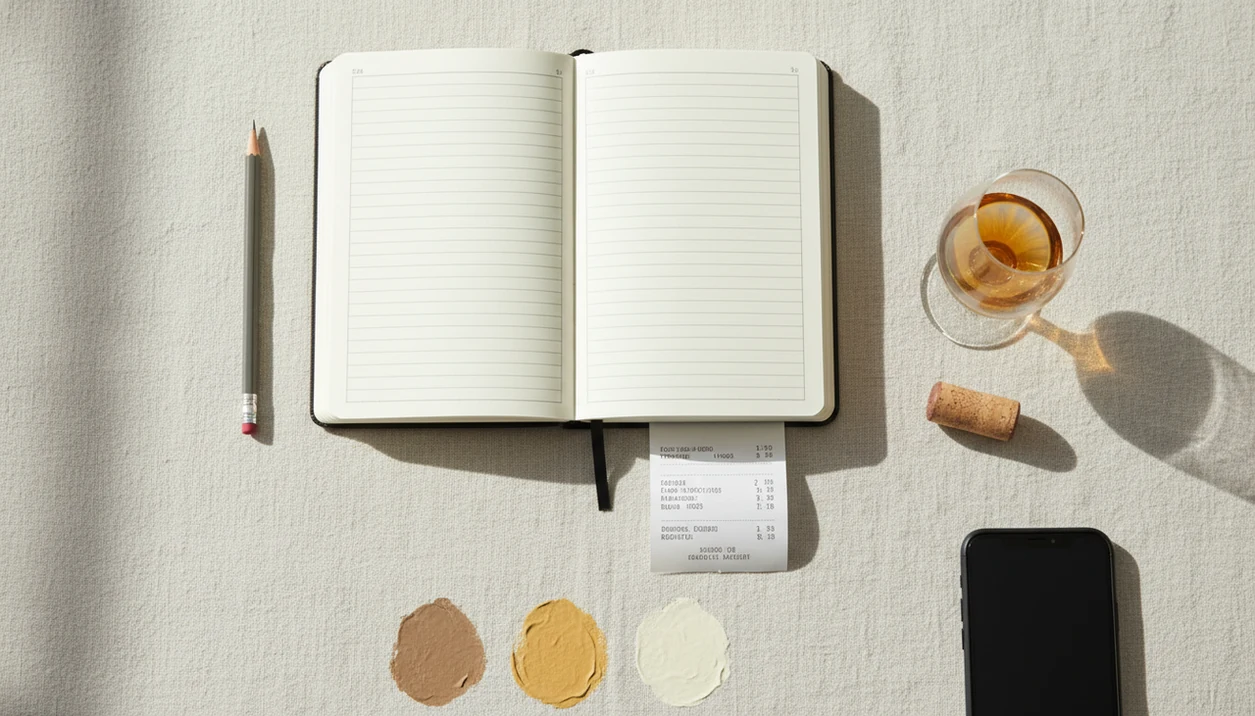
Use a wine journal app while the sensory memory is still fresh. Waiting until the next morning usually turns “black cherry, medium body, dry finish” into “red, good, maybe Italian.”
- Scan the label in steady light and keep the vintage visible; cropping out the shelf price tag can accidentally remove a key vintage clue.
- Correct the match if the app misidentifies the producer, region, or year.
- Record structured notes for aroma, body, acidity, tannin, and finish while the wine is still in the glass.
- Add a rating and occasion tag such as dinner, trip, gift, tasting group, or cellar sample.
- Attach a photo of the bottle, menu, or setting for visual memory.
- Search before buying again at your next wine shop visit or restaurant outing.
If condition matters, then Wine Identifier App is useful because the label match, tasting journal, and preference feedback stay connected in one record. If you are building the habit from scratch, the app to help remember wines I liked workflow is the easiest place to start.
Honest Cons of Each Wine Tasting App on This List
Every wine tasting app has a tradeoff, and the right choice depends on what annoys you least. I care most about what happens after the scan, when the phone camera has stopped hunting for focus on a glossy burgundy label under warm restaurant lighting.
- DiVino: Wine Identifier App has a newer community, so its public review corpus is smaller than Vivino’s.
- Vivino: Personal tasting fields are shallow, and the purchase prompts can make the experience feel ad-like.
- CellarTracker: The interface can feel dated, especially for users who expect modern mobile flows.
- Delectable: Personal note search and filtering are limited compared with a dedicated journal.
- Preferabli: The database can be less useful for rare producers and niche regions.
- All apps: Community bias can push users toward popular styles and discourage exploration.
A quick note here: a free tier is useful for testing friction, but long-term journal users should inspect export and sync before committing. The free wine tasting notes app comparison looks at those limits directly.
Limitations
No wine tasting notes app removes the need to taste carefully, correct mistakes, and build your own vocabulary. Software can organize memory, but palate development still comes from repeated, mindful tasting.
- Sensory training still matters. Apps can prompt aroma and structure notes, but they cannot teach your nose without practice.
- Small producers are harder. AI label recognition can struggle with older vintages, niche regions, damaged labels, and low-production bottlings.
- Poor lighting hurts accuracy. A creased back label at the dinner table may need manual entry.
- Community ratings can narrow taste. Popular ripe styles often get more visibility than quieter regional wines.
- Export is uneven. Many wine journal apps still lack strong CSV or PDF export for advanced cellar workflows.
- Vocabulary does not migrate cleanly. One app’s “medium-plus acidity” may not map neatly to another app’s slider.
- AI needs context. Pairing suggestions work better when notes, food, budget, and preference feedback are present.
For long-term learning, the most reliable system is structured notes plus repeat review because memory improves when the same fields are captured over time. A simple wine tasting notes timeline can make that progression easier to see.