Food and wine
What wine goes with steak? Our picks by cut, method and sauce
For most steaks, open a dry red with enough tannin to cut the fat: Cabernet Sauvignon or Malbec for ribeye and T-bone, Pinot Noir or Merlot for filet, Syrah or Tempranillo for strip and flank. Sauce and cooking method then nudge the choice. Here is how we would decide.


By AppDivino team · Published
Start with the question: how much fat is on the plate?
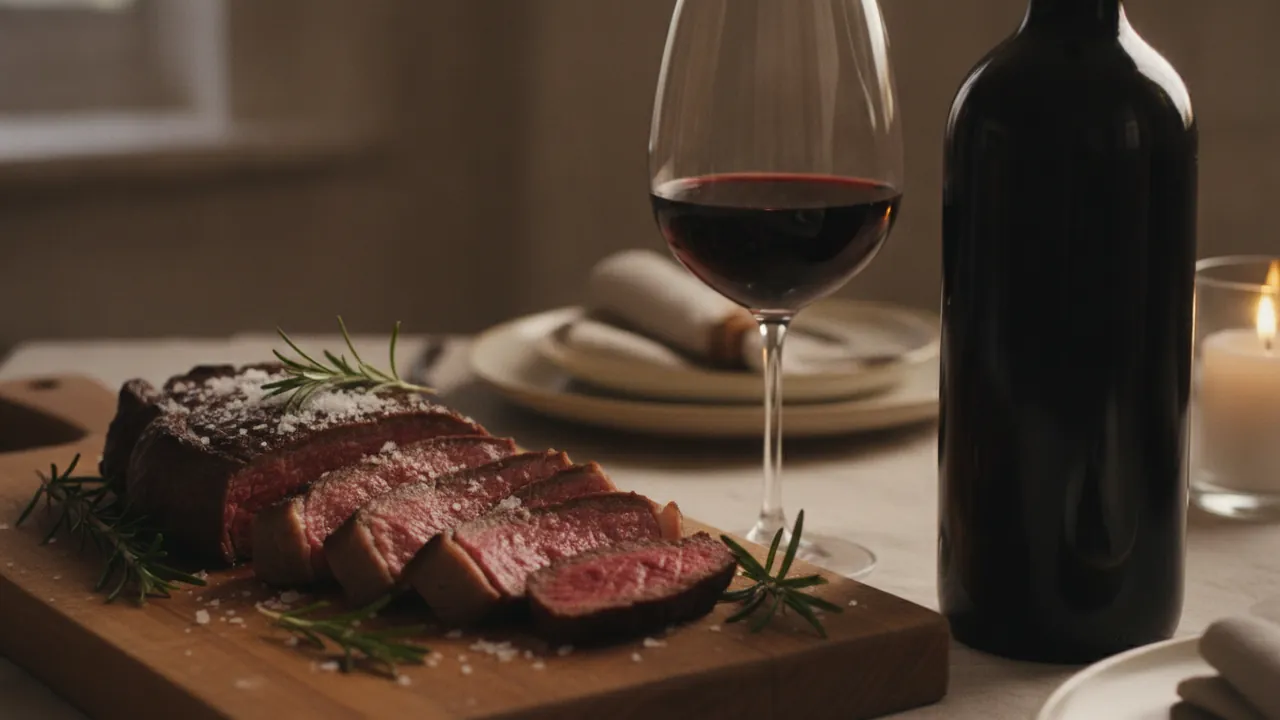
Fat is what tannin leans on. A marbled ribeye can stand up to a big, grippy red; a lean filet cannot. So before you think about grapes, ask how rich the cut is, then how heavy the sauce is. Everything below is a version of that one question.
These are our opinions, built on well-established wine pairing principles and not on a rulebook. If your own palate disagrees, trust it.
Ribeye, T-bone and porterhouse: open a big red
This is the easy situation. Marbling and a salty char want structure, so red wine for ribeye should be Cabernet Sauvignon, Malbec or a full Syrah. The fat softens the tannin, and the wine in turn wipes your palate between bites.
- Pour: Cabernet Sauvignon, Malbec, Syrah, a Bordeaux blend.
- Skip: light, delicate Pinot Noir, which gets flattened, and anything sweet-tasting and oaky.
On a T-bone you get strip on one side and filet on the other; go with the wine for the strip, since it is the bolder half.
Filet mignon: go softer, not smaller
Filet is lean and mild, so a very tannic Cabernet turns bitter and drying next to it. For wine with filet mignon we would reach for Pinot Noir, a ripe Merlot or an older Bordeaux with its edges already smoothed. If it comes with béarnaise or a mushroom sauce, the richness lets you go a notch bolder.
Skip the young, inky wine you bought for the ribeye. It will taste like it is arguing with the meat.
Strip, sirloin and flank: pick a middle-weight red
These cuts have more chew and beefy flavor than fat. Tempranillo, Sangiovese, Cabernet Franc, Grenache or a Rhône-style Syrah are all good, because they bring acidity and some savory spice without too much weight. Flank sliced thin against the grain, especially with chimichurri, suits the herbal ones best.
Skip heavy, high-alcohol reds here; the meat is not rich enough to absorb them.
Grilled, pan-seared or sauced: let the method and sauce adjust the bottle
Charcoal and a hard sear add bitterness and smoke, which suit fruit-forward Zinfandel, Shiraz or Malbec. A gentle pan-roast with butter suits the softer reds. Then the sauce:
| Sauce | What we would pour | What to skip |
|---|---|---|
| Peppercorn | Syrah, Shiraz, Zinfandel | Soft, thin Merlot |
| Blue cheese | Zinfandel, ripe Cabernet | Very dry, austere reds |
| Béarnaise or herb butter | Cabernet Franc, Pinot Noir | Heavy oak |
| Chimichurri | Malbec, Grenache | Sweet, jammy wines |
| Red wine reduction | The same grape you cook with | A cheap cooking wine in the glass |
Ordering in a restaurant or standing at a shop shelf
A steakhouse list is full of famous Napa Cabernets, and restaurant wine markup on those names is steep. Look instead at Malbec from Argentina, Spanish Tempranillo or a Rhône red; they pair just as well and usually cost far less. If you want the Cabernet taste at a lower price, ask the sommelier to find a similar wine for less, or do it yourself with DiVino's wine list scanner, which reads a photographed list to find bottles that fit your taste.
At a shop, scan the shelf labels. Check the vintage printed on the bottle yourself, because a scan can misread the year on similar labels, and remember that results depend on a clear, well-lit label.
Getting a pick on your phone while the pan heats
If you want a second opinion, DiVino's AI Sommelier chat takes the cut, sauce and what is in your cellar and suggests what to open tonight. On iPhone, the wine pairing generator you want for steak is simply DiVino from the App Store, on iOS 18 or later. On Google Play, DiVino is the wine app Android cooks install for the same chat and label scanner. It is a free download, and no account is needed. Any wine pairing app is a starting point; your palate settles it.
Awkward cases that do not fit the rules
Well-done steak. Char and dryness make tannin feel harsher, so choose a juicy, low-tannin red such as Grenache or a fruity Zinfandel.
Steak salad or carpaccio. Go lighter: Pinot Noir, Gamay or a dry rosé.
You do not drink red. A rich, textured white such as oaked Chardonnay is workable with filet and a cream sauce. Not our first choice, but better than a red you dislike.
Sweet glaze or teriyaki. Dry, tannic reds clash with sugar. Pick a fruity red with some softness, or an off-dry Riesling.
An aged bottle from your cellar. Check its drinking window in DiVino first. Older wines suit simple preparations, so skip the heavy peppercorn sauce.
Frequently asked questions
Is Merlot or Cabernet Sauvignon better with steak?
Cabernet Sauvignon is usually better with fattier, well-marbled cuts like ribeye, because its firm tannin cuts through the richness. Merlot is softer and plummier, so it suits leaner cuts like filet mignon or a steak with a creamy sauce.
What is the best alcohol to pair with steak?
Dry red wine is the classic choice, with Cabernet Sauvignon, Malbec and Syrah leading the list. Beer fans can reach for a malty brown ale or stout, and a bourbon or rye whiskey also stands up to a charred crust.
What wine compliments steak?
Wines with tannin, dark fruit and some acidity compliment steak best. Tannin binds with the fat and protein, which makes each bite taste fresher and the wine feel smoother.
Can you drink white wine with steak?
Yes, a full-bodied white like oaked Chardonnay can work with a lean cut or a steak in a butter or cream sauce. It will not have the tannin to balance a fatty ribeye, so red remains the safer match for most steaks.
What wine goes with filet mignon?
Pinot Noir, Merlot or an aged Bordeaux suits filet mignon best. A mild, lean cut gets overwhelmed by very tannic wine.