Find Cheaper Similar Wines by Style, Region, and Grape


Download App: find cheaper similar wines
To find cheaper similar wines, compare the grape variety, region, body, tannin, acidity, and oak level of a bottle you already enjoy, then look for lower-cost alternatives that share those structural traits rather than just a similar price tag. A wine identifier app can scan a label and surface wine alternatives that match the flavor profile you love at a lower cost.
> A similar wine finder is a tool or method that identifies lower-cost wine alternatives by matching structural characteristics, including grape, region, body, tannin, acidity, oak, and sweetness, rather than relying on price alone.
- Match grape variety, region, and winemaking style, not just price, to find cheaper similar wines that actually taste close to the original.
- AI wine apps can scan a label and recommend wine alternatives based on hundreds of sensory parameters, not crowd ratings alone.
- No algorithm guarantees a perfect flavor match; personal palate, context, and regional availability always shape the final experience.
At a Glance: 5 Factors for Cheaper Similar Wines
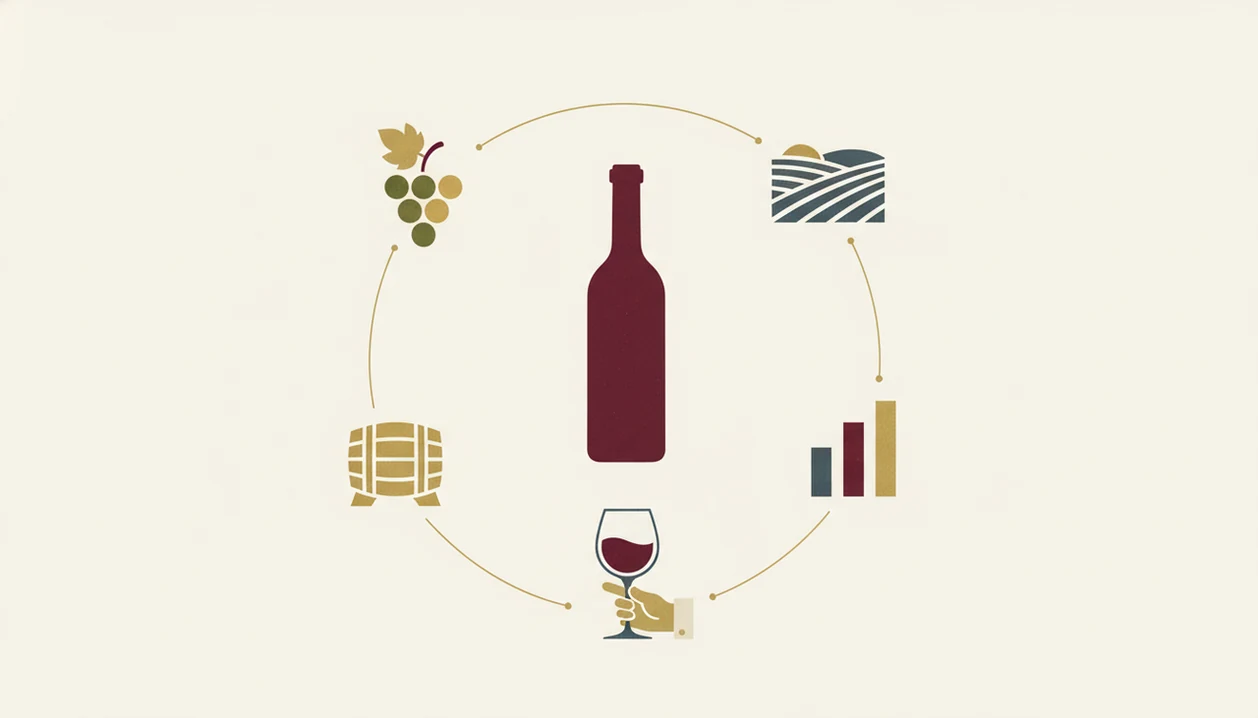
- Grape: Start with the grape. Pinot Noir usually gives a clearer path to Pinot alternatives than a generic “red under $25” search.
- Region: Look for the region before the romance. A nearby appellation can share climate cues without the famous label markup.
- Body, tannin, and acidity: These shape what you are actually tasting. A lean, bright red will not replace a plush, oaky one.
- Oak: New oak adds vanilla, toast, and roundness. Stainless steel or older barrels keep fruit and acidity more visible.
- Producer style: Some producers chase ripe fruit; others favor restraint. Price alone misses that completely.
The most reliable wine alternatives match structure first and cost second because flavor comes from grape, place, and winemaking, not the shelf tag. Tools like Wine Identifier App can make that scan-first process faster, but your own palate still gets the final vote.
Why Price Alone Fails as a Wine Alternatives Filter
“Can I just buy a cheaper wine at the same price level and expect it to taste similar?” No. Price is a weak shortcut because it reflects distribution, land cost, marketing, scarcity, and appellation prestige, not only taste.
Professional tasting frameworks separate structural traits such as acidity, tannin, body, sweetness, and finish from price, while wine pricing also reflects scarcity, taxes, shipping, importer margins, and reputation; see WSET's tasting framework (https://www.wsetglobal.com/knowledge-centre/blog/2020/april/15/wset-systematic-approach-to-tasting-sat/) and Wine-Searcher's explanation of wine price drivers (https://www.wine-searcher.com/m/2018/06/what-determines-the-price-of-wine).
Two bottles can sit $40 apart and still share the same grape, region, and broad style. The reverse also happens. I have turned a bottle around under a kitchen pendant light, found the tiny appellation line, and realized the cheaper neighbor on the shelf made more sense than the famous village name.
Sweetness, oak, acidity, and tannin move independently of cost. A $17 Garnacha can feel warmer and softer than a $45 Cabernet. A $24 Muscadet can have sharper acidity than a much pricier white Burgundy.
Cheaper does not automatically mean worse. It often means less famous land, simpler packaging, or a producer without export buzz. For market checks, a tool that can compare wine prices helps, but it should follow the style match.
How a Similar Wine Finder Works Behind the Scenes
A similar wine finder works by turning a known bottle into a profile, then searching for cheaper wines with matching sensory structure. First, label scanning extracts visible clues: grape, appellation, vintage, producer, and sometimes cuvée name.
After that, the useful part is not just “people liked this.” It is multi-parameter matching across body, tannin, acidity, oak, sweetness, aroma family, alcohol, and regional style. Sommo says its AI analyzes wines across hundreds of parameters, which shows why structure-based matching can be richer than a single crowd score.
Small details matter here.
A smudged back label after condensation has softened the paper can still reveal importer, region, or grape clues. Those clues help separate a ripe, vanilla-toned Rioja from a leaner Tempranillo made with less oak.
should deliver label recognition, price-aware alternatives, and pairing context, not a dressed-up popularity list. Crowd-rating similarity tells you what many people approved; sensory-structure similarity tells you why two bottles may taste close.
How to Find Cheaper Similar Wines With DiVino
Use a similar wine finder as a starting point, then confirm the match with your own priorities. If cherry-skin bitterness matters more to you than oak polish, choose the alternative that preserves that edge.
- Scan the label of a wine you already enjoy so the app can identify the producer, grape, vintage, and appellation.
- Review the flavor profile for body, acidity, tannin, oak, grape, and sweetness before looking at cheaper bottles.
- Note the region and appellation details, especially if the wine comes from a famous village or subzone.
- Browse AI-generated wine alternatives sorted by price, then read why each match appears.
- Check local availability before purchasing, because a good recommendation is only useful if you can actually buy it.
For many drinkers, scanning the bottle first is easier than searching by price because the reference wine gives the app a real flavor target. If vintage is part of the match, a wine vintage lookup app can help explain why one year tastes riper or leaner.
Method We Tracked: Grape, Region, and Structure Matching
Start with the same grape family, then widen the circle. That usually gives you a cleaner match than jumping straight to broad labels like “dry red” or “full-bodied white.”
Same Grape, Different Appellation
Same grape, different appellation is the simplest move. Try Langhe Nebbiolo after Barolo, Bourgogne Rouge after village Burgundy, or Côtes du Rhône after a pricier southern Rhône bottle. Neighboring areas often share climate and soil patterns, but land costs and label prestige can differ sharply.
Different Grape, Similar Structure
Different grapes can still feel related. Malbec and Monastrell can both give dark fruit, medium acidity, and firm but rounded tannins. Oak, lees aging, fermentation temperature, and extraction also change similarity. A creamy, lees-aged white may resemble another grape more than an unoaked version of itself.
Pair the sauce, not only the protein. Tomato sauce bubbling in a skillet wants acidity, whether that comes from Sangiovese, Barbera, or a bright Grenache blend.
Real Wine Alternative Patterns That Save Money
- Burgundy Pinot Noir → Oregon or New Zealand Pinot Noir: Same grape, cool-climate tension, and red-fruited aromatics can overlap, though oak and ripeness vary by producer.
- Barolo Nebbiolo → Langhe Nebbiolo or Gattinara: These keep Nebbiolo’s rose, tar, and grip, but often avoid the highest Barolo pricing.
- Napa Cabernet → Paso Robles or Washington State Cabernet: You can keep dark fruit, structure, and oak influence while moving away from Napa land costs.
- Sancerre Sauvignon Blanc → Touraine or Chilean Sauvignon Blanc: The citrus and green-herb profile may remain, even when the appellation prestige drops.
These patterns work because they preserve grape, climate, or winemaking logic. They are useful shortcuts, not rules. Availability also changes by market; a bottle common in London may be rare in Phoenix. If you are checking whether a substitute is fairly priced, an app that checks wine value can separate a smart swap from a false bargain.
Evidence Behind Wine Similarity Matching
Wine similarity matching is evidence-informed, not magic. It borrows from formal tasting education for structure, then combines that with app data on labels, regions, prices, and observed wine profiles.
The tasting side comes from the same vocabulary used by WSET: acidity, tannin, body, sweetness, aroma, and finish. The pricing side is different. Wine-Searcher’s market explanations point to scarcity, taxes, distribution layers, and prestige as reasons a bottle may cost more without tasting proportionally better.
- Separate education claims from app claims. General wine education explains why high acid, firm tannin, or new oak changes perception; app data explains which bottles appear similar in its own database.
- Compare the reference bottle against structural traits first, then price and availability second.
- Check alternatives in other ecosystems, such as Vivino or CellarTracker, when you want broader market context or user notes.
- Treat the match score as directional. A high similarity score means “worth considering,” not “this will taste identical in your glass.”
That last point matters. Temperature, glassware, food, vintage, and your own palate can still move two technically similar wines apart.
What a Similar Wine Finder Cannot Show You
A similar wine finder cannot fully reproduce your palate. It can compare structure, labels, and tasting patterns, but it cannot know whether you love lemon-zest acidity or avoid chalky tannin on the gums.
Crowd ratings can also overweight popularity. A soft, sweetly fruited red may score well because many people enjoy it, not because it resembles your reference bottle. Obscure wines have another problem: weaker data. The fewer labels, notes, and comparable bottles in the system, the less confident the match becomes.
Vintage changes the target too. The same producer can make a riper wine in a warm year and a sharper one in a cool year. Context shifts perception as well. Chili heat lingering after a bite can make tannin feel harsher and fruit taste sweeter.
A similar wine finder is best for directional matches, not identical copies.
Limitations
Finding cheaper similar wines is practical, but it has real limits.
- No app guarantees that a cheaper bottle will taste identical to the original.
- Similarity based on crowd ratings can diverge from similarity based on body, acidity, tannin, oak, and sweetness.
- Popular bottles usually have stronger matching data than obscure regional wines.
- Regional availability matters; a recommended bottle may not be sold near you.
- AI similarity claims are often broad, and not every recommendation is equally validated.
- Vintage variation adds unpredictability, even when the producer and label stay the same.
- Personal palate differences matter. The “best” substitute for one drinker may taste too oaky, too tart, or too soft to another.
- Restaurant temperature, glassware, and food can change how close a substitute feels.
If a recommendation looks close but the price seems odd, the wine price lookup vs wine value distinction is worth understanding before buying.
Read more
FAQ
Is there an app that finds cheaper wines?
Yes. Label-scanning wine apps can identify a bottle and suggest lower-cost wine alternatives based on grape, region, and flavor profile.
Does the same grape mean similar taste?
The same grape is a strong starting point, but region, oak, vintage, and producer style also shape taste. Pinot Noir from Burgundy and Pinot Noir from California can feel very different.
Are cheap wines always lower quality?
No. Many cheaper wines cost less because of land price, distribution, or label recognition, not because they taste worse.
Can AI match wine flavors accurately?
AI can compare body, tannin, acidity, oak, sweetness, and aroma patterns across many wines. It gives directional matches, not guaranteed identical flavor.
What makes two wines taste similar?
Two wines taste similar when they share structure: body, tannin, acidity, oak, sweetness, aroma profile, and sometimes regional climate.
Do wine ratings predict similarity?
Wine ratings measure approval or popularity, not structural closeness. A highly rated wine may taste nothing like the bottle you want to replace.
Which regions offer cheaper alternatives to famous wines?
Languedoc, Puglia, Chile, Washington State, and Paso Robles often offer lower-cost alternatives to famous European or Napa styles. The match depends on grape and structure.
How accurate are similar wine finders?
Similar wine finders are useful for narrowing choices, especially when they explain the match. They are not exact because taste, vintage, and availability vary.