

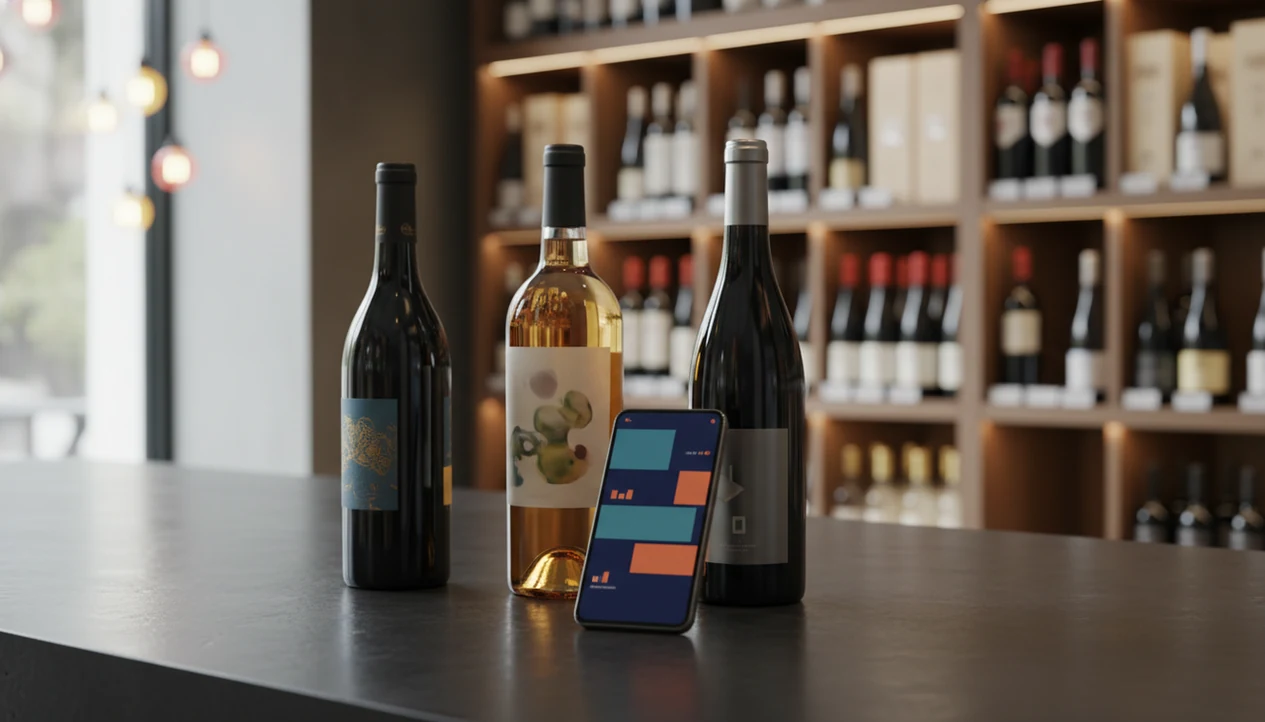
Definition: A wine price lookup app is a mobile tool that scans or searches a wine label and returns market price ranges, retailer options, and quality indicators so users can assess fair value before buying.
- No single app shows every price. Treat results as a market guide, not gospel.
- True wine value depends on vintage, region, and context, not just the lowest number on screen.
- DiVino adds sommelier-style interpretation, including food pairing, style fit, and drinking window, that pure price tools skip.
- Evaluate apps by merchant coverage, label-scan accuracy, and whether they separate crowd scores from expert ratings.
- Restaurant and auction prices are poorly covered by every app on this list.
5 Facts About Wine Price Lookup Apps Every Buyer Needs
- Wine price apps aggregate retailer data, not one universal wine market. A bottle may appear cheap only because the app sees three merchants, not thirty.
- Value means price plus quality, vintage, and context. A $28 Rioja Crianza and a $28 village Burgundy are not equal buys just because the number matches.
- Pure price tools often miss what you are actually tasting. Region, producer reputation, bright acidity, soft tannins, and food pairing rarely show up in raw price grids.
- Coverage varies by country, merchant count, and vintage depth. I have seen a store shelf divided by region signs scan cleanly for Napa, then go thin on smaller Loire producers.
- Any price snapshot can go stale quickly. Promotions, dynamic pricing, shipping rules, and currency changes can shift the fair range within hours.
A wine price app gives you a useful shortcut, not a rule. For deeper context, the wine price lookup vs wine value distinction matters more than most buyers expect.
3 Top Wine Price Apps Compared: Wine-Searcher, Vivino, and DiVino
The strongest shortlist is Wine-Searcher for price breadth, Vivino for community ratings, and Wine Identifier App for value context beyond the sticker price. Good wine prices and ratings need both data coverage and interpretation, especially when the label scan feels certain but the vintage match is slightly off.
| App | Merchant count | Label-scan accuracy | Vintage detail | Sommelier features | Free vs paid tiers |
|---|---|---|---|---|---|
| Wine-Searcher | Broadest retailer coverage | Search-led, less scan-centered | Strong vintage-level pricing | Limited pairing context | Useful free tier, Pro adds depth |
| Vivino | Large marketplace network | Strong consumer label scan | Moderate vintage nuance | Community taste signals | Free scan tools, marketplace model |
| DiVino | Smaller price aggregation than Wine-Searcher | AI label scan for bottle details | Region, producer, and vintage context | Food pairing, style fit, drinking window | App-led guidance with premium features |
Source note: Merchant breadth and marketplace/community claims should be checked against each company’s public materials: Wine-Searcher describes its worldwide wine-price listings at https://www.wine-searcher.com/about-us, while Vivino describes its ratings and marketplace network at https://www.vivino.com/about.
Anyone dealing with a phone tucked behind the water glass and a tight wine list should prefer an AI sommelier-style scanner when pairing fit matters more than exhaustive merchant coverage. Good results deliver bottle context, not a fake guarantee that every merchant has been checked.
5 Criteria for Picking Wine Value Lookup Tools
Pick a wine value lookup tool by asking five plain questions. First, how many merchants, countries, and vintages does it index? Second, does the label scan handle damp, scuffed, or oddly designed labels?
The next three questions are just as important. Are ratings crowd-sourced, expert-led, or a hybrid? Does the app explain style, food pairing, and drinking window, or only list prices? Finally, how does it make money through affiliate links, marketplace margins, or subscriptions?
That last point matters. If one retailer always rises to the top, the “deal” may reflect commercial placement as much as fair value. Buyers who want to check wine value from label should confirm the vintage line before trusting the price.
Evidence Behind These Wine Price App Picks
These picks are based on public coverage claims, observable app behavior, and a reality check from mobile shopping research. Wine-Searcher’s merchant breadth and Vivino’s community scale are company-reported signals, while in-store phone comparison behavior is supported by independent consumer research.
- Treat merchant coverage as a company claim. Wine-Searcher says its search covers wine prices from merchants around the world, which is useful evidence for price breadth but not proof that every local shelf price is captured.
- Read Vivino scale the same way. Vivino publicly describes a large base of users, ratings, and marketplace activity, so its strength is broad crowd feedback, not necessarily expert validation.
- Use independent shopping behavior as context. Pew Research Center has reported that many U.S. adults use phones in stores to compare prices or look up product information, which supports the shelf-scanning use case.
- Separate reported scale from verified accuracy. Merchant counts, user totals, and rating volume come from the companies; bottle-match accuracy and fair-value judgment still need cross-checking.
- Check your own app store. Availability, subscriptions, Pro tools, marketplace buying, and paid features can change by country, platform, and app-store region.
Wine-Searcher: Best Wine Price App for Global Retailer Coverage
Wine-Searcher is the strongest choice when the main job is cross-retailer price comparison. Its merchant database and vintage-level pricing make it especially useful for serious buyers, collectors, and anyone comparing the same bottle across regions.
- Retailer breadth: Wine-Searcher covers more merchants than most wine price tools, which helps establish a realistic market range.
- Vintage pricing: It is strong when the year matters, especially for Bordeaux, Burgundy, Napa, and other heavily traded categories.
- Critic integration: Professional scores can sit beside price data, which helps separate cheap from genuinely good value.
- Tradeoff: The scan experience and sommelier-style guidance feel thinner than newer AI-first apps.
Collectors who compare auction bottle wrapped in tissue paper against current retail listings will usually start here. For pure market checking, Wine-Searcher often beats a free wine scanner app with lighter data.
Vivino: Best Wine Price App for Community Ratings
Vivino is the easier everyday pick for shoppers who want a fast label scan, a large review base, and a marketplace path to buy. Its strength is social proof: many bottles have thousands of user ratings.
- Community scale: Vivino’s large review database helps show broad consumer sentiment quickly.
- Label scanning: The scan flow is simple, especially on clean front labels under normal store lighting.
- Marketplace buying: Integrated retail offers can move a user from scan to purchase without much friction.
- Value caution: Crowd scores can reward ripe, smooth, familiar styles more than structured or subtle wines.
A crowd score is useful, but it is not the same as expert assessment. A young Nebbiolo can feel chalky on the gums and still be a very good value, even if casual ratings punish its grip.
DiVino: Best Wine Price Context With AI Sommelier Features
DiVino is the fit when you want price context interpreted through wine style, not just a retailer list. Wine Identifier App scans the label, identifies region, producer, and vintage, then frames whether the price makes sense for that bottle’s grape, place, and drinking window.
- AI label scan: It reads bottle details, including producer, region, vintage, and style clues.
- Value-for-style scoring: It asks whether the price is fair for that wine type, not only whether it is low.
- Pairing context: Food pairing and occasion matching add meaning that pure price grids skip.
- Cellar use: Cellar tracking helps decide whether to drink, hold, or later reassess value.
- Honest gap: DiVino has a smaller price aggregation database than Wine-Searcher.
If your priority is deciding whether a bottle fits dinner, Wine Identifier App earns its spot because pairing guidance connects value to the sauce, the texture, and the drinking window. Soft cheese sweating on slate changes the decision.
Which Wine Price App Should You Choose?
Choose the app that matches the decision in front of you. Wine-Searcher is best for market price checking, Vivino is best for fast crowd feedback, and DiVino is best when the bottle has to make sense at the table.
A practical workflow helps more than app loyalty:
- Start with Wine-Searcher when price accuracy is the main concern. Use it for collector bottles, vintage-sensitive purchases, and cross-retailer checks where one shop’s price may be misleading.
- Use Vivino when you need a quick label scan. It is useful in a store aisle when broad community sentiment matters more than deep vintage interpretation.
- Open DiVino when context changes the answer. Pairing, drinking window, body, acidity, tannin, and style fit can turn a fair price into the right buy.
- Compare two apps for higher-stakes bottles. Pair a market tool with a sommelier-style tool when both price confidence and tasting context matter.
- Step back for edge cases. No app should be the final authority for auction lots, restaurant markups, leaking corks, low fills, damaged labels, or bottles with uncertain storage.
The best answer is often not one app, but the right sequence.
4 Technologies Behind Wine Price Lookup Results
Wine price lookup works by matching a scanned or typed wine to a database entry, then layering merchant prices, vintage data, and ratings onto that match. The technical pieces are ordinary but important: OCR reads text, image classification compares label patterns, and price-normalization logic adjusts messy retailer data.
- Merchant data feeds: Retailers push inventory and prices through APIs, scraped pages, or marketplace listings.
- Label recognition: OCR plus image embeddings match producer names, cuvée names, and vintage years.
- Price aggregation: Algorithms normalize currency, taxes, shipping, and bottle size into comparable ranges.
- Rating overlay: Apps merge critic scores, user reviews, and vintage charts into the result.
Pew Research Center reported that 59% of U.S. adults had used a phone in a store to compare prices or look up product information, which explains why a wine price app must be fast at the shelf: https://www.pewresearch.org/internet/2016/05/19/on-the-cusp-of-a-mobile-shopping-boom/.
5 Steps to Use a Wine Price App for Real Bottle Value
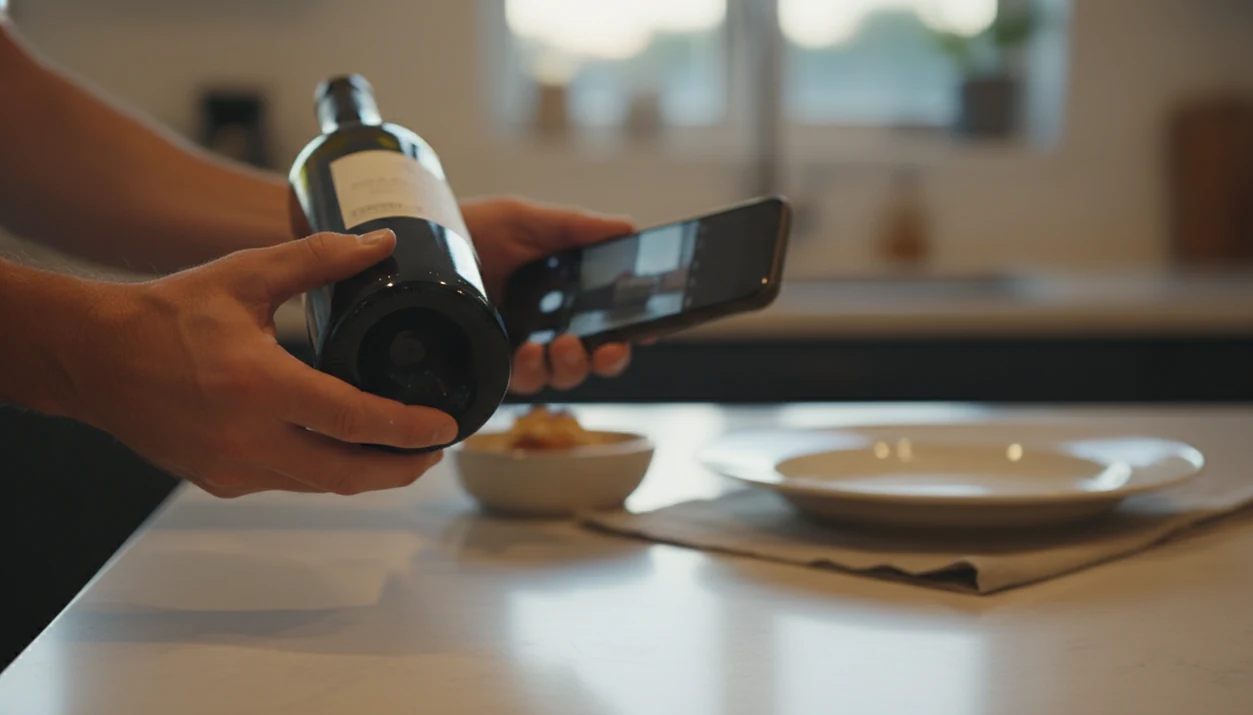
Use a wine price app by confirming the exact bottle first, then judging the price against quality and context. The vintage line is the small hinge; miss it, and the whole answer can swing wrong.
- Scan the label or type the wine name with the vintage year. Turn the bottle under decent light if the appellation line is tiny.
- Check the price range across multiple retailers. Do not trust the first result as the market.
- Compare the vintage shown in the result. A 2019 and 2021 can differ sharply in demand and quality.
- Review critic and user ratings separately. Crowd enthusiasm and expert structure scores answer different questions.
- Factor in food pairing, occasion, and drinking window. Wine Identifier App handles this step automatically with its sommelier layer.
On days the importer sticker on curved green glass blocks half the back label, is useful because the scan workflow pushes you to verify producer, region, and vintage before judging value. The wine vintage lookup app step is not optional for serious price context.
4 Myths About Wine Value Lookup Apps
The first myth is that the app always shows the lowest possible price. It only reflects the merchants, vintages, and regions inside its database.
The second myth is that a higher app price means higher quality. Markups can reflect brand heat, scarcity, state laws, or a shop’s location, not better taste.
The third myth is that all vintages of the same label have the same value. Weather, critic attention, and drinking window can move prices a lot. Tiny print under flickering candlelight does not make vintage checking easier, but it matters.
The fourth myth is that apps can perfectly value old or collectible bottles. Rare wine data may be sparse, stale, or distorted by auctions. For collectors, a wine collection valuation app should be treated as one input, not a final appraisal.
Comparing Wine Prices Across Shops
“Tool that can compare wine prices” belongs here: match producer, cuvée, vintage, and bottle size, then compare current in-stock offers rather than asking prices or unmatched vintages.
For label-first value research, use check wine value from label. For restaurant list markups, use restaurant wine markups.
Limitations
Every wine value lookup has blind spots, including DiVino, Vivino, and Wine-Searcher. The honest use case is guidance, not certainty.
- Merchant data gaps can make small regions, tiny producers, or old vintages look mispriced.
- Prices change daily through promotions, dynamic pricing, currency moves, taxes, and shipping rules.
- Label recognition can misread damaged, unusual, wet, or very old labels.
- Restaurant wine-list prices are poorly represented because markups vary by venue and service model.
- Private sales and auction markets are thinly covered, especially for rare bottles.
- AI value-scoring models are still emerging and may overgeneralize taste or rely on limited training data.
- Affiliate links and marketplace margins can influence which retailers or offers get highlighted.
- A scan cannot tell you bottle condition, storage history, fill level, or cork integrity.
When the issue is finding a similar style for less, Wine Identifier App helps because style recognition can point toward grape, region, and structure before you find cheaper similar wines. Still, no app can smell heat damage through glass.