How Food and Wine Pairing Works in Real Meals


Download App: food and wine pairing
How food and wine pairing works comes down to balancing five key wine components, acidity, tannin, sweetness, alcohol, and body, against the fat, salt, spice, sweetness, and umami in your dish so neither the food nor the wine overwhelms the other. You can either mirror similar flavors, known as complementary pairing, or offset them through contrasting pairing, and the useful starting point is always the dominant element on the plate, usually the sauce or seasoning.
> Food and wine pairing is the practice of selecting a wine whose acidity, tannin, sweetness, body, and aroma either complement or contrast the dominant flavors and textures in a dish to create a balanced sensory experience.
- Pairing relies on matching or offsetting acidity, tannin, sweetness, fat, salt, and spice between wine and food.
- Start with the sauce or dominant seasoning, not the protein, to choose the right wine.
- The most reliable pairing decisions begin with structure first, then grape, region, and personal taste.
Food and Wine Pairing Definition for Everyday Meals
Food and wine pairing is the practice of selecting a wine whose acidity, tannin, sweetness, body, and aroma either complement or contrast the dominant flavors and textures in a dish to create a balanced sensory experience.
That sounds formal, but the dinner-table version is simple. Start with the label, then ask what the food is really doing. Is the dish creamy, sharp, smoky, sweet, spicy, or salty? Pairing is not “white with fish, red with meat” in nicer clothing. It is structural balance.
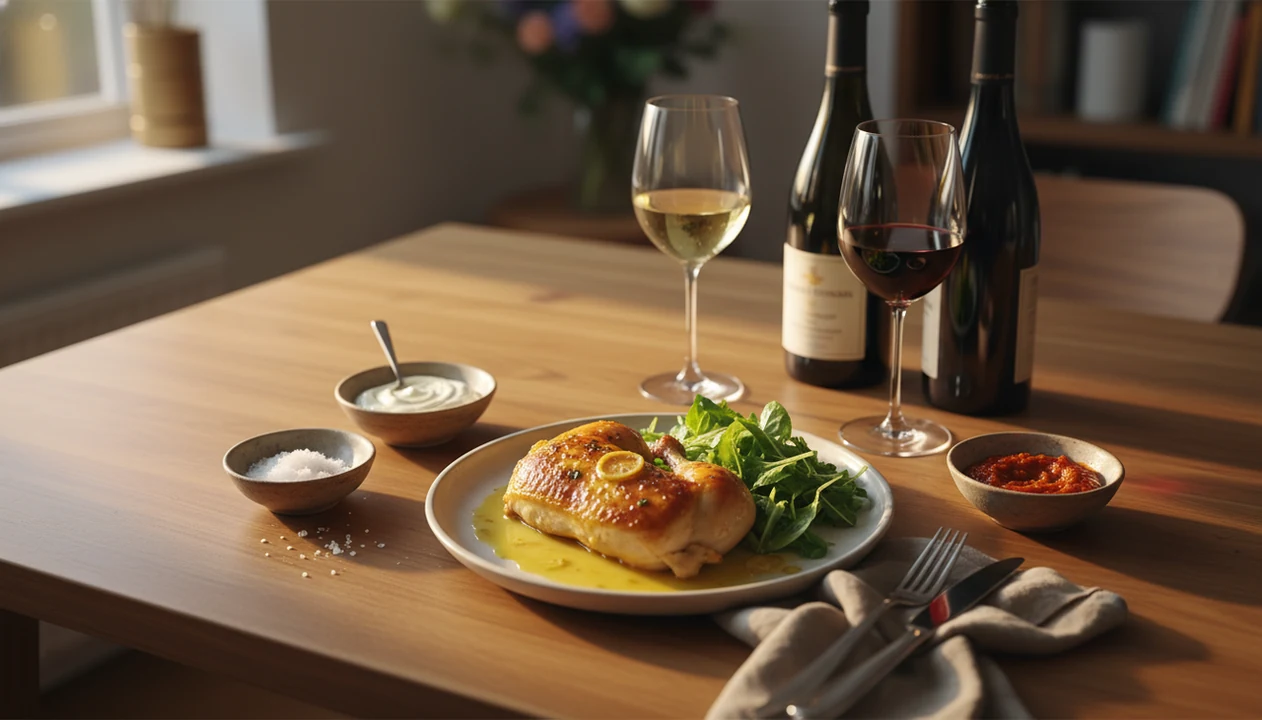
A U.S. wine consumer survey found that many people drink wine with dinner at least once a week, so this is not a restaurant-only skill. It matters when roast chicken rests on a cutting board and the pan sauce is lemony, not heavy.
Look for the sauce before the romance.
5 Facts About How Food and Wine Pairing Works
- Acidity, tannin, sweetness, alcohol, and body are the five wine components that interact most directly with food. Acidity feels bright, tannin grips, sweetness softens heat, alcohol adds warmth, and body controls weight.
- Match wine intensity to dish intensity. A light salad usually wants a lighter wine, while braised short ribs can handle more body. For most home cooks, matching weight is often easier than memorizing grape rules because the plate gives you the clue.
- Acidic wines cut fat, while tannic wines need protein and fat. Lemon-zest acidity with goat cheese can feel clean and vivid. Young Nebbiolo, with that chalky grip on the gums, needs something richer.
- Sweet or spicy dishes usually need slightly sweeter, lower-alcohol wines. Dry, high-alcohol reds can make chili heat feel sharper and more bitter.
- The dominant flavor element matters more than the protein. Tomato sauce, soy glaze, green herbs, char, and cream all change the pairing map. Pair the sauce, not only the protein.
Before You Start Pairing Wine and Food
Before you start pairing wine and food, decide what the dish is actually built around and make sure the bottle is ready to taste fairly. The best pairing call starts with the plate, then checks the wine’s structure, temperature, and room for small fixes.
- Choose the dish first. Include the sauce, garnish, and cooking method in that decision, because roast chicken with lemon pan sauce is not the same pairing problem as roast chicken with mushroom cream.
- Name the meal’s weight and pressure points. Call it light, medium, rich, spicy, or sweet before reaching for a grape. That quick label tells you whether freshness, body, sweetness, or lower alcohol matters most.
- Read the wine label for clues. Look for grape, region, alcohol level, and style words that suggest acidity or body. Cool regions often signal more freshness; higher alcohol often hints at more weight.
- Serve the wine near the right temperature. A too-warm red can feel hot and blunt, while an over-chilled white may hide texture.
- Keep simple corrections nearby. Lemon, salt, butter or olive oil, and a short chill can rescue a pairing that is close but not quite balanced.
Pairing Science Behind Acidity, Tannin, and Sweetness
Wine pairing works because taste compounds interact in your mouth, not because tradition said so first. Acidity, phenolic tannins, sugar, fat, protein, salt, and aroma compounds can change how a wine feels after one bite.
How Acidity and Fat Interact on Your Palate
Acidity refreshes the palate by making rich foods feel less heavy. A crisp Sauvignon Blanc with fried seafood works because the wine’s acid acts like a squeeze of lemon. If the food is already acidic, the wine should usually be equally bright or brighter.
Why Tannin Needs Protein and Fat
Tannins bind with proteins and fats, which can soften astringency. That is why a firm Cabernet can taste harsh alone but calmer with steak or aged cheese. Sensory research on wine and cheese has shown measurable changes in aroma, astringency, and taste balance source.
The Chemistry of Red Wine and Fish Clashes
Some red wine and fish clashes come from iron-driven lipid oxidation. In plain terms, certain wines can push fish oils toward metallic or stale flavors. Controlled experiments have demonstrated this effect, especially with higher-iron wines and unsaturated fatty acids in fish source.
Wine Pairing Rules Chart for Fat, Salt, Spice, Sweetness, and Umami
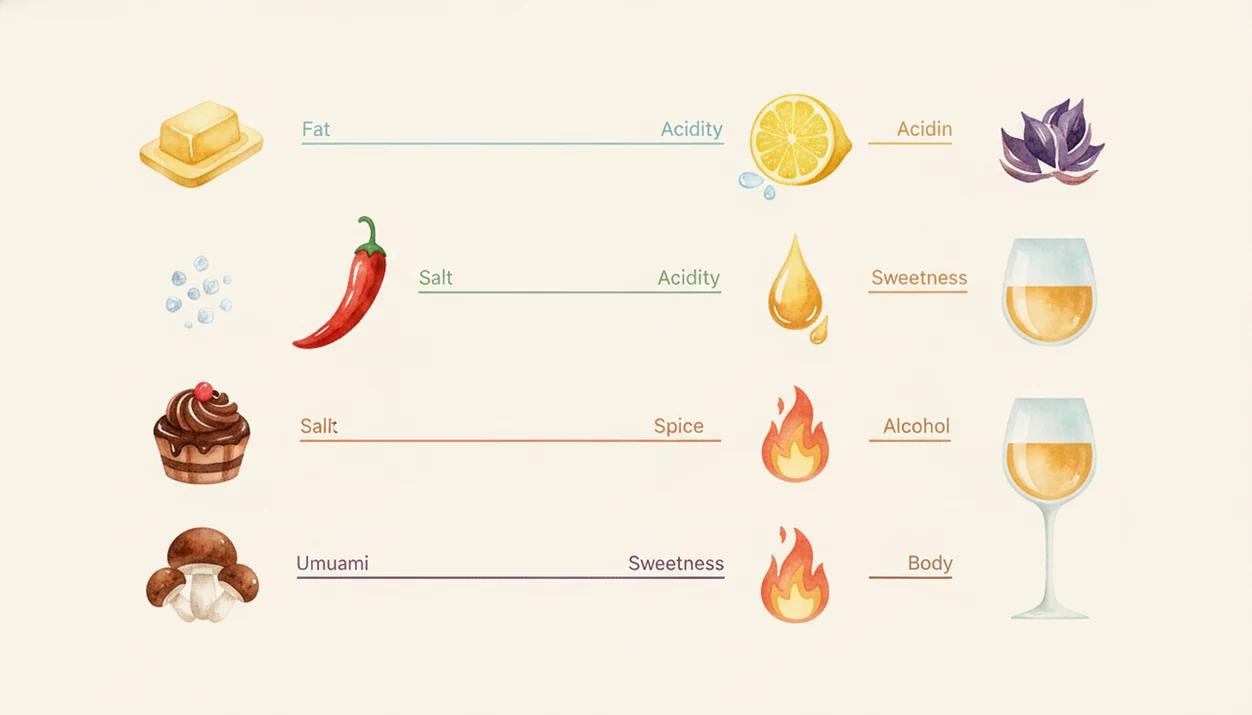
Wine pairing rules work best as shortcuts, not laws. Use this chart to decide whether you want a complementary pairing, where similar traits echo each other, or a contrasting pairing, where the wine pushes back against the food.
| Food Trait | Ideal Wine Trait | Example Wine | Pairing Approach |
|---|---|---|---|
| Fatty | High acidity or firm tannin | Champagne | Contrasting, because bubbles and acid refresh richness |
| Salty | Bright acidity, light body | Sauvignon Blanc | Contrasting, because acid keeps salt lively |
| Acidic | Equal or higher acidity | Pinot Noir | Complementary, because the wine does not taste flat |
| Sweet | Sweeter than the dish | Riesling | Complementary, because sugar must keep pace |
| Spicy | Lower alcohol, slight sweetness | Chardonnay or off-dry Riesling | Contrasting, because sweetness softens heat |
| Umami | Moderate tannin, ripe fruit | Syrah | Complementary or contrasting, depending on sauce |
The OIV estimated global wine consumption at about 221 million hectolitres in 2023, so everyday pairing decisions affect far more than tasting-room conversations source. If you want a phone-first shortcut, an app to help pair wine with food can turn these rows into quick dinner choices.
6 Steps to Use Wine Pairing Rules at a Restaurant or Home Dinner
Use wine pairing rules by moving from the plate to the glass, not the other way around. At a date-night table near the window, the smartest question is not “Which grape sounds impressive?” It is “What is the dish built around?”
- Identify the dominant element. Start with the sauce, seasoning, cooking method, or garnish that will shape the bite.
- Gauge the dish’s intensity. Call it light, medium, or bold based on fat, char, spice, sweetness, and texture.
- Match the wine’s intensity. Choose a wine with similar body so neither side disappears.
- Check for sweetness or spice. Move toward a slightly sweeter or lower-alcohol wine when heat or sugar is central.
- Scan the label or menu for confirmation. Tools like Wine Identifier App can compare grape, region, body, acidity, and tannin before you order.
- Taste and adjust. Add lemon, salt, fat, or a slight chill if the pairing is close but not quite settled.
Tiny adjustments count.
4 Wine Pairing Myths About Meat, Fish, Price, and Subjectivity
Wine pairing myths survive because they are easy to remember. The better version is still simple, but it asks better questions.
- Myth 1: Red wine always goes with meat, and white wine always goes with fish. Reality: sauce, tannin, acidity, and body matter more than color. A tomato-braised fish may handle a light red better than an oaky white.
- Myth 2: Expensive or older wines automatically pair better. Reality: structural balance beats price. A modest Riesling can save spicy takeout better than a mature Bordeaux.
- Myth 3: Only one ideal pairing exists. Reality: many wines can work if the pairing science checks out. For pasta, the sauce usually tells you more than the noodle shape; a tool to pair wine with pasta can help sort that out.
- Myth 4: Pairing is pure snobbery and totally subjective. Reality: sensory research shows consistent patterns in aroma, taste, and astringency. Preference still matters, but chemistry is in the room.
Common Mistakes When Pairing Wine with Spicy, Sweet, and Umami Dishes
The easiest pairing mistakes happen with spice, sugar, and umami because each one can exaggerate bitterness or heat. A ruby swirl in a wide glass may look promising, but the first bite can change everything.
High-alcohol wine with spicy food is the classic problem. Alcohol can make chili heat feel hotter and can pull bitterness forward. Off-dry Riesling, Gewürztraminer, or a low-alcohol sparkling wine usually behaves better.
Sweet dishes create another trap. If the dessert is sweeter than the wine, the wine can taste sour, thin, or oddly severe. The wine should be sweeter than the dish’s sweetest component.
Umami needs care too. Soy sauce, mushrooms, aged cheese, and miso can make tannic wines taste more bitter. Add fat, salt, or acid to the food if the match is almost there. Wine Identifier App flags many of these conflicts in pairing recommendations, especially around spice, sweetness, and cooking method.
DiVino Pairing Suggestions from Label Scans, Menu Scans, and Cellar History
Label and menu scanning can turn pairing mechanics into a practical decision flow: scan the label, read the menu, identify the dominant dish element, then compare structure. Strong wine-identification and sommelier-app suggestions should deliver grape, region, body, acidity, tannin, and pairing logic, not a fantasy promise of the one correct bottle.
A label scan can identify the grape, region, vintage clues, body, acidity, and likely tannin profile. I still turn bottles around under a kitchen pendant light to find the tiny appellation line, but scanning helps when the print is microscopic.
A menu scan works differently. It looks for sauce words, cooking methods, spice cues, sweetness, and protein weight. The logic resembles a sommelier’s mental checklist, with adjustments for heat, sugar, char, cream, and acid.
At home, pairing history and cellar tracking help patterns become visible. If your basement shelf smells of cork and dust, a best wine cellar app can make those bottles easier to match with dinner before the corkscrew comes out.
First-Sip Verification Checklist for Wine Pairing
A pairing is not confirmed until one bite and one sip meet. The first sniff above the rim tells you aroma, but the bite tells you structure.
- Check body. The wine’s weight should match the dish’s weight.
- Check acidity. The wine should be as acidic as, or more acidic than, the food.
- Check sweetness. The wine should be sweeter than the dish’s sweetest element.
- Check tannin. Firm tannins need fat, protein, or both.
- Check temperature. A slight chill can soften alcohol and sharpen freshness.
- Check with a scan if unsure. Wine Identifier App can act as a second opinion before you commit.
- Adjust the food. Lemon, salt, butter, or a cooler serving temperature can rescue a near-miss pairing.
For beginners, tasting one bite with one sip is often better than following a memorized rule because it tests the actual meal.
Limitations
Pairing science is useful, but it is not a machine that predicts pleasure every time. Treat the rules as a useful shortcut, not a rulebook.
- Taste perception varies by person. Bitterness, sweetness, alcohol warmth, and aroma sensitivity differ, sometimes for genetic reasons.
- Controlled tests do not cover every dish. Regional cooking, fusion cuisine, fermentation, smoke, and very complex sauces can fall outside simple charts.
- Many wine pairing rules come from tradition and expert practice. They are helpful, but they are not the same as large clinical studies.
- Apps depend on clear inputs. Wine Identifier App can misread vague menu wording, damaged labels, or wines with unusual production styles.
- Context changes enjoyment. Mood, company, glassware, serving temperature, and occasion can shift whether a pairing feels right.
- Natural and niche wines may behave unpredictably. A skin-contact white, volatile red, or oxidative bottle may not fit standard acidity-tannin-body expectations.
- Personal preference can override structure. If you love soft tannins with salmon, that matters.
Read more
FAQ
Does red wine always pair with meat?
No. Sauce, body, tannin, acidity, and cooking method matter more than the meat itself.
What wine goes with spicy food?
Spicy food usually pairs well with off-dry, lower-alcohol wines such as Riesling or Gewürztraminer. Sweetness softens heat, while high alcohol can make spice feel harsher.
Why does wine taste bitter with fish?
Some red wines can taste bitter or metallic with fish because iron in the wine may promote oxidation of fish oils. Lighter reds or high-acid whites are safer choices.
Can you pair wine with dessert?
Yes. The wine should usually be sweeter than the dessert, or it may taste sour and thin.
Is wine pairing actually scientific?
Yes. Sensory research shows measurable changes in aroma, taste, sweetness, bitterness, and astringency when food and wine are tasted together.
What is complementary vs contrasting pairing?
Complementary pairing matches similar traits, such as creamy food with a round Chardonnay. Contrasting pairing balances opposites, such as salty fried food with crisp Champagne.
Does expensive wine pair better?
No. Structural balance matters more than price, age, or prestige.
How can a wine app suggest food pairings?
A wine app can use label and menu scanning to estimate grape, region, body, acidity, tannin, sweetness, and dish traits, then suggest pairings based on those structural matches.
Can I fix a bad wine pairing?
Often, yes. Add salt, acid, or fat to the food, or chill the wine slightly to reduce heat and sharpen freshness.