Find Best Wine on Menu for Your Food, Taste, and Budget
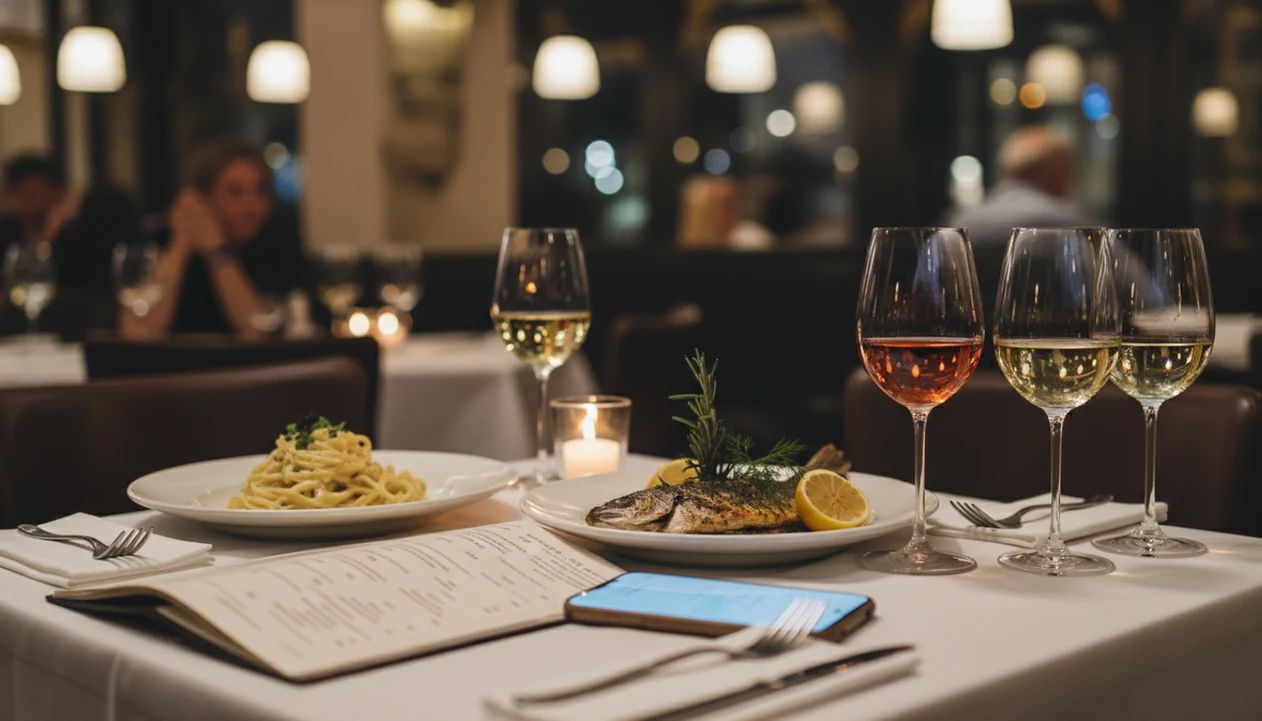
To find best wine on menu, match the wine's body and intensity to your dish's dominant flavor or sauce, not the protein alone, then narrow by budget using lesser-known regions for better value. If the list is long, use three filters first: food fit, price ceiling, and the styles you already know you enjoy.
Definition: Finding a strong wine on a menu means selecting the bottle or glass that pairs with your food's weight and flavor profile, fits your price range, and suits your personal taste, rather than defaulting to the most expensive or most familiar label.
TL;DR
- Pair wine to the sauce or dominant flavor on your plate, not just the protein.
- Lesser-known regions and by-the-bottle orders often deliver better value than famous labels or multiple glasses.
- An AI sommelier app like DiVino can scan a restaurant wine list and recommend matches for your meal, taste, and budget in seconds.
Restaurant Wine Menu Confusion and Ordering Pressure
Restaurant wine menus feel difficult because they combine unfamiliar regions, pricing pressure, and public decision-making in one short moment. In the 2023 U.S. Wine Consumer Survey, 52% of regular wine drinkers said choosing wine in restaurants is confusing or somewhat difficult (Wine Market Council).
That tracks with the table experience. Friends are debating bottles over shared appetizers, the server is waiting, and someone suddenly asks whether Rioja is the grape or the place. In a 2018 survey of 2,000 U.S. adults, 26% said they always feel intimidated ordering wine, and 48% felt pressure to choose a more expensive bottle than planned (PR Newswire).
Price design adds another nudge. A 2007 restaurant field experiment found diners were more likely to choose wines from the middle of the list (ScienceDirect). That middle-option bias feels safe, but it is not always the right value. With restaurant wine markups often around 200% to 300% over retail, the stakes feel higher than they do on a store shelf.
The pause is real.
Five Facts About Choosing Wine from a Restaurant List
- The right restaurant wine choice is about fit, not price. A $64 bottle that matches lemon, herbs, and grilled fish can beat a $140 bottle that tastes too heavy for the dish.
- Acidity, tannins, sweetness, and body decide most pairings. Bright acidity refreshes creamy sauces, tannins grip protein and fat, sweetness calms spice, and body controls whether the wine overwhelms the food.
- Start with the sauce or dominant flavor. Tomato sauce bubbling in a skillet wants a different wine than butter-poached fish, even if both plates include seafood or poultry.
- Ask for help with context. Sommeliers, trained servers, and menu-scanning tools work better when you say what you ordered, what you usually like, and what you want to spend.
- Value often hides away from famous names. Lesser-known regions and full bottles can beat familiar labels by the glass, especially when the table will drink four glasses or more.
For most diners, choosing wine by flavor weight is easier than choosing by reputation because the plate gives clearer clues than the label.
How Finding Wine on a Menu Works
Finding wine on a menu works by reducing a long list into a few realistic matches for the food, the table, and the budget. The label matters later; first you sort by structure, meaning the wine’s body, acidity, tannin, and sweetness.
Food weight sets the lane. Delicate crudo, lemony salad, and butter-poached fish need lift and restraint, while steak, mushrooms, lamb, or braised dishes can handle more depth. Sauce often overrules protein: cream wants acidity, tomato wants brightness, chili heat likes lower alcohol or a touch of sweetness, and fatty meat can soften tannin, the drying grip you feel on your gums. Once the pairing lane is clear, budget filters remove distractions before famous regions or labels pull your eye upward.
- Set the price ceiling for glass or bottle before reading producer names.
- Match the dish’s dominant sauce, weight, and sweetness to a compatible style.
- Use region or grape when it signals style, producer when quality is the question, and vintage when age or weather could change ripeness.
- Ask the server, sommelier, or a scanning tool with the same inputs: dish, budget, and tastes you already like.
Restaurant Wine List Pairing Mechanics for Food
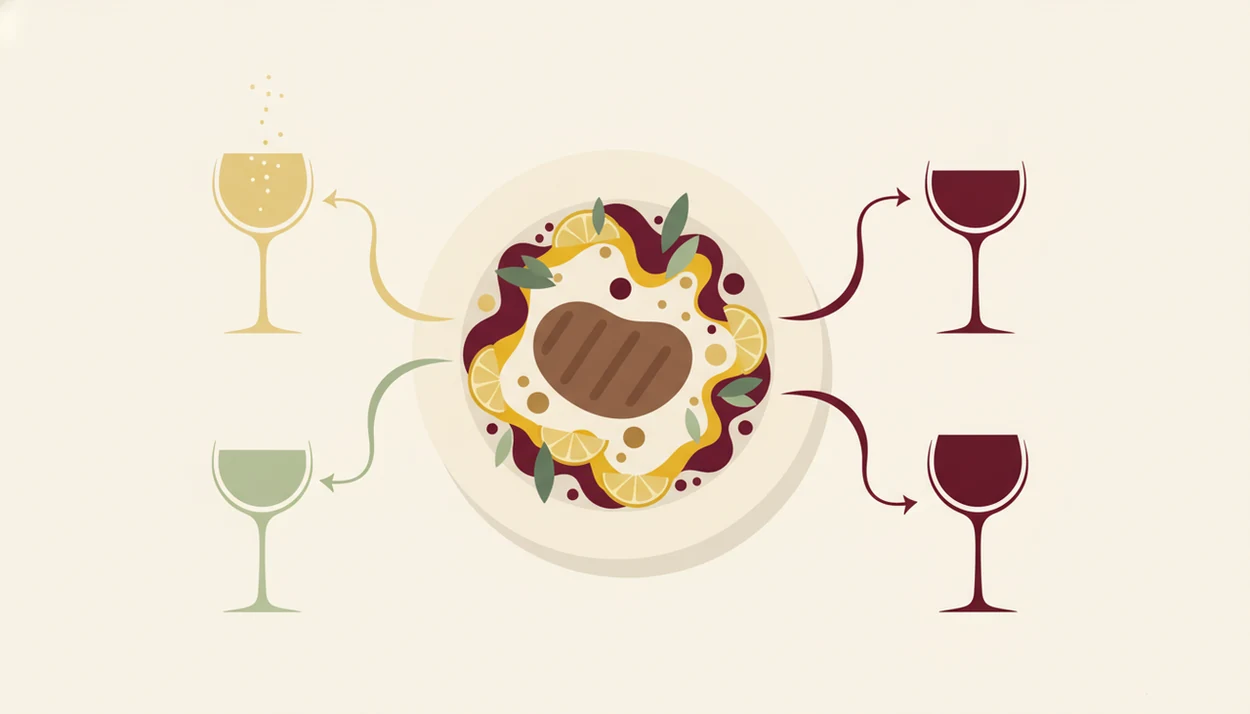
Wine pairing works by balancing structure. The useful shortcut is simple: light dishes usually need lighter wines, while rich dishes need wines with more body, acidity, tannin, or sweetness.
Weight, Acidity, and Tannin Interactions
Weight means how full the food and wine feel. A crisp Albariño can make oysters or citrusy salad taste sharper, but it may disappear beside braised short ribs. Acidity acts like a squeeze of lemon. It lifts cream, butter, fried edges, and salty cheese. Tannin behaves differently. In a young Nebbiolo, that chalky grip on the gums can feel harsh alone, but fat and protein soften it at the table.
Sweetness matters too. If the food is sweeter than the wine, the wine can taste thin or bitter.
How DiVino's AI Matches Wine Data to Your Plate
AI models compare dish descriptors, tasting notes, grape profiles, and region patterns. A menu-scanning app can read a list and turn “high-acid white from Rueda” into “good with goat cheese, herbs, and grilled vegetables.” For a phone-first workflow, an app that scans restaurant wine list can shorten the search before the server returns.
5 Steps to Find the Best Wine on a Menu
Use this process when the list is long and the table is ready to order. It keeps you from choosing only by price, label recognition, or panic.
- Identify the dominant flavor or sauce. Decide whether the plate is creamy, spicy, tomato-rich, smoky, citrusy, earthy, sweet, or fatty.
- Set your price ceiling. Choose the maximum glass or bottle price before scanning names, so the list does not pull you upward.
- Look for matching regions or grapes. Try Côtes du Rhône for savory roasted dishes, Rueda for bright seafood, or Malbec for grilled meat.
- Open DiVino and scan the list. Search a bottle name or use the camera for pairing scores, tasting notes, style clues, and plain-language tradeoffs.
- Confirm with the server or sommelier. Say the dish, budget, and style you like; ask for a taste if the wine is poured by the glass.
If you want the phone method broken down more slowly, the how to scan wine menu with phone guide covers the camera step.
Budget Strategy for Restaurant Wine Bottles and Glasses
Restaurant wine value starts with markup awareness. A bottle that retails for $20 may appear for $60 or more, since restaurant markups often fall around 200% to 300%.
Bottle vs. Glass Ordering Math
A standard 750 ml bottle contains about five 5-ounce pours, though many restaurants price it closer to four generous glasses. If two people each want two glasses, a bottle can cost less per pour and may arrive fresher than by-the-glass wine. Not always. Some short lists price bottles aggressively, while others protect glass margins.
Lesser-Known Regions That Deliver Value
Famous regions carry brand premiums. Napa Cabernet and Bordeaux can be excellent, but you often pay for recognition. Argentine Malbec, Côtes du Rhône, Rueda, Loire Cabernet Franc, and Sicilian reds can deliver similar food usefulness at lower list prices.
Middle-option bias also matters. Once you notice the pull toward the center, you can look one step below or above it with more intention. A menu-scanning app can also compare retail reference prices against list prices, not just tasting notes. For a deeper tool comparison, the wine menu scanner app page is the natural next read.
Wine Menu Myths That Cost Diners Money
The most expensive bottle is not automatically the right wine for your meal. Price may reflect rarity, producer reputation, age, or restaurant margin, not whether it suits chili heat, cream sauce, or cherry-skin bitterness in Sangiovese.
The second-cheapest bottle is not a foolproof value hack either. Restaurants know diners use that trick. A better move is to find regions where the name is less famous but the style fits the food.
The old red-with-meat and white-with-fish rule is too stiff. Pinot Noir can work beautifully with salmon or mushrooms, while a textured white can handle roast chicken or pork.
You also do not need jargon. “I like bright acidity and not much oak” is enough. A 2021 online choice experiment found that digital tasting notes and pairing suggestions increased confidence and encouraged consumers to try unfamiliar wines. Good menu-scanning tools deliver translation and context, not a performance of expertise.
Real Diner Patterns with Restaurant Wine List Bottles
Many diners default to the one label they recognize, even when it does not fit the food. That familiar Sauvignon Blanc may be fine with goat cheese, but it can taste sharp beside a sweet glaze or too lean with roasted lamb.
Another pattern is asking, “What’s good?” without giving the server useful clues. Better: “We have steak, mushroom pasta, and roast chicken, and we want something under $75 with soft tannins.” Now the answer can be specific.
By-the-glass ordering is also a hedge. It feels safer, but four glasses can cost more than a bottle and may split the table into mismatched pours. When dishes vary widely, choose versatility: sparkling wine, dry rosé, Pinot Noir, Côtes du Rhône, or a medium-bodied white with bright acidity.
A few scanner users tell us they scan the menu before the server arrives. Quietly. The goal is not to avoid the sommelier; it is to ask a better question. If that is your main use case, an app to help choose wine at restaurant may be more useful than a cellar-only tool.
4 Outcomes Wine Menu Pairing Cannot Promise
Wine pairing cannot promise that everyone at the table will love the same bottle. Personal taste still wins, especially with oak, bitterness, sweetness, and tannin.
A pairing method also cannot fix a weak wine list. If the list is poorly curated, the right match may still be only average.
Complex fusion dishes resist tidy rules. Chili heat, coconut, smoke, vinegar, and sweetness can pull wine in different directions at once.
Restaurant inventory creates another limit. The ideal match may be sold out, too young, too warm, or simply outside the price ceiling you set. Reset the plan.
Limitations
No wine menu method should be treated as a guarantee. Use pairing logic as a useful shortcut, not a rule.
- Personal taste overrides the chart. If you dislike Riesling, even the smartest spicy-food pairing may fail for you.
- Wine list quality varies. The right match on a bad list is still an average choice.
- Fusion dishes can confuse the match. Sweet chili, smoke, vinegar, and cream in one dish narrow the safe options.
- Restaurant markups limit value. Your preferred style may sit above your budget because of pricing, not scarcity.
- Stock gaps happen. A listed bottle may be unavailable, replaced by a different vintage, or served too warm.
- Tasting-note databases are inconsistent. One taster’s “ripe cherry” may be another taster’s “dried cranberry.”
- Vintage variation changes the same label. A warm year can make a familiar wine taste richer and softer.
- By-the-glass pours can fade. Open bottles lose freshness, especially delicate whites and lighter reds.
When in doubt, ask for the bottle to be described in plain terms: acidity, body, sweetness, tannin, and oak.
Read more
FAQ
Does an app help choose restaurant wine?
Yes. AI sommelier apps like DiVino can scan menus, identify bottles, and recommend pairings based on your food, taste, and budget.
Should wine match the sauce or protein?
Match the wine to the sauce or dominant flavor first. Protein matters, but cream, tomato, spice, smoke, and sweetness usually drive the pairing.
Is the second-cheapest bottle a good deal?
Not automatically. Value depends on region, producer, markup, and food fit, not the bottle’s position on the list.
Can red wine pair with fish?
Yes. Lighter reds such as Pinot Noir can pair well with salmon, tuna, mushrooms, or tomato-based fish dishes.
Is ordering a bottle cheaper than glasses?
Often, yes. A standard bottle equals about five small pours, and it can cost less than ordering several glasses separately.
What if no one at the table likes wine?
Choose sparkling wine or an off-dry style if people are open to it. It is also completely fine to skip wine.
How much should you spend on restaurant wine?
Set a ceiling before reading the list. Many diners choose a bottle near the cost of one or two entrées, then adjust for markup.
Can a wine app scan a paper wine list?
Yes. A wine identifier app can scan paper wine lists or labels and return bottle details, style notes, pairing guidance, and menu-friendly recommendations.