Tool To Pair Wine With Steak By Cut, Sauce, And Seasoning
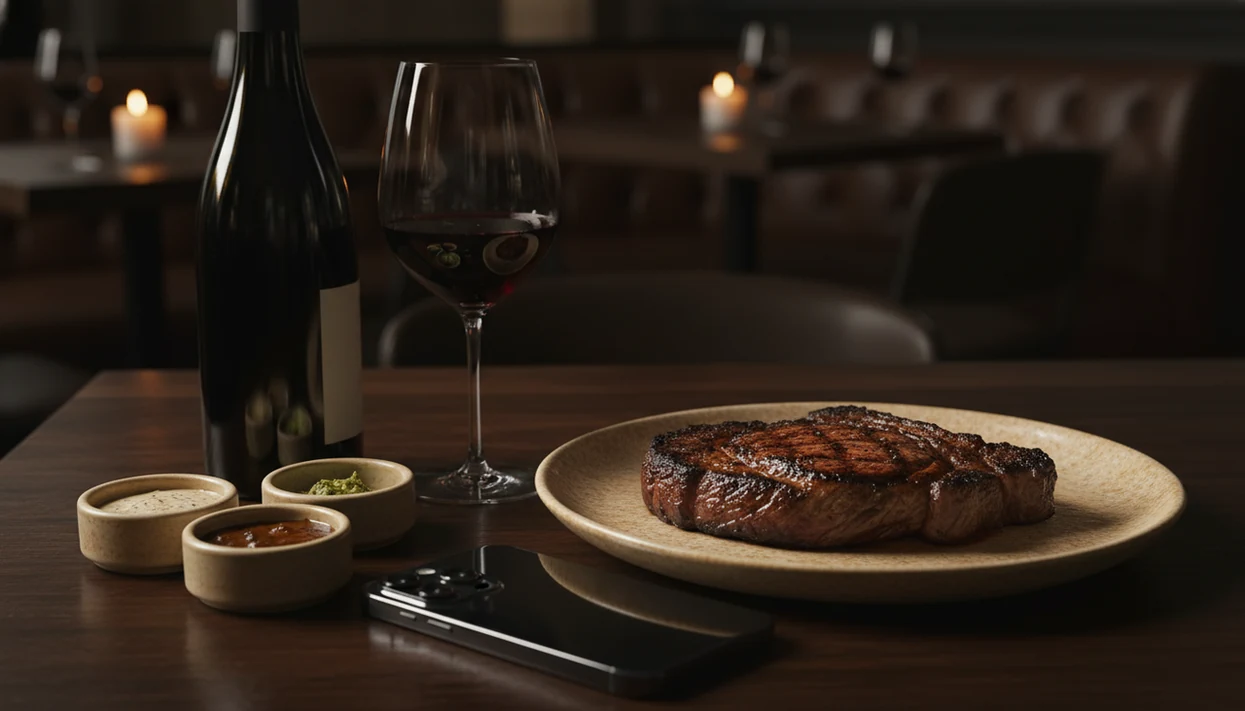
A tool to pair wine with steak uses AI label scanning and flavor-profile databases to match specific bottles to your cut, doneness, sauce, and seasoning in seconds. The point is not to memorize one “red with steak” rule; it is to match the bottle to what is actually on the plate.
A steak wine pairing tool is an AI-powered app or digital sommelier that analyzes a wine's tannin, body, and acidity against a steak's fat content, char level, and sauce to recommend the best bottle match.
- AI apps can scan labels and match wines to specific steak cuts, sauces, and seasonings in real time.
- Full-bodied, higher-tannin reds pair with fatty cuts like ribeye; medium-bodied reds suit leaner cuts like filet mignon.
- The strongest steak wine pairing apps personalize over time, learning from your ratings to outperform static pairing charts.
What a Steak Wine Pairing Tool Actually Does
A steak wine pairing tool is a digital sommelier that matches wine to steak variables, including cut, fat level, doneness, sauce, seasoning, and char. It compares those food details with wine structure: tannin, body, acidity, and fruit intensity.
That matters because “Cabernet with steak” is only a useful shortcut, not a rule. Ribeye with a salty crust asks for something different than filet with mushroom sauce. A peppercorn sauce can make a soft Merlot feel thin; a fatty porterhouse can make young Cabernet taste smoother.
Static charts stop at broad categories. A good app keeps asking: what cut, what sauce, what bottle, what vintage, what budget? With 81% of U.S. adults reporting smartphone ownership in a 2020 Pew survey, app-based pairing fits how most people already make dinner decisions. (Pew Research Center: https://www.pewresearch.org/internet/fact-sheet/mobile/)
Tiny print under flickering candlelight changes the problem fast.
Five Facts About Pairing Wine With Steak Using an App
- Label scanning removes the first guess. A steak wine pairing app can identify a bottle by producer, region, grape, and vintage, then compare it with your steak instead of making you decode the label alone.
- Red wine is the starting line, not the finish. Full-bodied reds often suit fatty cuts, but a tool can fine-tune by tannin and body for ribeye, strip, filet, flank, or sirloin.
- Availability matters. Useful apps filter by budget and bottles you can actually buy or order, not just a theoretical “Napa Cabernet” that is nowhere on the list.
- Personal ratings improve recommendations. If you keep choosing softer tannins or brighter acidity, the app can adjust future steak matches toward your pattern.
- No pairing tool is infallible. Treat the result as a smart assistant beside your own palate, especially if the label is blurry or the producer is obscure.
For a wider dinner context, the same logic appears in an app to help pair wine with food.
How AI Wine-and-Steak Pairing Works Behind the Scenes
AI wine-and-steak pairing works by turning the bottle and the dish into structured data, then scoring how well their flavor traits interact. Image recognition reads the label and identifies the producer, region, vintage, and grape when the photo is clear enough.
A flavor-profile engine then maps wine attributes, such as tannin, acidity, body, oak, and fruit, against food attributes, such as fat, char, spice, salt, and sauce richness. In plain terms, the system asks whether the wine will soften, echo, brighten, or overwhelm the steak.
The better tools add a personalization layer. If you rate a Malbec too heavy with strip steak, the next recommendation may move toward Tempranillo or Cabernet Franc. A 2022 study on AI-based food recommendation found users were significantly more satisfied with personalized algorithmic suggestions than with non-personalized lists. https://www.mdpi.com/2304-8158/11/19/3032
Tools like Wine Identifier App divino ai wine identification and sommelier app deliver bottle recognition and meal matching, not a guarantee that every palate will agree.
Requirements Before You Pair Wine With Steak
Before pairing steak with a wine pairing app, you need a smartphone with a working camera, the app installed on iOS or Android, and a clear idea of the steak you are cooking. Start with the label, then add the food details.
Know the cut first: ribeye, filet mignon, strip, sirloin, flank, porterhouse, or T-bone. Then add cooking method, doneness, sauce, and seasoning. A grilled medium-rare ribeye with black pepper is not the same pairing problem as tenderloin with béarnaise.
Set a budget range if you want practical results. Good lighting also matters. I have turned a bottle under a kitchen pendant light just to catch the tiny appellation line before scanning.
How To Use a Steak Wine Pairing Tool Step by Step
Use Wine Identifier App as a structured pairing workflow: identify the bottle or list, describe the steak, then let the app rank realistic matches. This is easier than flipping between a generic chart and a store shelf.
- Open Wine Identifier App and scan the wine label or restaurant wine list. Hold the camera steady and avoid glare from curved glass.
- Select steak as your dish and specify the cut. Choose ribeye, filet mignon, strip, sirloin, flank, porterhouse, or another option.
- Add sauce, seasoning, and doneness details. Peppercorn, chimichurri, blue cheese, herb butter, and char level can shift the result.
- Review the ranked pairing results. Look for tannin and body scores, not only grape names.
- Filter by budget and availability. A useful recommendation is one you can actually buy or order.
- Rate the pairing after your meal. That feedback trains the AI for future steak recommendations.
For steak, a step-by-step pairing tool is often easier than a static chart because it adjusts for cut, sauce, vintage, and price in the same decision.
Best Wine Styles With Steak by Cut and Sauce
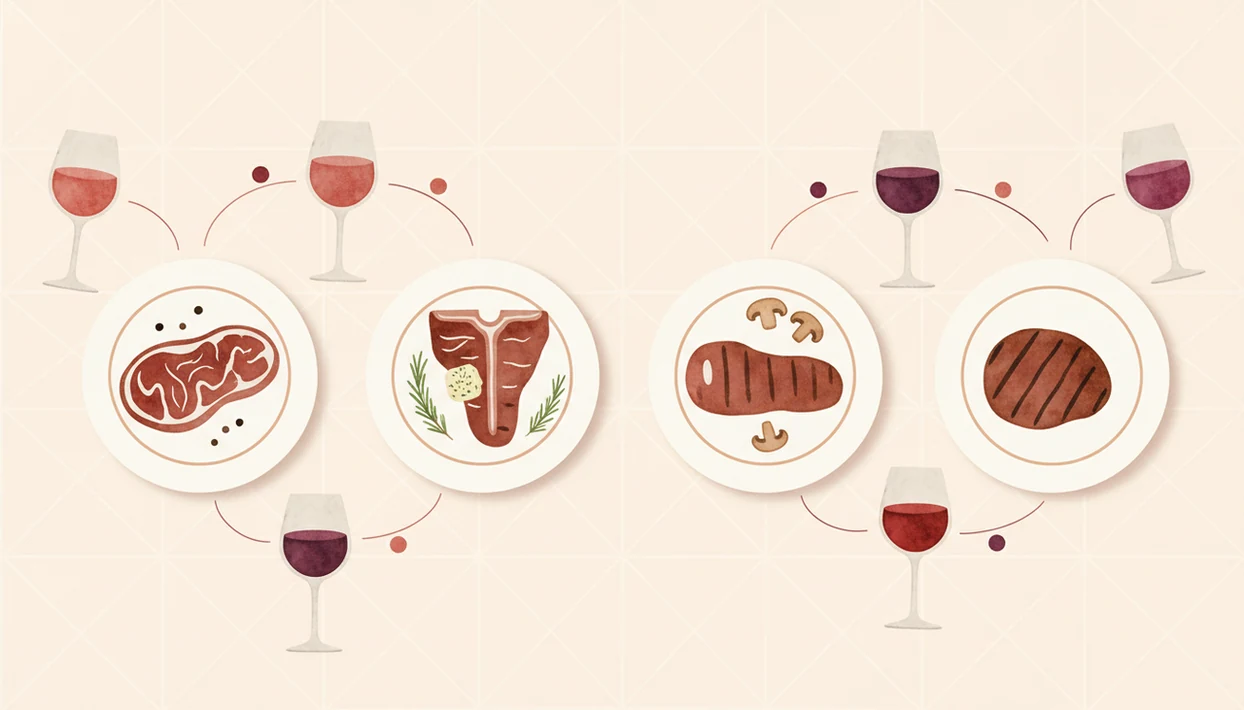
The right wine with steak depends on fat, sauce, and seasoning before grape prestige. According to a 2018 U.S. wine consumer survey, 79% of respondents drink red wine at least occasionally, which helps explain why red styles dominate steak pairings. https://www.winebusiness.com/news/article/199011
| Steak preparation | Wine styles that usually fit | Why it works |
|---|---|---|
| Ribeye, porterhouse, T-bone | Cabernet Sauvignon, Malbec, Syrah | High fat softens firm tannins |
| Filet mignon, tenderloin | Pinot Noir, Merlot | Softer tannins suit lean tenderness |
| Strip, sirloin | Bordeaux blends, Tempranillo | Balanced body matches moderate fat |
| Peppercorn or blue cheese sauce | Shiraz, Zinfandel | Bold fruit and spice handle intensity |
| Chimichurri or herb butter | Cabernet Franc, Grenache | Herbal notes echo the sauce |
Fatty Cuts: Ribeye, Porterhouse, T-Bone
Fatty cuts can take more tannin. Think of the chalky grip of young Cabernet becoming rounder after a bite of ribeye.
Lean Cuts: Filet Mignon, Flank, Tenderloin
Leaner cuts need care. Medium-bodied reds often work better because they do not bury the meat’s tenderness.
The wider principles are covered in how food and wine pairing works.
Common Mistakes When Pairing Wine With Steak Digitally
The most common digital pairing mistakes come from weak inputs, not weak pairing theory. A scan through reflective glass or dim restaurant light can misidentify the bottle before the app even reaches the steak.
Do not skip sauce and seasoning. Moving from béarnaise to peppercorn changes the ideal wine because cream, spice, salt, and fat push different parts of the bottle forward. Tomato sauce bubbling in a skillet beside sliced steak needs brighter acidity than blue cheese butter.
Another mistake is treating every red recommendation as interchangeable. Vintage, oak, alcohol, and region all matter. A warm-climate Syrah may feel plush; a northern Rhône Syrah may taste peppery and leaner.
Finally, rate the pairing. No feedback means the personalization loop starves. The app will keep guessing from general patterns instead of learning your taste.
How To Verify Your Steak Wine Pairing Worked
To verify a steak wine pairing, taste the wine once before the food and again after a bite of steak. A good match makes both sides clearer: the steak tastes more savory, and the wine feels less sharp or less drying.
Watch the tannins. With a fatty bite, they should feel softer on your gums, not harsher. Then check whether the wine’s fruit, spice, or herbal note echoes the seasoning. Cherry-skin bitterness in Sangiovese can be lovely with char, but awkward with sweet glaze.
Log the result in Wine Identifier App after the meal. U.S. per capita wine consumption rose from 2.34 gallons in 2010 to 2.95 gallons in 2022, so guided pairing is becoming more relevant for everyday drinkers, not only collectors. (Wine Institute: https://wineinstitute.org/our-industry/statistics/us-wine-consumption/)
Pairing usually works best when the wine matches the steak’s weight, while sauce details decide the final adjustment.
Limitations
Steak wine pairing apps are useful, but they still model likely flavor interactions rather than tasting your exact dinner. Keep these limits in mind:
- Algorithms cannot fully account for individual sensory differences, such as sensitivity to bitterness, oak, alcohol, or pepper.
- Camera-based label scanning can struggle with poor lighting, reflective glass, wax seals, and damaged labels.
- Small producers or less-documented regions may receive generic pairing advice because the database has thinner coverage.
- AI tools cannot taste bottle variation, cork condition, heat damage, or cellar history.
- Older vintages may drink softer than their database profile suggests.
- Well-known wines often receive more accurate recommendations than obscure bottles with little public data.
- Structured rosé or even a textured white can outperform red with some lean or herb-driven steak dishes, but many tools still default toward reds.
- Recommendations are starting points. Your palate gets the final vote.
If you also track bottles after buying them, a best wine cellar app can help connect pairing notes with storage and drinking windows.
Read more
FAQ
Does a wine pairing app replace a sommelier?
No. A wine pairing app helps with everyday decisions, but a sommelier can read context, service conditions, and guest preferences in real time.
Can I pair white wine with steak?
Yes. Structured whites or dry rosés can work with lean cuts, herb sauces, or lighter preparations where a heavy red would dominate.
What wine goes best with ribeye?
Full-bodied, higher-tannin reds such as Cabernet Sauvignon, Malbec, or Syrah usually work well with fatty ribeye. The fat softens tannins and supports the wine’s body.
Does steak doneness affect wine pairing?
Yes. Rare and medium-rare steak keeps more juiciness and fat, while well-done steak may work better with softer, less tannic reds.
Are steak wine pairing tools free to use?
Many wine pairing tools offer basic scanning or pairing features with paid options for expanded recommendations. Check the app store listing for current pricing.
How accurate are AI wine pairing apps?
Accuracy depends on label clarity, database coverage, and the quality of your food inputs. Sauce, cut, doneness, and ratings all improve results.
What wine pairs with peppercorn steak?
Bold reds such as Shiraz, Zinfandel, or structured Malbec can stand up to peppercorn spice. Softer reds may taste thin beside the sauce.
Can I scan a restaurant menu for pairings?
Yes. A steak wine pairing app can scan restaurant wine lists and suggest steak pairings from the bottles available on that menu.