App To Help Pair Wine With Food Beyond Basic Rules
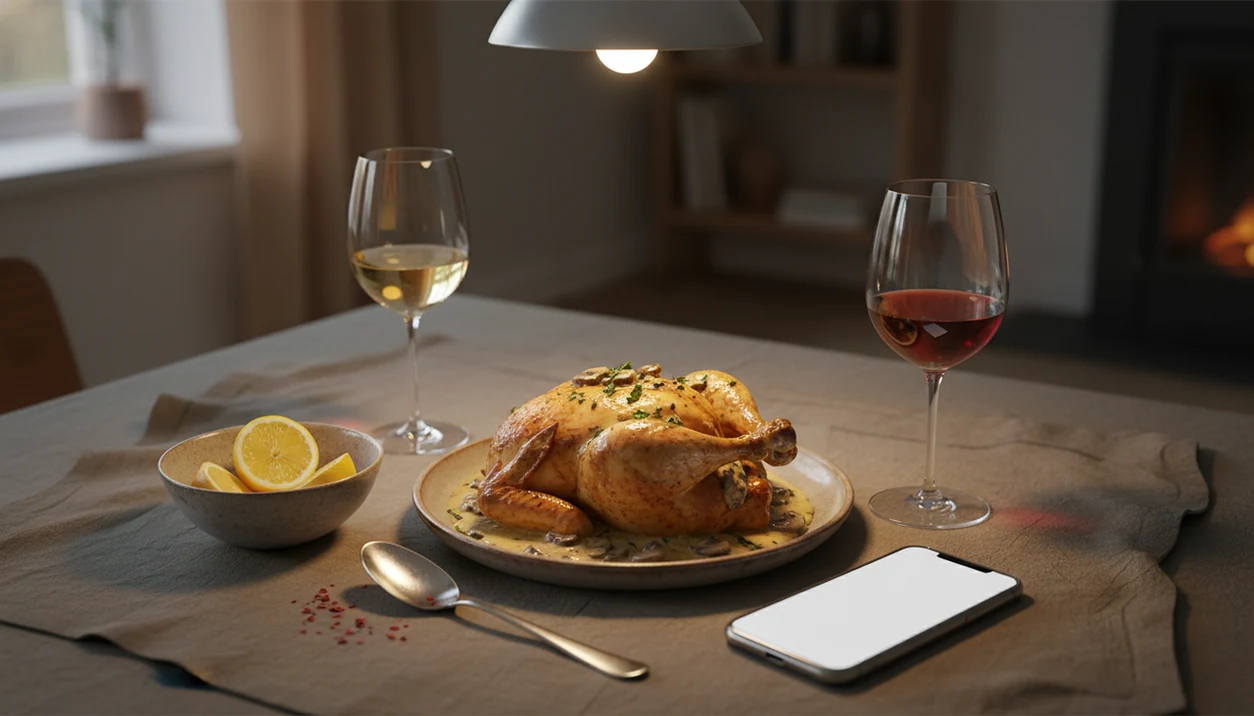
An app to help pair wine with food looks at sauce, spice level, sweetness, acidity, tannin, and texture before suggesting a bottle or style. That is more useful than the old “red with meat, white with fish” shortcut, especially when the same chicken can taste creamy, smoky, lemony, or hot.
Definition: A food wine pairing app is a mobile tool that uses AI, flavor-profile databases, and personal taste learning to recommend specific wines for any dish based on ingredients, cooking method, sauce, and seasoning rather than generic rules.
TL;DR
- Modern pairing apps analyze sauce, spice, acidity, tannin, and texture, not just the protein on your plate.
- AI-driven apps like DiVino learn from your ratings so recommendations get more accurate over time.
- Ingredient-level inputs, such as creamy mushroom sauce versus spicy tomato sauce, change the recommended wine even for the same main dish.
- No app replaces your own palate, budget, or local availability. Treat it as a decision-support tool, not a rulebook.
What a Food Wine Pairing App Actually Does
A food wine pairing app is a mobile tool that matches wine to food using AI, flavor data, and user feedback. It exists because real meals are more complicated than protein categories.
Start with the label, then look at the plate. A grilled salmon with lemon butter wants a different wine than the same salmon with miso glaze. The app reads grape variety, region, body, acidity, tannin, sweetness, cooking method, sauce, and spice. That is the useful shortcut, not a rule.
A study of Italian consumers found that 62% considered wine essential for meals and social occasions source. That helps explain why pairing advice has moved from books to phones.
Tools like DiVino can scan labels, take a meal description, and return pairing ideas quickly. The better input is not “chicken.” It is “roast chicken with tarragon cream and mushrooms.” That detail changes everything.
At-a-Glance: How Wine Pairing Apps Compare
Most pairing apps share one goal: reduce the guesswork between the shelf, the menu, and the meal. The differences show up in how much context they accept and whether they learn from you.
| Feature dimension | Basic pairing app | Label scanner app | AI sommelier-style app |
|---|---|---|---|
| Label scanning | Sometimes | Yes | Yes |
| Ingredient-level input | Limited | Often limited | Strong |
| Closed-loop learning | Rare | Sometimes | Yes |
| Offline mode | Partial | Limited | Usually limited |
| Chat-based sommelier | No | Sometimes | Yes |
Pew Research Center reported 85% smartphone ownership among U.S. adults in 2021 source, so phone-first pairing is not a niche behavior anymore. At a tasting counter, I’ve watched someone scan the tiny vintage year above the barcode before asking about dinner. That is exactly where a best wine pairing app earns its place.
How an AI Wine Pairing App Works Behind the Scenes
An AI wine pairing app works by converting labels, menus, and dish descriptions into structured flavor information. Then it compares that information against wine profiles and your past ratings.
Image recognition identifies a bottle from the front label. OCR, or optical character recognition, turns a restaurant wine list into readable text. Natural-language processing interprets phrases like “spicy tomato sauce” or “crispy pork with apple mostarda.” In plain terms, the app is translating messy dinner language into acidity, tannin, sweetness, body, and intensity.
Flavor-Profile Matching Engine
The matching engine maps wine traits to food traits. Bright acidity can lift fried food or goat cheese. Soft tannins can suit roasted poultry. A young Nebbiolo, with that chalky grip on the gums, may fight a delicate fish but work with braised meat.
Closed-Loop Taste Learning
Closed-loop learning means your feedback changes future suggestions. If you mark a pairing as too tannic or too sweet, the model adjusts. ACM research on AI wine recommenders found personalized algorithms can improve perceived recommendation quality compared with generic models source.
How To Use DiVino To Pair Wine With a Meal
To use DiVino to pair wine with a meal, give the app both the wine context and the food context. Sauce-level and spice-level detail matter more than a tidy dish name.
- Open DiVino and scan a wine label or restaurant menu.
- Describe your dish at the ingredient and sauce level, such as “pasta with spicy tomato sauce” or “halibut with beurre blanc.”
- Review the AI-generated pairing suggestions, including tasting notes and style reasons.
- Rate the pairing after your meal, especially if it felt too sharp, too tannic, or too sweet.
- Browse saved pairings in your cellar or history when a similar meal comes back.
The table gets quiet for a second when friends debate bottles over shared appetizers. Use the app there as a translator, not a judge. For dinner-specific situations, an app that pairs wine with dinner is often easier than searching grape names one by one because the meal is the starting point.
Why Sauce, Spice, and Acidity Change the Pairing
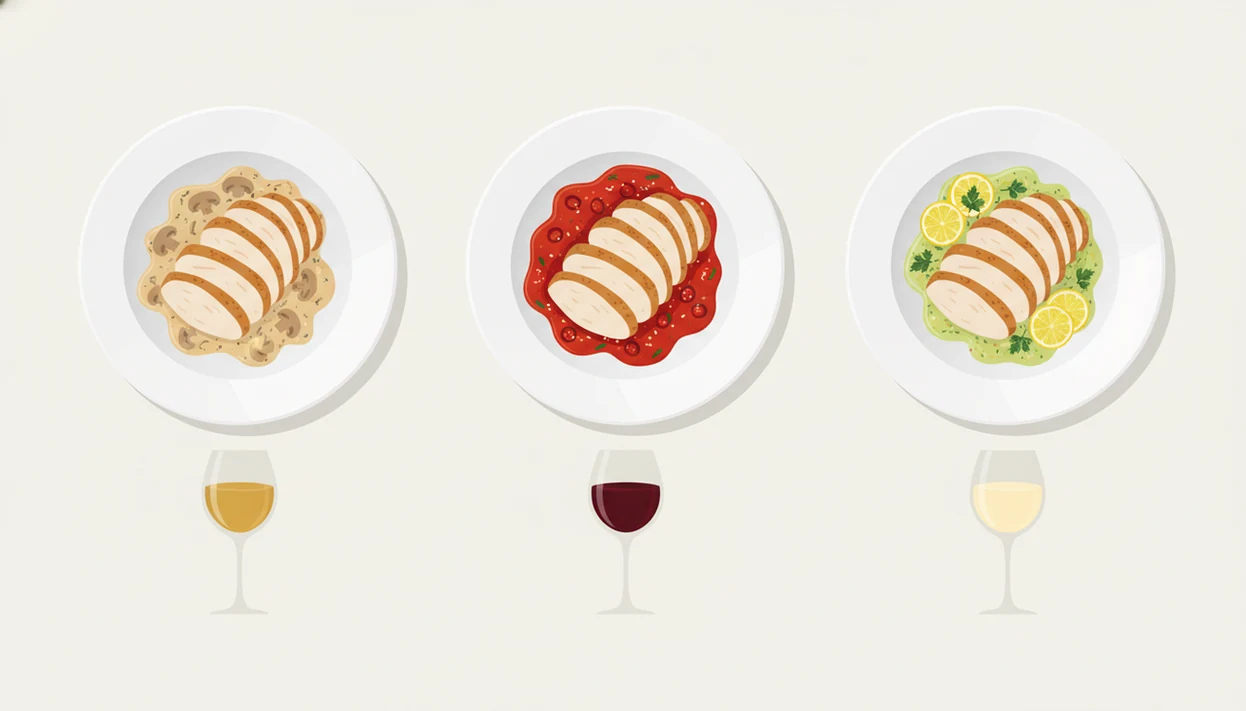
Sauce, spice, and acidity often change the pairing more than the main ingredient. The same protein can need two different wines once the seasoning changes.
- Same protein, different sauce: Grilled chicken with creamy mushroom sauce can suit Chardonnay or Pinot Noir, while spicy tomato sauce may need Barbera, Chianti, or rosé.
- Sweetness changes heat: A little residual sugar can soften chile heat. Bone-dry, high-tannin reds can make spice feel harsher.
- Acidity cuts richness: Lemon-zest acidity works beautifully with goat cheese, cream, fried food, and oily fish.
- Tannin needs weight: Tannic reds usually need fat, protein, or deep savory flavors to feel balanced.
- Texture matters: A light, crisp wine can disappear beside a dense stew, while a full-bodied wine can flatten a delicate salad.
For beginners, sauce-first pairing is often better than protein-first pairing because sauce carries salt, sweetness, acid, fat, and heat. For pasta examples, a tool to pair wine with pasta should ask about tomato, cream, pesto, or seafood before naming a bottle.
Common Myths About Food Wine Pairing Apps
Food wine pairing apps are not just digital versions of “red with meat, white with fish.” Good ones ask what you are actually tasting, then match the wine to the full dish.
One myth is that only experts benefit. Beginners may benefit more, because the app can explain why cherry-skin bitterness in Sangiovese works with tomato and herbs. Another myth says label identification alone is enough. It is not. A bottle may be clear, but the dish still matters.
The awkward dinner-table question, “Is Rioja the grape or the place?” is exactly the kind of moment an app can soften. It can say Rioja is the region, Tempranillo is often the grape, and grilled lamb is a common match.
A strong Wine Identifier App should deliver label recognition, menu scanning, pairing logic, and taste learning, not certainty, status, or a replacement for your own preference.
Common Mistakes When Using an App To Pair Wine With Food
The most common mistake is entering only the protein. “Steak” is thin information. “Steak with peppercorn cream sauce” gives the app fat, spice, and texture to work with.
Another mistake is never rating the result. If you skip feedback, the learning algorithm stays hungry. Hungry data. A quick “too oaky” or “loved the acidity” can improve the next suggestion.
Some users treat the output like a rulebook. Don’t. Pairing advice is a starting point, especially when the bottle is unavailable or outside your budget. Set a price range before you fall in love with a rare Burgundy.
Popularity can also mislead. High-rated wines are not always right for your meal, and emerging styles can be more interesting with the food. If you’re choosing for beef, a focused tool to pair wine with steak should still account for sauce, doneness, and seasoning.
Limitations
Wine pairing apps are useful, but they cannot model every bottle, dish, person, or table. Global wine consumption reached about 236 million hectoliters in 2023, according to the OIV source, and that scale creates real data gaps.
- Niche regional dishes may receive broad recommendations instead of precise local matches.
- Obscure wines, tiny producers, and new vintages may be missing from databases.
- Mood, company, family tradition, and nostalgia are not easy for algorithms to measure.
- Popular wines can be over-recommended, while lesser-known grapes get less visibility.
- Label scanning needs good lighting, reliable internet, and current wine records.
- Condensation, glare, or a torn back label can reduce scan accuracy.
- Allergy, health, medication, pregnancy, and alcohol-consumption concerns require independent professional guidance.
I have turned a bottle under a kitchen pendant light just to find the tiny appellation line. Apps help, but the real world is smudged, dim, and sometimes out of stock.
Read more
FAQ
Are wine pairing apps free?
Many wine pairing apps offer free tiers with optional paid features. Premium tools may add label scanning, cellar history, menu scanning, or deeper personalization.
Can a pairing app work offline?
Most AI-driven pairing apps need internet for label recognition, menu scanning, and database lookups. Some saved notes or previous pairings may remain available offline.
Do pairing apps learn my taste?
Yes, some pairing apps use closed-loop learning from ratings, likes, dislikes, and tasting feedback. The more specific your feedback, the more personal the suggestions can become.
Does the sauce affect wine pairing?
Yes, sauce, spice, and seasoning often matter more than the protein. Chicken with cream sauce and chicken with spicy tomato sauce can need different wines.
Can beginners use a wine pairing app?
Yes, pairing apps are designed for beginners as well as experienced drinkers. They can explain grape names, regions, tasting notes, and why a pairing works.
Are wine pairing apps available on iPhone and Android?
Most modern wine pairing apps are designed for mobile use, including iPhone and Android access where available. Check the current app store listing for your region and device.
How accurate are AI wine pairings?
Personalized AI pairings can outperform generic suggestions when the app has good data and user feedback. Accuracy may drop with niche dishes, obscure wines, or incomplete meal descriptions.
Can I scan a restaurant menu for pairings?
Yes, DiVino-style apps can scan restaurant menus and compare wine options against your meal. Menu scanning works best when the wine list is clear and the app has internet access.
Do pairing apps handle dietary restrictions?
Most pairing apps are not medical or allergy tools. Users should independently verify allergy, health, medication, pregnancy, and alcohol-consumption concerns.