Tool To Pair Wine With Pasta By Sauce Type
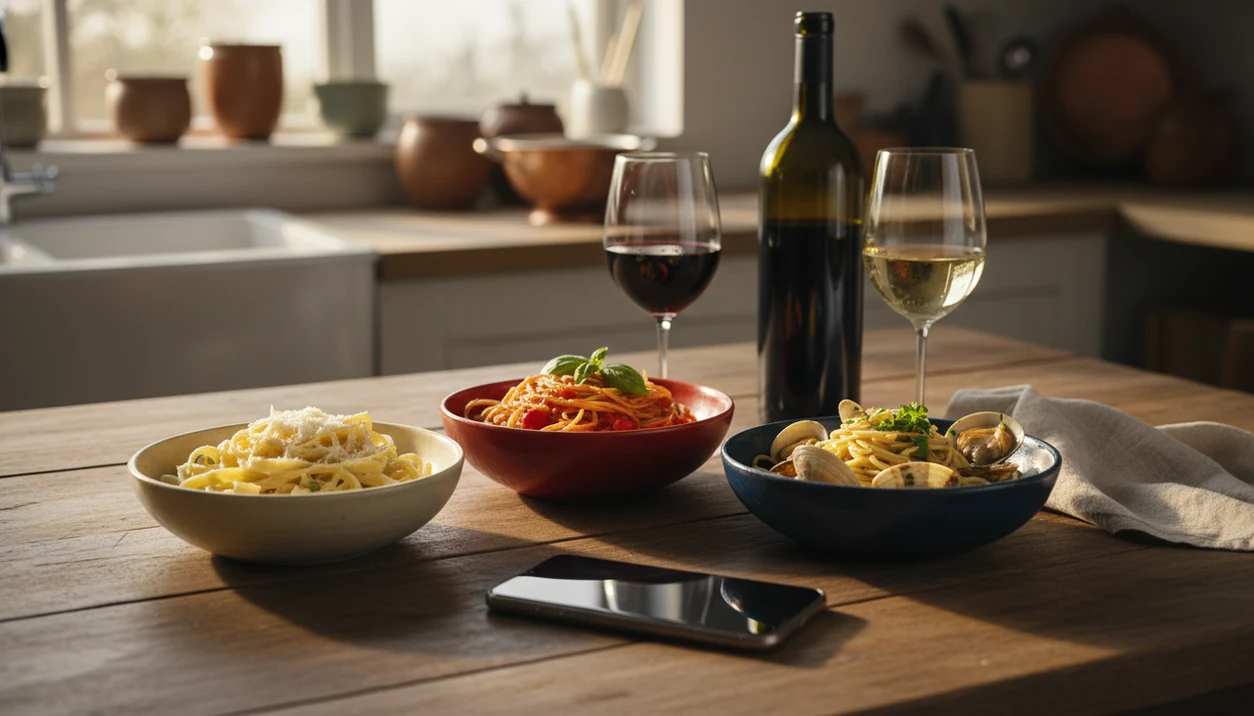
The best tool to pair wine with pasta matches the wine to your sauce, not the noodle shape, by analyzing acidity, creaminess, spice, herbs, and protein. DiVino AI sommelier app lets you scan a wine label or restaurant menu and see how well that bottle fits your specific pasta sauce, replacing guesswork with structured, sauce-first pairing logic.
Definition: A tool to pair wine with pasta is an app or interactive guide that recommends wine styles based on your pasta sauce's dominant flavor profile, including acidity, fat, umami, spice, and herbs, rather than the pasta shape alone.
TL;DR
- Always match wine to the sauce, not the pasta shape, pasta is neutral; the sauce drives the pairing.
- DiVino AI sommelier scans labels and menus, then evaluates how well a bottle fits your sauce style.
- Follow a five-step workflow: identify sauce type, assess acidity and weight, check protein, scan the bottle, and refine with feedback.
What a Tool To Pair Wine With Pasta Actually Does
A tool to pair wine with pasta maps a sauce profile to wine styles, usually through an app, chart, or interactive guide. The useful ones start with the sauce because plain pasta brings texture, not much flavor intensity.
Spaghetti, rigatoni, and pappardelle can all carry tomato, cream, seafood, or ragù. That is why shape alone tells you very little. A bright tomato sauce asks for acidity; a butter-heavy Alfredo asks for freshness or roundness; clams and garlic need a different bottle again.
The real question is wine with pasta sauce.
The U.S. consumed 1.118 billion gallons of wine in 2022, according to Wine Institute data compiled from U.S. government and industry sources (https://wineinstitute.org/our-industry/statistics/us-wine-consumption/). That scale helps explain why pairing tools exist. Most people are not studying appellations before dinner. They are turning a bottle around under a kitchen pendant light, trying to find the tiny region line before the pasta cools.
Five Facts About Wine With Pasta Sauce Pairing
- Tomato sauce needs acidity. Chianti, Sangiovese, and Barbera work because their bright acidity does not collapse beside tomato. Cherry-skin bitterness in Sangiovese can also echo slow-cooked red sauce without making it taste sweet.
- Creamy sauces need lift or softness. Oaked Chardonnay, Trebbiano, Soave, and low-tannin reds can handle butter, cheese, and cream. Heavy tannin often feels dry and awkward with dairy.
- Seafood pasta prefers lean whites. Pinot Grigio, Verdicchio, and Albariño bring citrus, salt, and clean acidity. A big red can make fish taste metallic.
- Meat ragù can take structure. Bolognese, pork sugo, and beef ragù have enough fat and umami for Montepulciano, Primitivo, Nebbiolo, or Sangiovese. Young Nebbiolo may still leave that chalky grip on the gums.
- AI tools classify the sauce first. A pasta wine pairing app can sort tomato, cream, seafood, herb-oil, meat, and spice into wine categories automatically, which is a useful shortcut, not a rule.
How Sauce-Based Wine Pairing Works
Sauce-based pairing works by matching the dominant sauce variables to wine traits. The main variables are acidity, fat or cream, umami, spice level, herb intensity, and protein type.
Sauce Variables That Drive Wine Selection
Acid balances acid, so tomato sauce usually needs a wine with equal or higher freshness. Fat needs acidity, bubbles, or a rounded white to keep the dish from feeling heavy. Tannin can work with beef ragù, but it often clashes with fish. Spice is different again; high alcohol can make heat feel sharper.
Italy produced 50.3 million hectoliters of wine in 2022, the highest national output that year, according to the OIV State of the World Vine and Wine Sector report (https://www.oiv.int/sites/default/files/documents/OIVStateoftheworldVineandWinesectorin2022_2.pdf). Many familiar pasta pairings come from that long table culture, but they remain heuristics. Your own palate still matters.
How Label-Scanning Tools Map Sauce Profiles to Wine Traits
Label-scanning tools classify the sauce input, then cross-reference grape, region, body, acidity, tannin, sweetness, and flavor notes. Good sauce-aware tools deliver bottle guidance and menu scanning, not a promise that every palate will agree.
For home cooks, sauce-first pairing is often easier than grape-first pairing because the food’s acidity, fat, and protein are already visible in the pan. For broader pairing logic beyond pasta, the same principle appears in our guide to how food and wine pairing works.
Requirements Before You Pair Wine With Pasta
Before you use a pairing tool, know what is actually in the sauce. Start with the base: tomato, cream, oil, broth, or meat stock. Then note protein, such as seafood, pork, beef, sausage, mushrooms, or none.
You also need the bottle or menu in front of you. A smudged back label after condensation has softened the paper is still useful if the app can read the producer, grape, or region. On a restaurant list, the by-the-glass column on a chalkboard can be enough to compare styles.
Use a label-scanning wine app if you want bottle scanning and menu reading in the same workflow. In a 2018 U.S. survey, 36% of adults reported drinking wine in the past month (https://news.gallup.com/poll/237908/americans-drinking-alcohol.aspx), so many pair pasta casually, without formal guidance. A tool simply gives that casual choice more structure.
How To Use a Tool To Pair Wine With Pasta Step by Step
Use the tool after you understand the sauce, not before. The app can read a label, but it cannot taste whether your arrabbiata is mildly warm or properly fiery unless you tell it.
Step 1: Classify Your Pasta Sauce Type
- Identify your sauce category: Choose tomato, cream, oil-herb, meat, seafood, pesto, or spicy as the starting point.
Step 2: Gauge Sauce Acidity and Weight
- Assess acidity and weight: Decide whether the sauce is sharp, rich, light, buttery, brothy, or slow-cooked.
Step 3: Factor In Protein, Spice, and Herbs
- Note protein and seasoning: Add seafood, beef, pork, mushrooms, chili, basil, sage, or rosemary, since these change the wine match.
Step 4: Scan the Wine Label With DiVino
- Scan the wine label or menu: Use Wine Identifier App to identify the bottle, grape, region, vintage clues, and likely style.
Step 5: Review Pairing Score and Alternatives
- Review the pairing score: Compare the suggested match with alternatives, especially if the first bottle looks too tannic or too sweet.
Step 6: Log Feedback for Smarter Future Pairings
- Log your preference: Save whether the pairing worked, so future pasta wine pairing app recommendations learn from your table.
Pasta Wine Pairing Chart by Sauce Category
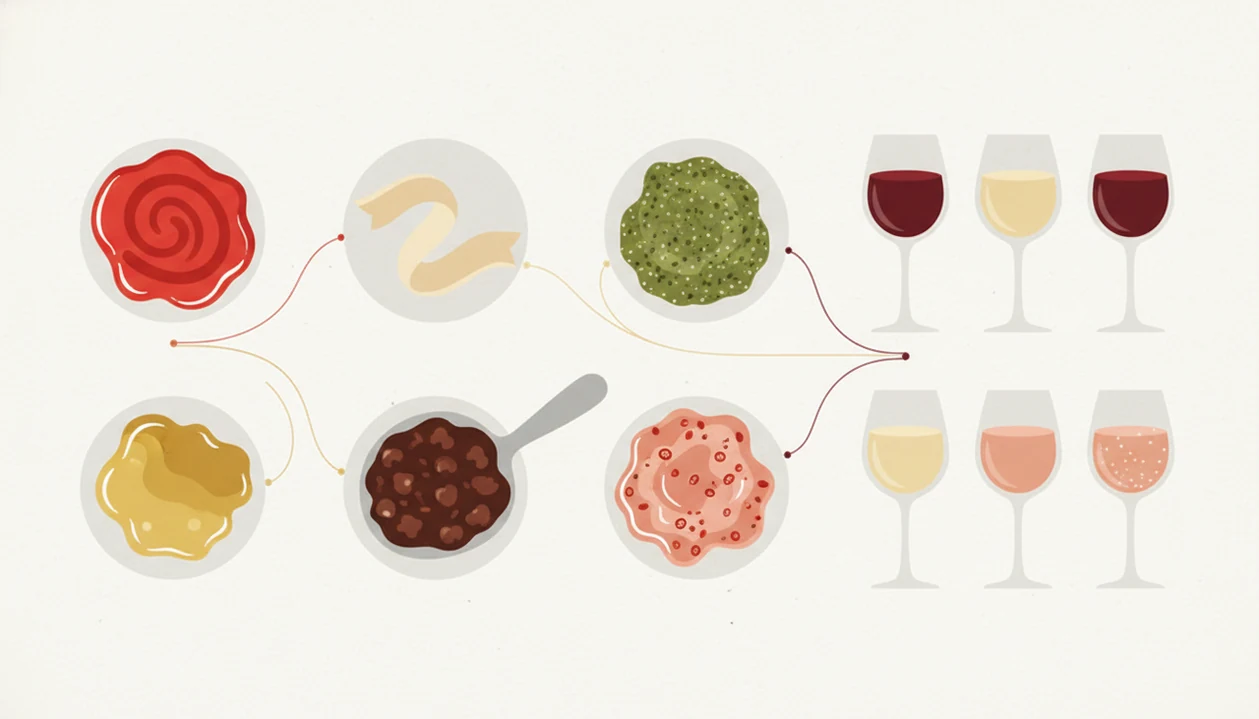
A pasta wine pairing chart should group wines by sauce category, not noodle shape. Use this as a practical first pass, then adjust for spice, protein, and personal taste.
| Pasta sauce category | Good wine styles | Why it works |
|---|---|---|
| Tomato sauce | Chianti, Sangiovese, Barbera | High acidity keeps tomato bright, not flat |
| Cream or Alfredo | Oaked Chardonnay, Trebbiano, Soave | Round whites match richness while freshness cuts fat |
| Pesto or herb-oil | Vermentino, Sauvignon Blanc, dry rosé | Green herbs need citrus, salinity, or dry red-fruit lift |
| Seafood | Pinot Grigio, Verdicchio, Albariño | Lean whites protect delicate fish and shellfish flavors |
| Meat ragù or bolognese | Primitivo, Nebbiolo, Montepulciano | Structure and darker fruit suit fat, meat, and umami |
| Spicy arrabbiata | Off-dry Riesling, Lambrusco, Zinfandel | Light sweetness or fruit softens chili heat |
For a wider dinner workflow, an app to help pair wine with food uses the same sauce-first logic across more dishes.
Common Mistakes When Pairing Wine With Pasta
The most common mistake is choosing red wine by default. Red can be right, but it is not automatic. A delicate lemon, parsley, and clam pasta will usually be happier with Verdicchio than with a dense Cabernet.
Another mistake is matching wine to shape. Penne does not require one wine. Penne with vodka sauce, sausage ragù, or pesto asks three different questions.
Watch the tannin.
Very tannic or high-alcohol reds can overwhelm tomato and herb sauces. They may also make chili feel hotter. Protein matters too; fish and beef change the pairing dramatically, even when the pasta shape stays the same. In the European Prospective Investigation into Cancer and Nutrition, researchers used 24-hour dietary recalls from more than 25,000 adults and documented mixed dishes, including pasta and rice dishes, as common eating occasions across countries (https://doi.org/10.1038/sj.ejcn.1602933).
No tool gives one fixed answer. A best wine pairing app should help you narrow the field, then learn from what you liked.
Verify Your Pasta and Wine Pairing Before Serving
Verify the pairing with one small bite and one small sip before you pour for the table. The wine should feel at least as bright as the sauce if tomato, lemon, vinegar, or white wine is in the pan.
If the sauce is creamy, check whether the wine refreshes your mouth after the bite. If the sauce is spicy, notice whether the wine cools the heat or sharpens it. If the first match feels off, compare the alternative styles and try the closest bottle available.
This is not fussy.
Rate the pairing after dinner, especially if tannin, bitterness, sweetness, or oak stood out. That note is more useful than a generic five-star score. For mixed meals beyond pasta, an app that pairs wine with dinner can help apply the same check before serving.
Limitations
Pairing tools are helpful, but they simplify a deeply personal choice. Use the recommendation as a starting point, then let the food and your palate correct it.
- Individual sensitivity to bitterness, tannin, sweetness, or acidity can make a recommended wine feel wrong.
- Pairing heuristics come from expert consensus and tradition, not large controlled trials.
- AI suggestions depend on training data; mislabeled bottles, unusual grapes, and nonstandard recipes reduce accuracy.
- Many apps focus on Italian and widely available international wines, so regional grapes can be under-represented.
- Quick answers can oversimplify, such as “tomato sauce equals Chianti,” and miss added cream, smoked meat, anchovy, or chili.
- Restaurant glassware, serving temperature, and bottle age can change how a pairing tastes.
- No app replaces repeated tasting. Personal experimentation is how you learn whether you prefer lemon-zest acidity with goat cheese or a softer white beside cream sauce.
A tool can shorten the path. It cannot taste for you.
Read more
FAQ
Does pasta shape affect wine pairing?
Pasta shape matters less than sauce. Match wine to sauce acidity, richness, protein, herbs, and spice.
What wine goes with tomato pasta?
Tomato pasta usually pairs well with medium-bodied, high-acid reds such as Chianti, Sangiovese, or Barbera. The wine should match the tomato’s brightness.
What is the best wine for pasta Alfredo?
Pasta Alfredo pairs well with oaked Chardonnay, Trebbiano, or other creamy whites with enough freshness. Low-tannin reds can work if the sauce includes mushrooms or chicken.
Should I drink white or red wine with pasta?
It depends on the sauce. Seafood and light herb sauces often favor white, while meat ragù and bolognese usually support red.
Can an app choose wine for pasta?
Yes, AI apps like Wine Identifier App can analyze sauce profiles and suggest matching wine styles. The result is guidance, not a fixed rule.
What wine pairs with spicy pasta?
Spicy pasta often pairs well with off-dry Riesling, Lambrusco, or fruit-forward lighter reds. Avoid high-alcohol wines if chili heat is strong.
Does bolognese need expensive wine?
Bolognese does not need expensive wine. Medium-priced Sangiovese, Montepulciano, or Barbera can pair well if the wine has enough acidity and structure.
Is rosé good with pasta?
Dry rosé can be good with pesto, light vegetable pasta, seafood pasta, and tomato sauces with moderate intensity. Choose a crisp style rather than a very sweet one.