Prices and value
Wine search app: price search site or DiVino?
A wine search app comes in two kinds. A price search site tells you which shops list a bottle and at what asking price; DiVino starts from the bottle in your hand and gives you the wine, an estimated value, a drinking window, pairings and a cellar. Pick by the question you are asking.


By AppDivino team · Updated
Who should pick which
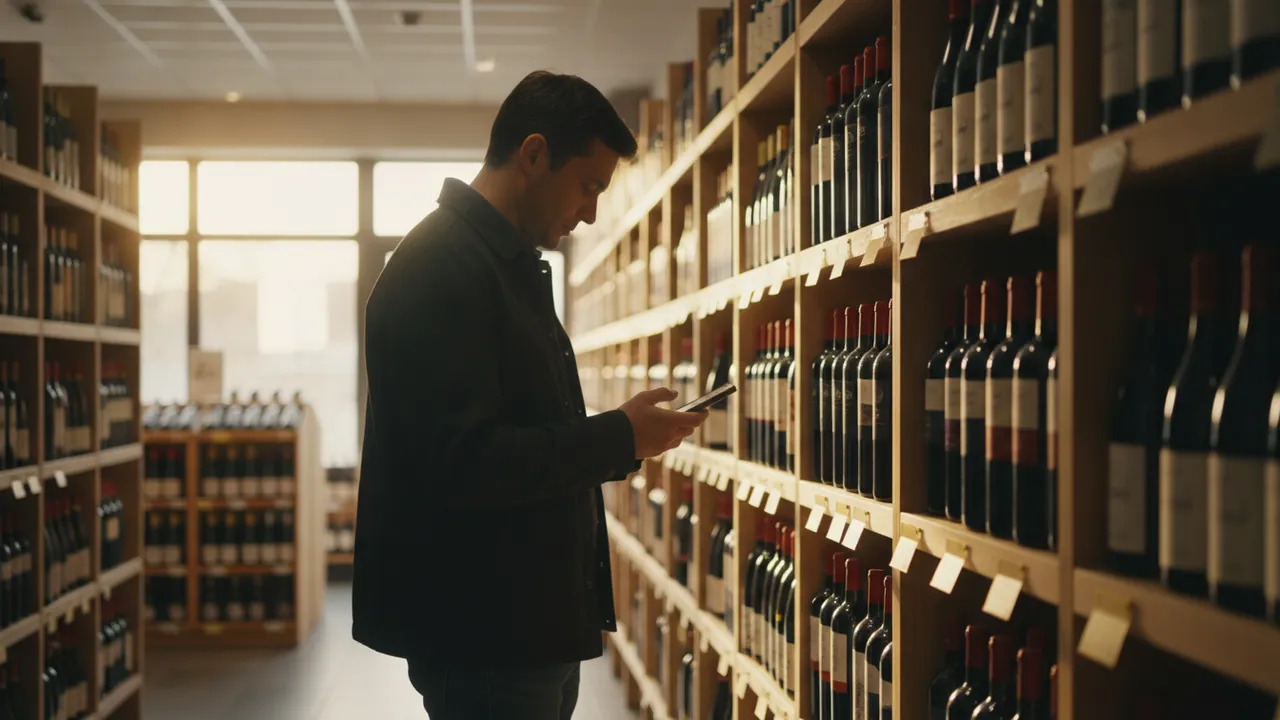
If you already know the exact wine and want to buy it, a dedicated price search site is the right tool. If you are holding a bottle, standing at a shelf or sitting in a restaurant and want to know what it is and what to do with it, DiVino is. Many people end up using both, and that is a perfectly sensible setup.
DiVino is not affiliated with any price search site.
The two options side by side
| Attribute | Dedicated price search site | DiVino |
|---|---|---|
| Starting point | A wine name you type in | A photo of the label |
| Main answer | Which merchants list it, and the asking price | What the wine is, plus its estimated value |
| Price information | Listed prices from shops | Estimated bottle value, not an appraisal |
| Drinking window | Not its focus | Past peak, At peak, Ready, or Hold: those are the four drinking stages |
| Pairing help | Not its focus | AI Sommelier chat |
| Restaurant lists | Look up bottles one by one | Photograph the list and find bottles that fit your taste |
| Cellar | Limited | Racks, shelves, quantities, search, value tracking |
| Cost | Free, with a paid Pro tier | You can begin at no cost, and PRO costs $59.99 for a full year or $5.99 for each week. |
Where a price search site wins and loses
The strength is coverage of shops. Wine-Searcher is the best-known example: it collects merchant listings, shows average listed prices and aggregated critic scores, and helps you see who sells a specific vintage. When you need to buy, that is the information you want, and we would not pretend DiVino replaces it.
Where it loses is the moment before you know what you have. You need a good name to type, and a half-remembered label in Portuguese is a poor search query. A listing is also an asking price, not a sale. It can be out of stock, taxed differently, or not shipped to your address, so look at several offers instead of grabbing the lowest one.
These are the usual jobs where wine price apps of this kind do well:
- Finding which shops carry an exact vintage
- Comparing asking prices across sellers
- Checking whether a shelf price looks in line with the market
Where DiVino wins and loses
DiVino is built around the bottle in your hand. You photograph the label and it identifies the producer, wine, vintage and key details, then shows tasting notes, community and critic ratings, an estimated bottle value and a drinking window. Think of checking a bottle's value as one step in a short chain, not the whole job: what is it, is it ready, what do I eat with it?
It is a useful alternative to a wine rating app when a star score is not enough and you want to know whether to open the bottle tonight or hold it. The AI Sommelier chat handles regions, grapes, serving and what to open, and the cellar keeps your bottles, locations and notes on the device with no account needed.
It loses on shop coverage. DiVino gives you an estimate, not a list of every merchant and their price, so for where to buy a wine you scanned you will often want a price search site as a second step. The limits are plain: results depend on a clear, well-lit label, similar labels can have the vintage misread so check the year on the glass, and a scan cannot prove authenticity, provenance or storage condition.
DiVino is a wine search app that runs on iPhone and iPad with iOS 18 or later. On the other side, Android users are covered too, since the wine price scanner DiVino is on Google Play.
Which one for your situation?
A weeknight at home
DiVino. You have a roast chicken in the oven and a bottle from the rack; you want to know if it is ready and what to serve. A price site has nothing to say about that.
A restaurant
DiVino first: photograph the list and find bottles that fit your taste and the meal. Then, if you are curious about markup, a price site gives retail context, though the lowest shop price is not what the restaurant paid.
A collector
Both. Use DiVino to scan bottles into the cellar, follow estimated value and decide hold or open. Use a price search site to see live merchant listings before you buy or sell. For anything rare, neither replaces a professional who can inspect the bottle.
A gift
Start with DiVino at the shelf to identify bottles and see the drinking window, so you do not hand over something past its best. Once you have chosen a wine, a price search site shows where it is cheapest to buy.
Frequently asked questions
What is the best app to search for wine?
The best wine search app depends on your question. A price search site suits you when you want to compare shop listings for a known bottle, while a label scanner suits you when you hold an unknown bottle and want to know what it is.
How do I find a wine by its label?
Photograph the front label in good light, or type the producer, wine name and vintage into a search engine. The producer, the appellation or region and the vintage year are the details that narrow a search fastest.
Are wine price search sites accurate?
A price search site shows asking prices from shops, which can differ by store, location, shipping and stock. Treat the listed price as a market snapshot, not a guaranteed price you will pay or receive.
How can I tell if a wine is a good deal?
Compare the price against several shops for the same vintage and bottle size, then check critic and community ratings for that vintage. A low price on a weak vintage is rarely a bargain, so match the year carefully.
Can DiVino help me decide whether to drink or keep a bottle?
Yes. After you scan a label, DiVino shows an estimated value and a drinking window marked Hold, Ready, At peak or Past peak. Results depend on a clear label, and you should check the vintage year on the bottle.