Where To Buy Scanned Wine Safely And Legally


Download App: where to buy scanned wine
To find where to buy scanned wine, scan the label, identify the exact bottle, then verify the result through a trusted retailer lookup tool or merchant network before purchasing. A successful scan does not guarantee availability, so confirm shipping compliance, return terms, vintage match, and age-verification rules for your address.
Buying scanned wine means using a wine label-scanning app to identify a bottle and then locating a licensed retailer, either within the app's marketplace or through an external merchant, where you can legally purchase and receive that exact wine.
- A wine scan identifies a bottle but does not prove it is in stock or available to ship to your address.
- Distinguish between in-app marketplaces that sell directly and retailer lookup tools that route you to outside merchants.
- Always verify retailer licensing, shipping legality, vintage accuracy, and age-restricted delivery before completing a purchase.
What Buying Scanned Wine Actually Means
Buying scanned wine is a chain, not a single click: label scan, bottle identification, retailer lookup, then purchase. If one link is weak, the checkout can fail or send you toward the wrong bottle.
Start with the label. The app reads the producer, cuvée, region, and sometimes the vintage. Then it tries to match that information to a wine database and a seller. An in-app marketplace, such as Vivino, may handle the shopping path inside its own buying flow. A search-and-compare tool, such as Wine-Searcher, usually points you toward outside merchants.
The scan is only the first clue.
I still turn bottles under a kitchen pendant light to find the tiny appellation line before trusting a result. A scan can identify Barolo, but miss the vineyard or year. For buying, that detail matters more than the pretty front label.
5 Facts About Wine Retailer Lookup After Scanning
Five facts matter most after a wine scan, because the scan result is only as useful as the seller behind it.
- Scan accuracy varies by vintage, label condition, lighting, and the app’s recognition algorithm. A smudged back label after condensation has softened the paper is harder to read than a clean store shelf bottle.
- A “buy” button does not guarantee the lowest price or legal delivery to your address. Shipping fees can change the real total quickly.
- Marketplace apps and search-and-compare tools handle fulfillment differently. One may sell through a partner retailer; another may only list merchants.
- Regional alcohol rules can block purchase even after the wine is correctly identified. The bottle may exist, but not be shippable to you.
- App popularity is not the same as scanning accuracy or retailer quality. Vivino reports tens of millions of users (Vivino says it has more than 65 million users: https://www.vivino.com/about), but user count does not prove every label match is right.
For buyers, retailer verification is often more important than scan speed because the purchase depends on licensing, inventory, and delivery rules.
How Scan-to-Buy Wine Technology Works
Scan-to-buy wine technology works by turning a label image into structured wine data, then matching that data to merchant inventory. The basic sequence is image capture, OCR, visual feature extraction, database matching, and retailer lookup.
Label Recognition and Database Matching
OCR reads printed text. Visual feature extraction compares shapes, logos, label layout, and sometimes capsule or bottle cues. In plain terms, the app is asking, “Have I seen this label before, and do the words support the match?”
Vintage, producer, and appellation need to line up. Rioja on a label is the place, not the grape, which is exactly the dinner-table whisper that good wine tools should prevent. Tools like Wine Identifier App can help identify a bottle and save it to a cellar record before you decide where to buy.
Retailer Inventory Feeds and Price Comparison
After the match, the wine entry may connect to merchant inventory feeds, in-app stock, or a comparison database. Older vintages, partial labels, and uncommon producers often break this step. If price matters, compare the result with a tool that can compare wine prices.
Good divino ai wine identification and sommelier app workflows deliver label recognition, cellar context, pairing clues, and retailer lookup support, not a guaranteed legal sale from every scan.
Specific Guarantees When You Buy Wine From Scan Results
Trustworthy scan-to-buy platforms should guarantee clear information before checkout, not just a fast match. The minimum standard is an accurate producer and vintage match before the app routes you toward payment.
Look for the merchant’s legal name, license signals, shipping location, and customer service contact. If that information is hidden, pause. Age verification at delivery is not a courtesy; it is part of legal alcohol fulfillment in many places.
A proper listing should also show shipping cost, estimated delivery timing, breakage rules, and refund terms before you pay. I check these details the same way I check acidity on a tasting note: first the structure, then the finish. If a listing says “2018” but the bottle in your hand says “2019,” use a wine vintage lookup app before buying.
Transparent checkout beats a fast checkout.
What Is Not Covered by a Wine Scan Purchase
A wine scan purchase does not cover every risk in the buying process. It can identify a label and suggest sellers, but it cannot promise the lowest price across all merchants.
It also cannot assure that interstate or cross-border shipping is legal for your exact address. Alcohol rules can vary by state, country, carrier, merchant license, and product type. For U.S. direct-to-consumer wine shipping, verify the destination state against Wine Institute's state law summary: https://wineinstitute.org/our-work/compliance/direct-shipping-laws-for-wineries/. That is why the same wine may show a buy path for one person and no delivery option for another.
A scan also does not protect you from vintage mismatches caused by weak label reads. One digit can change price, maturity, and drinking window. Crowd-sourced ratings are useful shortcuts, not professional evaluations. And some discovery-focused apps stop after identification, leaving you to search outside retailers. When a price feels odd, it helps to check wine value from label before trusting the listing.
Common Myths About Where To Buy Scanned Wine
The biggest myth is that a scan match means the bottle is in stock somewhere. A database can remember a wine long after retailers have sold through that vintage.
Another myth: the buy button always shows the cheapest option. It may show a partner merchant, a sponsored path, or a seller with higher shipping. I have seen a modest Chianti look affordable until the delivery fee made it less appealing than the local shop.
Legal delivery is another trap. A correct label ID does not mean the listing can ship to your address. Retailers still need compliant fulfillment and age-restricted delivery.
Finally, high app download numbers do not prove scanner accuracy. A popular app can still confuse nearby vintages or miss a small producer. For a deeper accuracy discussion, the practical question is not just are wine scanner apps accurate, but accurate enough for purchase.
Wine Retailer Lookup Checklist Before You Buy
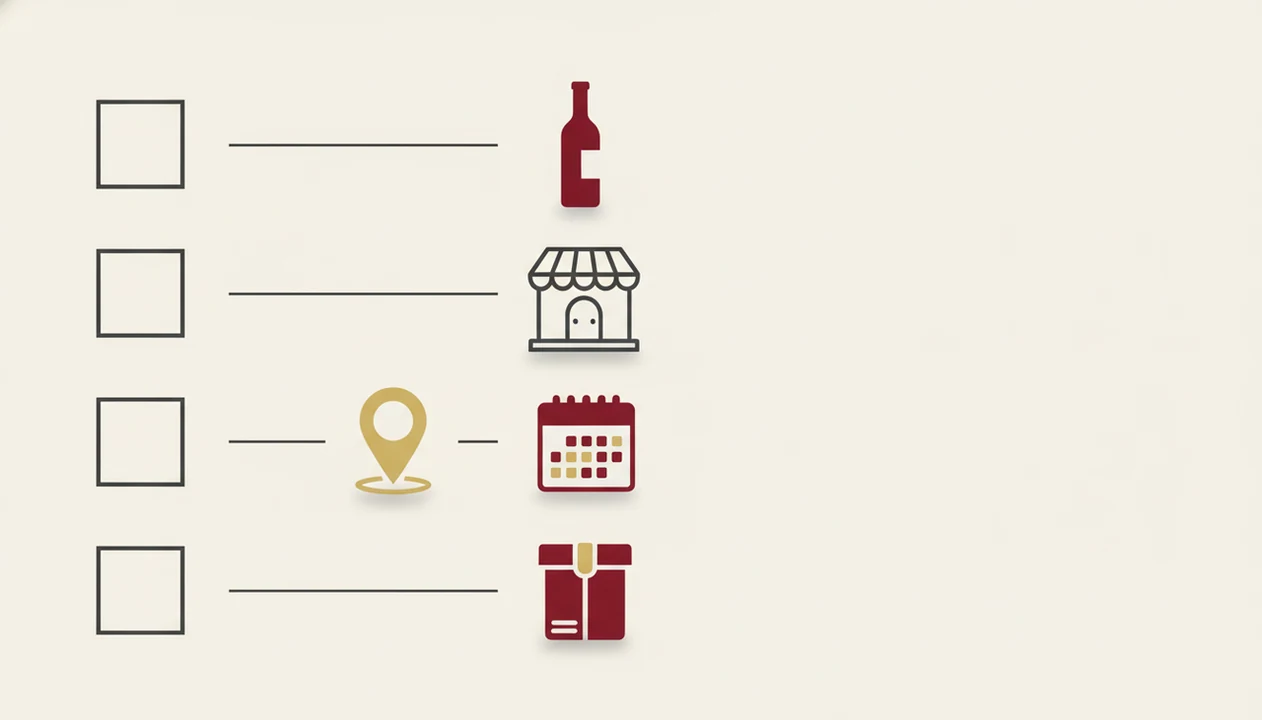
Use this checklist after scanning a label, especially when the wine is expensive, rare, or meant for a special meal. A wax-sealed bottle on a marble counter may look unmistakable, but checkout still needs evidence.
- Confirm the vintage and producer against the physical bottle, not only the app result.
- Check the merchant’s licensing signals, address, contact details, and recent independent reviews.
- Verify that the retailer can legally ship alcohol to your state, province, or country.
- Compare prices across at least two sources, including shipping and taxes.
- Confirm age-verification delivery requirements before choosing a delivery address.
- Review return, heat damage, and breakage policies before payment.
For a casual weeknight bottle, this takes two minutes. For a special-occasion magnum on the top shelf, it is worth slowing down. If the scan sends you to a very high or low price, compare it with an app that checks wine value.
Limitations
Scan-to-buy wine workflows are useful, but they have real limits. Treat them as decision support, not proof of purchase safety.
- Rare, older, or damaged wine labels often fail to scan correctly, especially when the label is torn, stained, or partly hidden.
- A successful scan does not confirm the wine is purchasable at that moment.
- Cross-border alcohol shipping is restricted or illegal in many jurisdictions.
- App store user counts and marketing claims do not measure scanning accuracy, retailer quality, or delivery reliability.
- Some apps emphasize discovery over checkout, so you may still need external retailer searches.
- Vintage mismatches can lead to buying the wrong year of the same wine.
- In-app ratings may reflect crowd taste, not storage condition, authenticity, or professional review.
Wine Identifier App can support identification and cellar tracking, but the final buying checks still belong with the licensed retailer. The quiet red flag is simple: no clear seller, no clear shipping rules, no purchase.
Read more
FAQ
Can every scanned wine be purchased?
No. A scan can identify a wine even when no retailer currently has it in stock or can legally ship it to your address.
Are wine scan apps accurate on old labels?
Older, damaged, stained, or partial labels can reduce scanner accuracy. Vintage details are especially easy to misread.
Is it legal to ship wine across states?
Wine shipping laws vary by state, country, retailer license, and carrier rules. A legal purchase in one location may be blocked in another.
Do wine apps guarantee the lowest price?
No. Marketplace apps and comparison tools surface different merchants, and shipping, taxes, and fees can change the final price.
What is a wine retailer lookup tool?
A wine retailer lookup tool helps match an identified bottle to merchants that may sell it. It differs from an in-app marketplace, which may route purchase and fulfillment through its own partner flow.
Can a wine identifier app help find scanned wine?
Yes. Wine Identifier App can help identify wine from a label and organize the bottle in a cellar or tasting record. It can support the pre-purchase workflow, but retailer legality and inventory still need verification.
Does a buy button mean the wine is verified?
No. A buy button usually means a merchant listing exists, not that the app has independently confirmed vintage, storage, licensing, or legal delivery.
Can a scan match the wrong vintage?
Yes. A scan can match the correct producer and wine name but return a different vintage, especially when the year is small, damaged, or missing from the visible label.