Check Wine Value From Label Details, Vintage, and Scan Data


Download App: wine value lookup
To check wine value from label details, scan the bottle with a label-recognition app like DiVino, then verify the producer, vintage, region, appellation, and classification against recent market prices. The result is an indicative value, not a guaranteed resale price, because storage history and bottle condition still matter.
Definition: Checking wine value from a label means using visible details, including producer, region, vintage, appellation, and classification, combined with app-based image recognition to estimate a bottle's current market price and drinking quality.
TL;DR
- Label scans use image recognition to match your bottle against pricing databases and show indicative market values.
- Producer name, region, vintage, and classification are the strongest value signals visible on a wine label.
- App-based estimates are starting points, not guarantees; bottle condition, storage history, and provenance still matter for collector value.
2026 Wine Label Value Checks for Stores, Cellars, and Auctions
Wine label value checks matter because wine buying is large, mobile, and often rushed. The global wine market was valued at about $441 billion in 2022 and is projected to reach around $699 billion by 2030, according to Grand View Research source.
A Pew Research Center survey found that 44% of U.S. adult drinkers used smartphones while shopping for alcohol to compare prices, read reviews, or look up product information source. Research on wine-label attention also shows that front-label cues strongly shape expectations and purchase choice when shoppers do not know the bottle source.
A shelf decision can happen fast.
In a store, you may only have the front label, a price tag, and a few seconds. At auction, a dusty Bordeaux label under kitchen light needs more than a guess. For deeper price research, a best wine price lookup app guide can help you compare scan results with merchant data.
Five Facts About Wine Label Value Signals
- Label-scan apps match images to bottles. They use image recognition and product databases to identify the producer, cuvée, vintage, and likely SKU before showing market prices.
- The strongest visible value signals are specific. Producer, region, appellation, vintage, grape variety, and classification usually matter more than label art or bottle weight.
- App prices are indicative, not final valuations. A scan usually cannot judge fill level, capsule damage, cellar temperature, humidity history, or proof of purchase.
- Different apps can disagree. One service may lean on merchant listings, another on community records, and another on auction data. For selling or investing, compare more than one source.
- AI tools can add drinking context. Tools like Wine Identifier App combine label recognition with sommelier-style guidance, so you see not only what the bottle may sell for, but whether it suits roast chicken, grilled fish, or a quiet Tuesday dinner.
For collectors, label reading is often easier than broad price searching because the label narrows the producer, place, and vintage before the database search begins.
Wine Label Recognition and Bottle Value Lookup Mechanics
Wine label recognition works by turning a bottle photo into structured wine data. The camera captures the label, then AI extracts text and visual features such as producer name, vintage numerals, crest shape, and appellation wording.
Under the surface, the system uses optical character recognition and image embeddings. In plain terms, it reads the words and compares the picture to known label patterns. The extracted data is then matched against databases of producers, vintages, and product SKUs. After that, the app may pull live or recent pricing from merchants, auction houses, and aggregators.
The best result is boring: exact producer, exact vintage, exact bottle.
Mismatches still happen. Wax, glare, torn corners, and similar-looking annual label designs can confuse the match. I’ve turned a bottle around under a kitchen pendant light just to find the tiny appellation line that separated a village wine from a broader regional bottling. If vintage is the main question, a wine vintage lookup app can narrow the problem before price enters the picture.
5 DiVino Steps to Check Wine Value From a Label
Here is how to use a label scan without treating the first number as truth.
- Open DiVino and point the camera at the front label. Hold the bottle still and avoid glare across the producer name or vintage.
- Confirm the matched wine, vintage, and producer details. Check the appellation line, bottle size, and cuvée name before trusting the result.
- Review the indicative price range and critic scores. Treat the range as market context, not as a sale offer.
- Check food pairing and drink window for drinking value. A modest bottle at the right moment can beat an expensive one opened too early.
- Cross-reference with a second source if selling or investing. Recent transactions matter more than a stale listing.
A good divino ai wine identification and sommelier app delivers identification, pricing context, pairing help, and cellar notes, not a formal auction appraisal. If you want the broader category view, compare it with an app that checks wine value.
Label Details That Change a Wine Bottle's Value Dramatically
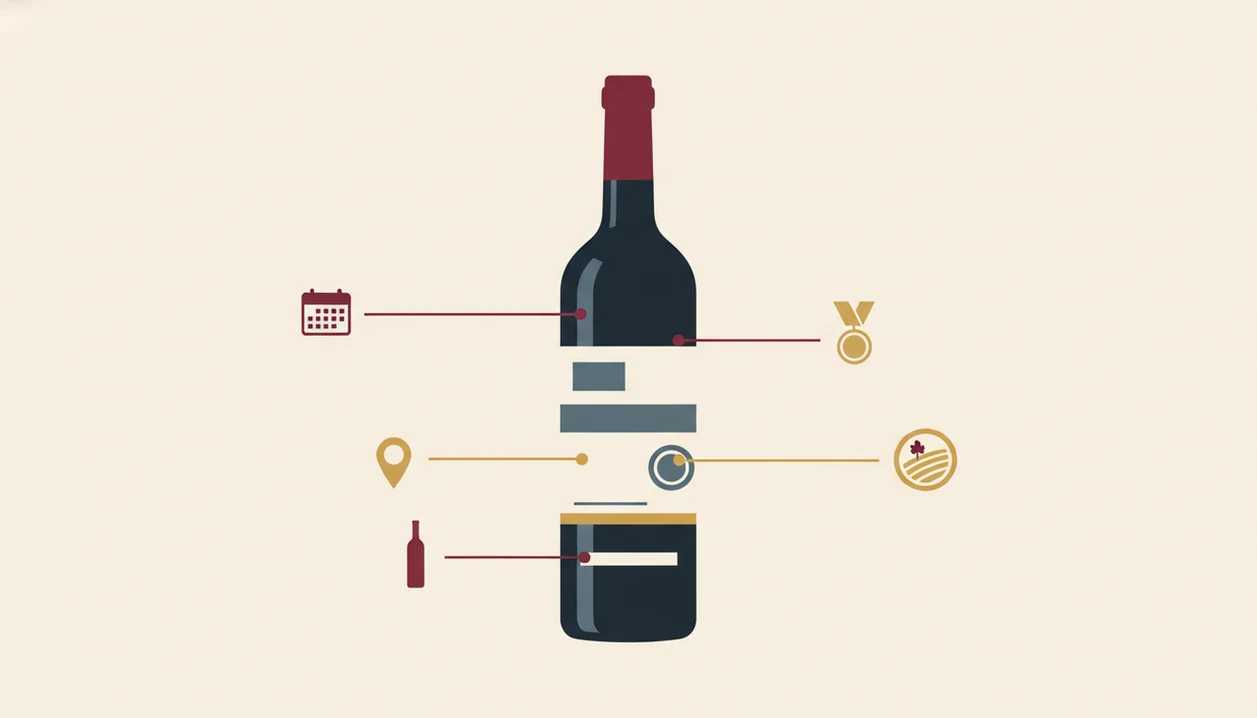
Small label details can move a bottle from everyday drinking to serious collector interest. Start with the label, but read it in layers: producer first, place second, vintage third, classification fourth.
Vintage Year and Sub-Appellation Differences
Vintage year can double or halve value when weather, critic attention, and supply line up. A 2016 Barolo and a 2017 Barolo from the same producer may not trade at the same level. The chalky grip of young Nebbiolo on the gums may tell you it needs time, but the label tells you which year you’re dealing with.
Sub-appellation matters too. “Napa Valley” is broad. “Oakville” is narrower. In Burgundy, a village name, ranked vineyard, or Grand Cru designation can change the price conversation immediately.
Classification Tiers and Cuvée Names
Classification words such as Grand Cru, Premier Cru, Reserva, Gran Reserva, or Grosses Gewächs can affect perceived quality and price. They are useful shortcuts, not rules.
Special cuvée names and vineyard names also matter. A producer’s regular bottling may be modest, while a single-vineyard release becomes collectible. When prices feel inflated, it helps to find cheaper similar wines by grape, region, acidity, tannin, and style.
4 Myths About Wine Label Value Checks
Myth 1: Scanning gives an exact resale price. Reality: most scans show indicative market prices based on available listings or recent data.
Myth 2: A high online average means high quality. Reality: price can reflect rarity, branding, speculation, or limited supply. Ripe fruit is not the same thing as sweetness, and expensive is not the same thing as balanced.
Myth 3: Same label art means same value. Reality: vintage, sub-appellation, bottle size, and cuvée name can change value dramatically.
Myth 4: Label scans replace professional appraisal. Reality: experts still matter for condition, provenance, authenticity, and market timing.
A scan is a useful shortcut, not a rule. The awkward dinner-table whisper, “Is Rioja the grape or the place?” is exactly why labels need translation before valuation. In that case, Rioja is the place, and the producer plus vintage still carry the value signal.
Drinking Value vs Resale Value in Wine Label Scan Results
Drinking value asks whether the bottle is worth opening for the meal, the people, and the price. It depends on style profile, food pairing, drink window, acidity, tannin, and price-to-quality ratio.
Resale value asks a colder question. Could someone else pay for this bottle in its current condition, with its storage history and market demand? Provenance, fill level, capsule condition, and auction trends matter more here than whether it pairs with lemon zest over grilled fish.
These are different answers.
Wine Identifier App bridges both by combining market data with food pairing and drink-window guidance. Still, cross-checking label signals with live scan data helps prevent overpaying. For a fuller distinction, the wine price lookup vs wine value debate is worth reading before buying older bottles.
For dinner buyers, drinking value usually matters more than resale value because the bottle’s usefulness depends on timing, food, and style fit.
Limitations
Label-based value checking is helpful, but it has hard edges.
- Damaged, old, smudged, or obscure labels can produce weak matches or wrong vintages.
- Apps usually ignore storage conditions, including heat exposure, humidity, light, and vibration.
- Fill level, seepage, capsule damage, and label staining can change collector value sharply.
- Provenance is not visible from the front label, yet serious buyers care about it.
- Price databases can lag volatile auction markets, especially for cult wines and rare vintages.
- Small producers and lesser-known regions may have sparse or missing pricing data.
- AI scores approximate patterns, but they cannot detect cork taint or oxidation in your specific bottle.
- A single app’s price is not a guaranteed sale price.
I’ve scanned a smudged back label after condensation softened the paper; the app found the producer, but I still had to confirm the vintage by eye. That extra check matters.
Checking Wine Value From a Label Photo
“App that checks wine value” and “wine value lookup by label” are the same intent as this page: identify the bottle from a photo, then research sold or listed comps for the matching vintage and 750 ml format.
A scan is not an appraisal. For merchant-price comparison tools, continue to best wine price lookup app and price lookup vs wine value.
FAQ
Is there an app that checks wine value?
Yes. A label-recognition app can scan a wine label and show indicative market prices, scores, and bottle details.
Can I check wine value for free?
Several apps offer free basic label scans. Advanced pricing, cellar, or comparison features may require a paid plan.
How accurate are wine label scans?
Accuracy depends on label condition, database coverage, image clarity, and whether the vintage is correctly matched. Similar labels can still confuse scan results.
Does vintage year affect wine value?
Yes. Vintage year can dramatically affect wine value because weather, critic demand, supply, and aging potential vary by year.
Can a label scan detect fake wine?
A scan can flag mismatches between a label and database record. It is not a reliable authentication tool for high-value bottles.
Why do apps show different prices?
Apps use different merchant networks, databases, auction feeds, and update schedules. That is why serious sellers compare more than one source.
Does bottle condition affect scanned value?
Yes, but most apps do not measure condition directly. Collectors price storage, fill level, capsule condition, label damage, and provenance heavily.
What label details matter most for value?
The most important label details are producer, vintage, region, appellation, classification, and cuvée or vineyard name. Bottle size can also affect value.