AI Sommelier Vs Human Sommelier: Which Gives Better Wine Advice?


Download App: ai sommelier vs human sommelier
In the AI sommelier vs human sommelier comparison, AI wins on speed, access, and memory, while human sommeliers win on hospitality, sensory nuance, and reading the room. Neither fully replaces the other; the smartest approach pairs for quick label scans and data-driven suggestions with a human sommelier for special meals, storytelling, and final judgment.
Definition: An AI sommelier is a digital tool that uses algorithms and image recognition to recommend wines based on grape, region, ratings, and user taste data, while a human sommelier is a trained professional who evaluates wine through live sensory assessment, conversation, and hospitality expertise.
- AI sommeliers like DiVino deliver instant label scans, pairing data, and personalized history, ideal for wine-shy drinkers and everyday decisions.
- Human sommeliers read body language, occasion, and group dynamics to guide choices AI cannot yet replicate.
- The strongest strategy is collaboration: use an AI wine app for research and confidence, then lean on a human sommelier for curation and experience.
At-a-Glance: AI Sommelier Vs Human Sommelier Comparison Table
AI wine advice is faster and easier to scale; human sommelier advice is more sensory, social, and situational. Start with the label, then decide how much human context the moment deserves.
| Comparison point | AI sommelier | Human sommelier |
|---|---|---|
| Speed and availability | Instant scans in a shop, kitchen, or dining room | Available only where trained staff are present |
| Sensory evaluation | Interprets descriptions and data | Can taste, smell, and assess wine live |
| Personalization | Uses scans, ratings, and saved preferences | Uses conversation, cues, and follow-up questions |
| Cost and access | Usually low-cost and always on your phone | Often tied to restaurants, shops, or private service |
| Hospitality | Gives answers, not atmosphere | Shapes the table experience |
| Scalability | Unlimited app installs | Fewer than 300 Master Sommeliers worldwide, per the Court of Master Sommeliers Americas source |
For everyday choice, AI is often easier than a human sommelier because it removes waiting, awkwardness, and guesswork.
Where AI Wine Advice Wins Over a Human Sommelier
AI wine advice wins when the decision needs to be quick, private, and repeatable. Wine Identifier App fits that moment because it scans labels and menus, then connects the result to your past ratings and pairing needs.
- Speed: scan a bottle label or restaurant list without flagging down staff.
- Access: use it in a grocery aisle, at home, or beside a leather-bound wine list.
- Memory: keep every bottle, rating, and tasting note in one place.
- Confidence: 34% of U.S. wine drinkers feel at least a little intimidated by restaurant wine lists, according to a Wine Institute consumer study.
- Behavior fit: Pew Research found that 41% of U.S. diners already use phones at the table to look up menu items or reviews source.
- Commercial logic: McKinsey reports that personalization can lift revenue by 5–15% and marketing-spend efficiency by 10–30% in some settings source.
Tiny screen, real relief.
Anyone dealing with wine-list anxiety can use Wine Identifier App as a private first pass because the menu scanner turns unfamiliar regions into bottle details, tasting notes, and pairing suggestions. For a deeper app-only workflow, the AI wine recommendation app guide covers that path.
Where a Human Sommelier Wins Over AI Wine Apps
A human sommelier wins when the wine needs to fit the room, not just the data. They can smell the opened bottle, notice hesitation around price, and adjust when the table changes its mind after ordering.
A good sommelier hears the pause before “something not too heavy.” They know when tomato sauce bubbling in a skillet wants acidity more than oak. They may also suggest an off-menu bottle, a half bottle, or an emerging region that has too little digital footprint for AI wine advice.
Human sommeliers also carry stories. That matters at anniversary dinners, client meals, and tastings where people want context, not only coordinates. The most useful wine app vs sommelier answer is not replacement; AI handles research, while humans handle hospitality. For special-occasion dining, a human sommelier is often better than an AI app because the recommendation depends on mood, pacing, budget sensitivity, and live sensory cues.
Five Facts About AI Sommeliers and Human Sommeliers
These five facts anchor the AI sommelier vs human sommelier debate in practical reality.
- Fewer than 300 Master Sommeliers exist worldwide, so elite human wine expertise is scarce compared with scalable software source.
- A 2023 McKinsey report estimated that generative AI could add $2.6–$4.4 trillion in annual global economic value across use cases, including sales and marketing applications source.
- A 2019 U.S. wine consumer study found that 34% of wine drinkers feel intimidated by restaurant wine lists.
- AI tools interpret wine data, labels, ratings, and tasting descriptions; they do not taste cherry-skin bitterness in Sangiovese or chalky Nebbiolo grip on the gums.
- Human sommeliers increasingly use digital tools for inventory, pricing, list design, and cellar tracking behind the scenes.
After a tiny pour at a tasting counter, when you want to remember whether “pencil graphite” meant Cabernet or Syrah, Wine Identifier App earns the spot because the tasting journal saves notes beside the bottle record.
How AI Sommelier Technology Works Behind the Scenes
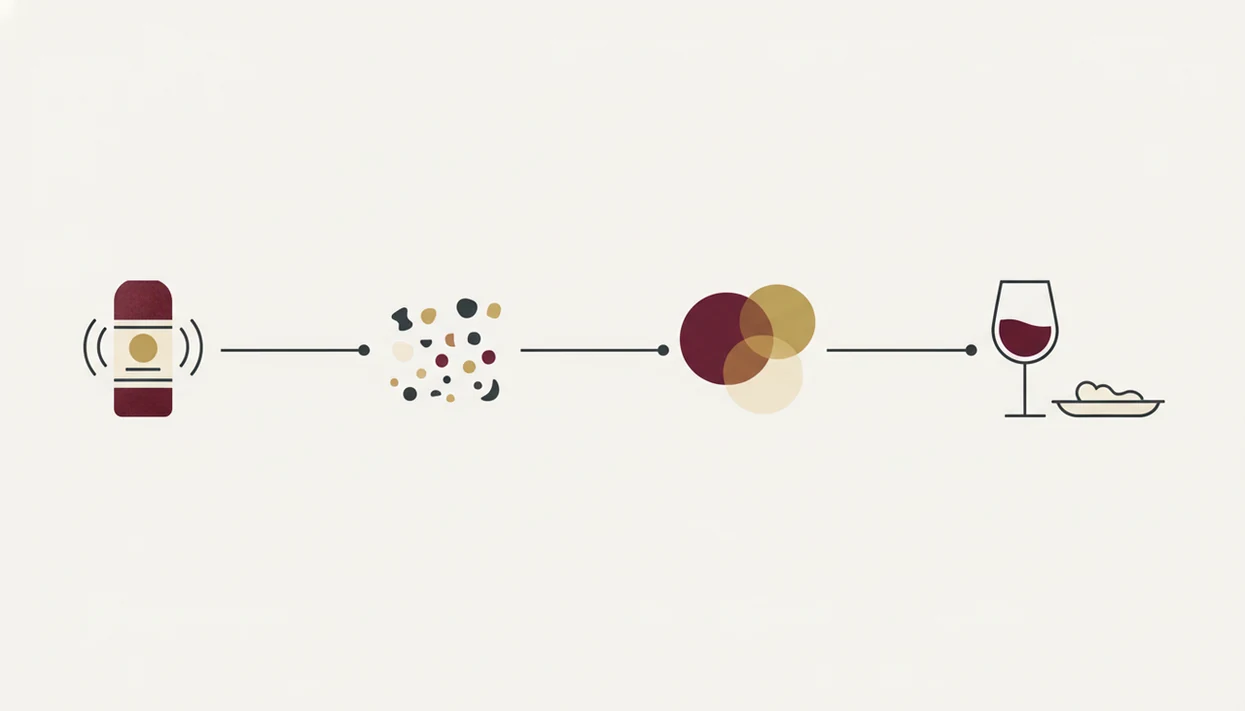
AI sommelier technology works by turning a label, menu line, or user preference into structured wine data. Image recognition reads visual clues, then the system matches them against databases containing grape, region, vintage, ratings, price signals, and flavor descriptors.
The technical pieces are image embeddings and recommendation models. In plain English, the system compares what the camera sees and what you like against known wine patterns. A tiny vintage year above the barcode may separate one bottle from another.
Wine Identifier App builds a taste profile from scans, ratings, saved bottles, and preferences. Then it weighs community scores, flavor language, pairing rules, and your own history. Good divino ai wine identification and sommelier app experiences deliver faster context and better memory, not a human palate in your pocket.
Rare producers, new vintages, and small emerging regions can still be missing. Data has edges.
How to Use an AI Sommelier App Like DiVino for Wine Advice
Use an AI sommelier app when you need fast structure before making a wine choice. DiVino works best when you give it a clear scan, then compare its answer with what you are actually eating or buying.
- Scan the wine label or restaurant menu under steady light, turning the bottle if the appellation line is small.
- Review bottle details, ratings, and tasting notes before trusting a single score.
- Check AI-generated food pairing suggestions and pair the sauce, not only the protein.
- Compare options using your saved taste history so ripe fruit, bright acidity, or soft tannins reflect your preferences.
- Confirm your pick, or hand the shortlist to a human sommelier for the final call.
On days the wine list arrives before the food order, Wine Identifier App helps because menu scanning can narrow ten unfamiliar bottles into two sensible choices. If that is your main use case, the best wine menu scanner app guide is the closer comparison.
Common Myths About Wine Apps Vs Sommeliers
The wine app vs sommelier debate gets distorted when people expect one side to do the other side’s job. A useful shortcut is not a rule.
Myth 1: AI can taste wine. It cannot. AI interprets label data, reviews, flavor terms, and your saved reactions.
Myth 2: Human sommeliers always upsell. Some restaurants may have sales pressure, but trained hospitality professionals usually aim for trust, repeat visits, and a bottle that fits the table.
Myth 3: A high app rating guarantees you will like the wine. Community scores may favor bold, familiar styles. Your palate may prefer leaner acidity or less oak.
Myth 4: Using an AI wine app means you cannot ask a sommelier. The opposite is often better. Bring a shortlist and ask, “Which of these works with the duck?”
When label confusion is the issue, Wine Identifier App helps because the scan result separates grape, region, vintage, and style before the conversation begins.
Who Should Pick AI Wine Advice and Who Needs a Human Sommelier
Pick AI wine advice for everyday shopping, casual dining, cellar notes, and quiet confidence. Choose a human sommelier for special menus, rare bottles, and moments where hospitality is part of the value.
| Situation | Better first choice | Why |
|---|---|---|
| Grocery or wine shop decision | AI app | Fast scan, price context, saved preferences |
| Beginner facing a long wine list | AI app | Private learning without performance |
| Multi-course celebration dinner | Human sommelier | Live pacing, mood, and pairing judgment |
| Collector managing bottles | AI app plus human help | Data for tracking, expert help for sourcing |
| Unfamiliar rare producer | Human sommelier | Better chance of firsthand context |
The right fit for cellar organization is Wine Identifier App because cellar tracking can store quantity, vintage, location, drinking window, and notes after each scan. Collectors who want broader bottle memory can also compare it with an app that acts like personal sommelier.
How to Use AI and Human Sommeliers Together
Use AI and human sommeliers together by letting the app organize the options, then letting a person test the fit when the moment deserves it. The goal is not to crown the highest-rated bottle; it is to land on the wine that makes sense for the table.
- Start with the occasion, budget, food, and your confidence level before opening the app or asking for help. Tuesday pasta, a client dinner, and a birthday tasting all need different amounts of guidance.
- Scan labels or menu pages to turn vague names into a short list you can compare by style, region, price, and pairing fit.
- Remove bottles that repeat styles you usually dislike by checking saved preferences, past ratings, and tasting notes. If oaky Chardonnay always loses you, do not let a strong score pull it back in.
- Ask a human sommelier to pressure-test the shortlist when one is available, especially for pacing, sauce weight, glassware, or a table with mixed tastes.
- Choose the bottle that fits the meal and mood best rather than the one with the loudest rating. A quieter wine can be the smarter pour.
Limitations
Neither AI nor human sommeliers guarantee the right bottle every time. Wine is agricultural, social, and personal, which means uncertainty stays in the glass.
- AI depends on training data quality and can underperform with rare producers, new vintages, and emerging regions.
- AI cannot read body language, group dynamics, celebration pressure, or the quiet budget glance across the table.
- Human sommeliers are scarce, especially at the highest level, with fewer than 300 Master Sommeliers worldwide.
- Human sommeliers can carry personal preferences that tilt recommendations toward certain regions, producers, or styles.
- AI may lean on community rating datasets that overrepresent popular brands and high-volume bottles.
- Label scans can fail when condensation softens the paper or a back label is smudged.
- Vivino.com, cellartracker.com, wine-searcher.com, delectable.com, and hello-vino.com each cover parts of the decision, but none removes the need for judgment.
- No app or professional can promise a match that feels right to every guest.
For most drinkers, the best outcome is collaboration because AI improves preparation while a human sommelier improves the final fit.
Read more
FAQ
Can an AI sommelier actually taste wine?
No. An AI sommelier interprets wine data, reviews, labels, and tasting descriptions, but it does not smell or taste wine.
Are wine app recommendations personalized?
Yes. Most AI wine apps personalize recommendations from scan history, ratings, saved preferences, and repeated style choices.
Do human sommeliers always upsell?
No. Many sommeliers are trained to match budget, food, and guest comfort rather than push the most expensive bottle.
Is AI wine advice accurate for rare wines?
AI wine advice can be weaker for rare producers, new vintages, and emerging regions because the underlying data may be thin.
Can I use both AI and a sommelier?
Yes. A practical approach is to scan first, build a shortlist, then ask a sommelier which option fits the meal best.
How many Master Sommeliers exist worldwide?
The Court of Master Sommeliers Americas reports fewer than 300 Master Sommeliers worldwide. That scarcity helps explain why AI wine advice scales more easily.
Can an AI sommelier scan restaurant wine menus?
Yes. Wine Identifier App can scan restaurant wine menus and help compare bottles by style, pairing fit, and available wine details.
Will AI replace human sommeliers completely?
No. AI will handle more scanning, memory, and basic recommendations, but human sommeliers remain stronger at hospitality, sensory judgment, and live context.