Is There an App That Acts Like a Personal Sommelier?
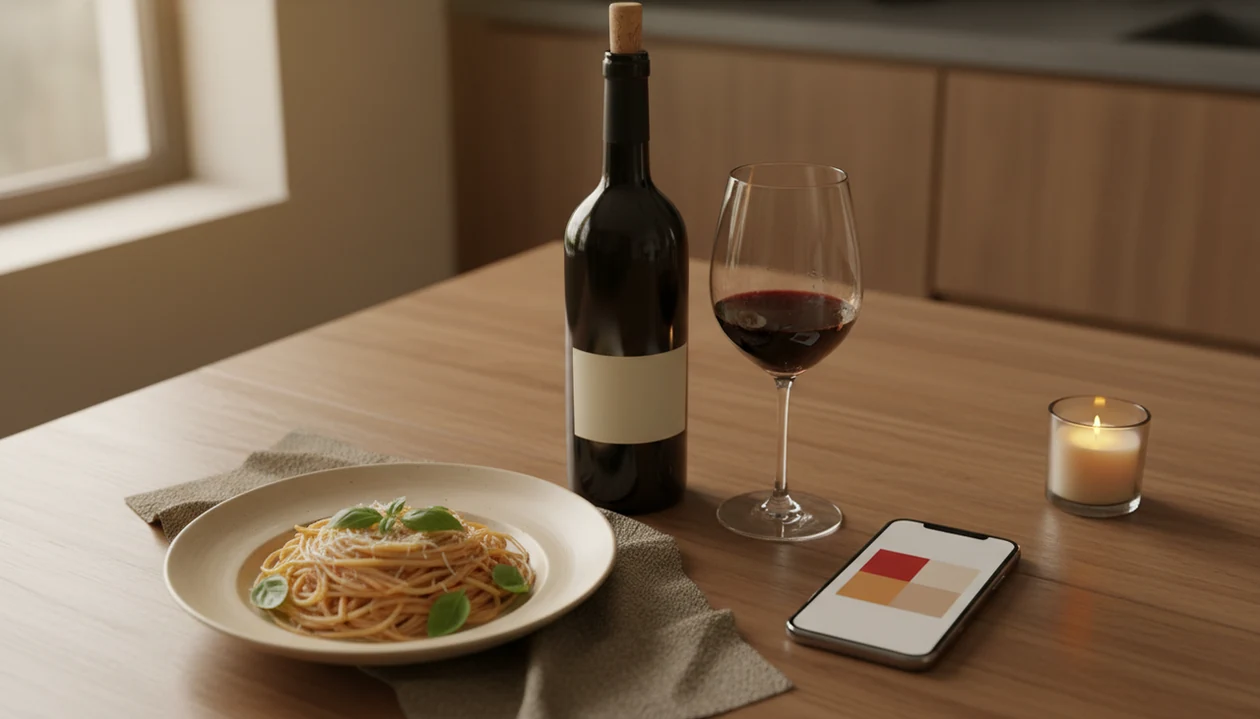
Yes, an app that acts like personal sommelier uses label scanning, taste-profile memory, and food-pairing data to give bottle-by-bottle wine guidance on your phone. It can help with store shelves, restaurant lists, gift bottles, and dinner pairings, though it cannot fully replace a trained sommelier’s in-person judgment.
> Definition: A personal sommelier app is a mobile tool that combines computer-vision label scanning, community tasting data, and AI recommendation algorithms to identify wines, suggest food pairings, and remember your taste preferences, giving sommelier-style guidance without a human expert.
TL;DR
- AI-powered apps scan labels and menus to identify wines and suggest pairings instantly.
- Recommendation quality depends on database breadth; large, fresh datasets outperform small ones, especially for niche regions.
- No app fully replaces a trained sommelier for complex cellaring or ultra-specific stylistic nuance, but they handle most everyday wine decisions.
What a Personal Sommelier App Actually Does
A personal sommelier app identifies a wine from its label, explains what it should taste like, suggests food pairings, and remembers what you like over time. The core promise is simple: start with the label, then turn that label into a useful decision.
Most apps use your phone camera to match a bottle against a wine database. From there, they return grape, region, vintage, tasting notes, ratings, price context, and pairing ideas in plain language. If you scan Sangiovese and see “cherry-skin bitterness” beside tomato sauce, that is more useful than a vague “medium-bodied red.”
The better apps also build a taste profile. If you keep rating crisp whites highly and heavy oaked reds poorly, future suggestions should shift. Some apps lean on crowd-sourced reviews, while others add expert-curated notes. Crowd data gives volume. Expert notes give structure. The useful ones combine both.
For everyday choosing, a phone can be enough.
At-a-Glance: AI Wine Assistant Capabilities vs. Human Sommelier
An AI wine assistant is strongest when the task is fast, repeatable, and database-driven. A human sommelier still wins when the decision depends on context, service, cellar condition, or fine stylistic nuance.
For context, users often compare DiVino with Vivino, Delectable, and CellarTracker: Vivino is strongest on community ratings, Delectable on label recognition and social tasting notes, and CellarTracker on cellar inventory.
| Task | AI wine assistant | Human sommelier |
|---|---|---|
| Label ID | Strong for common bottles and clear photos | Strong, especially with context |
| Food pairings | Good for classic matches and dish keywords | Better for sauces, texture, and mood |
| Budget picks | Fast price filtering and value checks | Better at reading the table’s priorities |
| Cellar strategy | Basic drinking windows and reminders | Better for long-term aging decisions |
| Restaurant list curation | Useful for scanning and narrowing options | Stronger on the whole list and meal pacing |
| Niche/natural wines | Mixed, due to limited data | Often better if locally informed |
| Personalization over time | Improves with ratings and saved bottles | Learns through conversation |
| Availability 24/7 | Always available | Limited to the setting |
Wine has a large adult consumer base, so mass access matters. Not everyone has a sommelier beside the shelf when a sommelier points at an unfamiliar region and the table goes quiet.
How AI Label Scanning and Wine Recommendation Engines Work
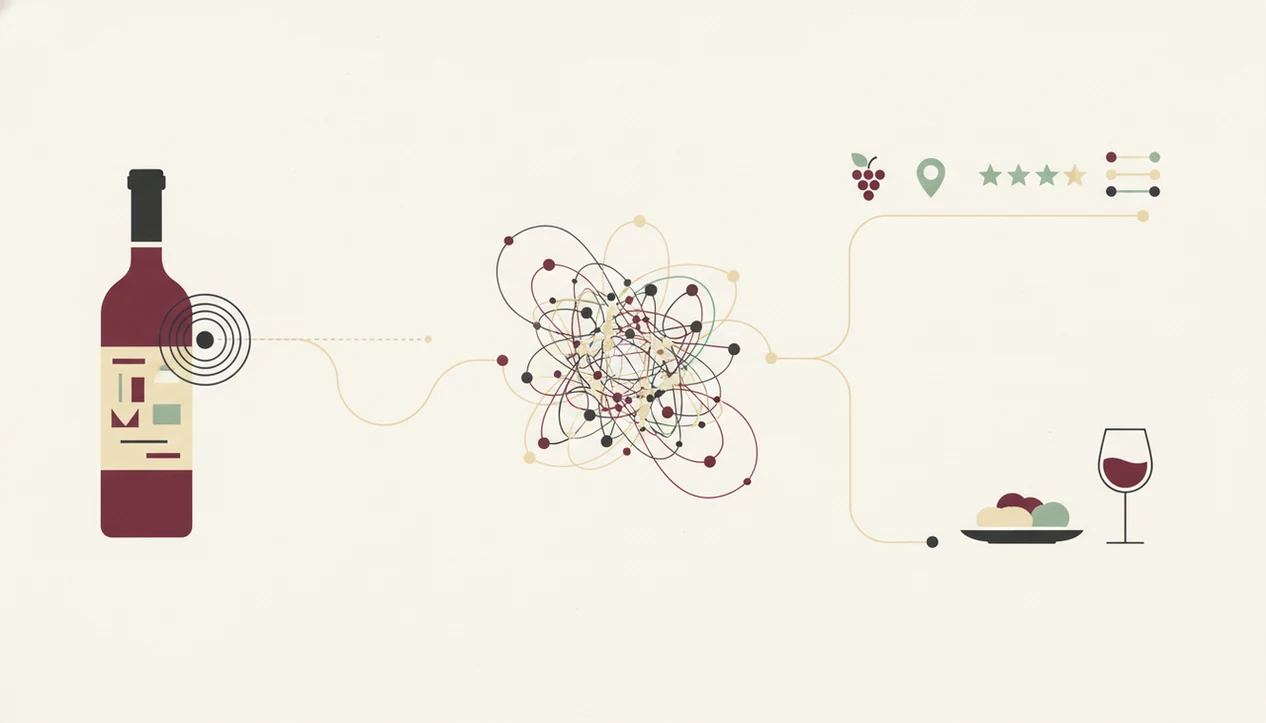
Personal sommelier apps work by turning a camera image into a wine match, then using tasting data to predict what you may want next. The mechanism is technical, but the result should feel ordinary: scan, compare, decide.
Computer Vision: From Camera Snap to Wine Match
Computer vision looks for visual patterns on the label, such as producer name, typography, crest, appellation, vintage, and layout. The app converts the image into searchable signals, often called image embeddings. In plain English, it makes a fingerprint of the label and compares it with known bottles.
This is why a grocery aisle bottle tilted toward a phone can work well, but a torn back label may not. Condensation-softened paper, glare, and tiny appellation lines can confuse the match.
Recommendation Algorithms and Tasting-Data Training
Recommendation engines compare your ratings with community tasting data, expert notes, grape variety, region, price, and pairing rules. The broader AI market is also growing quickly; Grand View Research estimated the global artificial intelligence market at USD 279.22 billion in 2024 and projected 35.9% compound annual growth from 2025 to 2030: https://www.grandviewresearch.com/industry-analysis/artificial-intelligence-ai-market.
Data quality still sets the ceiling. Emerging regions, tiny producers, and natural wines may have fewer examples, so the AI has less to learn from. If you want the deeper mechanics, the AI wine recommendation app guide covers that layer in more detail.
Before You Start: What You Need for Better Wine Scans
Better wine scans start with a readable bottle, a little context, and realistic expectations about what the app can recognize. Before you open the camera, set up the label and your preferences so the first result is useful rather than generic.
- Choose a clean, front-facing label. Make sure the producer, vintage, and appellation are visible, especially on bottles where the region line is small or decorative.
- Check the light before scanning. Glossy glass and foil can throw glare into the camera, so tilt the bottle slightly or move away from direct overhead light.
- Set your price range first. A recommendation is easier to judge when the app knows whether you are looking for a weeknight bottle or a special dinner pick.
- Add basic taste preferences. Mark a few likes and dislikes, such as crisp whites, lighter reds, low oak, or fuller body.
- Confirm the app’s main tools. Some apps focus on labels, some read menus, and others are better for cellar logging, so choose the mode that matches the decision in front of you.
How to Use a Personal Sommelier App Like DiVino
To use a personal sommelier app well, give it clean inputs, then rate the wines you actually taste. Tools like Wine Identifier App are most helpful when you treat them as a learning loop, not a one-off answer machine.
- Download and set taste preferences. Choose grapes, styles, prices, and regions you already know you like.
- Scan a wine label or restaurant menu. Hold the camera steady and include the producer, vintage, and appellation line.
- Review tasting notes, ratings, and price context. Look for flavor clues, not just a high score.
- Check AI food pairing suggestions for your meal. Pair the sauce, not only the protein.
- Save the bottle and rate it. Your rating teaches the app whether “ripe fruit” means pleasant richness or too much weight for you.
- Revisit your cellar log before your next purchase. Check what you already own before buying another similar bottle.
A tiny pour at a tasting counter becomes more useful when you save the note while the tart cherry is still on your tongue.
Five Facts Every Wine Lover Should Know About Sommelier Apps
Sommelier apps are practical tools, but they work best when you know what they can and cannot infer. These five facts are the clearest starting point.
- Label scanning plus AI plus large databases can identify many wines in seconds. Clear photos and well-known producers usually produce stronger matches.
- Apps replicate basic sommelier guidance, not full in-person expertise. They can explain Cabernet with steak, but they cannot read a dining room.
- Recommendation quality depends on underlying data. Millions of reviews and tasting notes usually beat a small, stale database.
- Niche wines can still stump the AI. New producers, low-intervention bottlings, and unusual pairings may have too little data.
- Commercial bias is possible. Some apps earn from in-app sales or affiliate links, which can shape which bottles appear first.
For beginners, label scanning is often easier than memorizing grapes because the app starts from the bottle in your hand. If you are comparing broader options, the best AI sommelier app overview may help.
Evidence Behind AI Wine Assistants and Recommendation Apps
The evidence is strongest for the demand and the technology category, not for a promise that any app will choose your perfect bottle. Wine is a large consumer market, and AI-assisted image matching and recommendations are growing fast enough to make phone-based guidance practical.
The category scale is real: the Wine Institute tracks U.S. wine consumption and reported hundreds of millions of cases consumed annually, showing why mobile help at the shelf matters source. On the technology side, computer vision and recommendation systems can classify label images, compare bottles, and rank likely preferences from prior ratings. Those are model-capability claims. Claims about “better choices,” repeat use, or saved favorites are user-behavior claims, because they depend on what people scan, rate, buy, and correct over time.
A sensible reading is:
- Treat sourced market figures as context. They explain why wine apps exist at scale.
- Treat recognition and ranking as technical functions. They can work well without being infallible.
- Treat tasting satisfaction as personal evidence. Your ratings are still the best signal.
- Check coverage before trusting certainty. Databases vary by region, producer, importer, and vintage.
That keeps product positioning separate from practical advice.
Where to Use an AI Wine Assistant: Store, Restaurant, and Home
An AI wine assistant is most useful at the exact moment a wine decision appears. That usually means a store aisle, a restaurant table, or a kitchen counter with dinner already underway.
Scanning Wine Labels in the Store Aisle
In a wine shop or supermarket, scan unfamiliar labels, compare prices, and check whether the tasting notes match your preferences. Mobile shopping behavior has made this normal. People already use phones to compare products, and wine is no exception.
Navigating a Restaurant Wine List with Your Phone
At a restaurant, photograph the wine list and match options to what you are ordering. The app can narrow the list before you ask the server a better question. Red Burgundy with duck? Maybe. High-acid white with lemony fish? Also maybe.
Pairing Suggestions for Home Cooking
At home, type the dish and budget. Tomato sauce bubbling in a skillet points toward acidity before it points toward prestige. A personal sommelier app should deliver pairing logic, not just bottle names. Good divino ai wine identification and sommelier app experiences give label recognition, menu scanning, taste memory, and pairing help, not theatrical certainty.
Common Mistakes When Using a Personal Sommelier App
The most common mistakes come from treating the app’s answer as final instead of as evidence. A personal sommelier app works better when you check the details, feed it honest feedback, and keep room for your own palate.
- Look beyond the top rating. A five-star average is not enough if the wine is sweeter, oakier, lighter, or more tannic than you enjoy. Check grape, region, style, and sweetness before trusting the score.
- Scan the front label first. Back labels can help with importer notes or tasting copy, but the producer, appellation, vintage, and cuvée name usually live on the front.
- Compare vintages carefully. Two bottles from the same producer can drink differently if one year was warmer, cooler, wetter, or older in the bottle.
- Rate the misses, too. If you only save wines you liked, the app learns a flattering but incomplete version of your taste.
- Treat pairings as prompts. A suggested match should start the decision, not end it. Sauce, spice, cooking method, and mood can all bend the rule.
The small corrections matter. They turn a quick scanner into a more useful memory.
Common Myths About Personal Sommelier Apps
Personal sommelier apps are useful, but several claims around them need trimming back. Here is the cleaner version.
| Myth | Fact |
|---|---|
| Apps perfectly replace certified sommeliers. | Apps are strong on quick ID and general pairings, but weaker on cellar strategy and service judgment. |
| AI wine recommendations are completely objective. | Community bias, limited regional data, and commercial partnerships can shape results. |
| Label scanning always identifies the exact wine. | Vintage changes, similar labels, and small-producer omissions can cause mismatches. |
| You will love every recommended wine. | Taste, mood, food, glassware, and context still matter. |
The awkward dinner-table whisper, “Is Rioja the grape or the place?” is exactly where an app helps. Rioja is the place. Tempranillo is often the grape. But if the bottle has unusual aging, producer style, or bottle age, a human may still explain it better.
The does AI sommelier app work question usually comes down to that distinction.
Combining an AI Wine Assistant with Human Expertise
The smartest workflow is not app versus person. It is app first, human second, then app again for memory.
Use the app to scan a restaurant list before the sommelier arrives. Instead of saying “What’s good?” you can ask, “Which of these two has brighter acidity for goat cheese?” That is a better conversation. After dinner, log the bottle, the dish, and whether the pairing worked.
At a wine shop, share your saved history with the clerk. “I liked this Etna Rosso, but not this jammy Zinfandel” gets you farther than “I like reds.” For regular buyers, an AI assistant and a good merchant can become a useful shortcut, not a rule.
The AI sommelier vs human sommelier comparison is most honest when it treats both as different tools.
Limitations
A personal sommelier app can make wine easier, but it still has real constraints. The bottle, the food, and the person drinking it remain stubbornly specific.
- Subjective taste is hard to predict. A highly rated wine can still disappoint you if you dislike oak, sweetness, bitterness, or texture.
- Database gaps are common. Obscure producers, tiny regions, private labels, and brand-new releases may be missing.
- Label scans can fail. Similar labels, vintage changes, damaged paper, glare, and small-producer omissions can produce the wrong match.
- Commercial bias can enter the results. Apps with affiliate sales or in-app retail may promote bottles that are easier to sell.
- Human service skills do not transfer fully. Apps cannot decant at the table, check cellar temperature, or read whether guests want a safer choice.
- Vintage variation can outrun the model. A cool, lean year and a warm, ripe year may taste different before the data catches up.
- Unusual pairings need judgment. Dark chocolate squares beside red wine may work with some fortified or plush styles, but many dry reds will taste bitter.
That last mismatch is memorable.
Read more
FAQ
Can an app replace a real sommelier?
No. A sommelier app can handle everyday label identification, pairings, and budget guidance, but it cannot fully replicate in-person service, cellar judgment, or nuanced restaurant advice.
Is a personal sommelier app free to use?
Some personal sommelier apps offer free wine identification, while advanced guidance, cellar tools, or premium recommendations may require a paid version. Check the app listing for the latest free and paid features.
How accurate is AI wine label scanning?
AI wine label scanning is usually strongest with clear photos of common bottles. Accuracy drops with vintage changes, similar labels, glare, damaged labels, and very small producers.
Do sommelier apps work with restaurant menus?
Yes. Apps such as Wine Identifier App can scan or photograph restaurant wine lists and return bottle details, price context, and pairing suggestions.
What types of wines are hardest for personal sommelier apps to identify?
Niche wines, natural wines, private labels, very new releases, and tiny-production bottles are often hardest to identify. These categories usually have less public tasting and label data.
Are app wine recommendations biased?
Yes, they can be. Affiliate sales, retailer partnerships, community rating skew, and limited regional data can all influence which wines are recommended.
Can a wine app learn my taste?
Yes. A wine app can learn your taste when you save bottles, rate them, and record notes about grapes, regions, acidity, tannin, sweetness, and price.
Does a sommelier app suggest food pairings?
Yes. A sommelier app can suggest pairings when you type a dish, scan a menu, or scan a bottle and compare its style with common food matches.