Is There an App That Checks Wine Value? What It Can (and Can't) Tell You
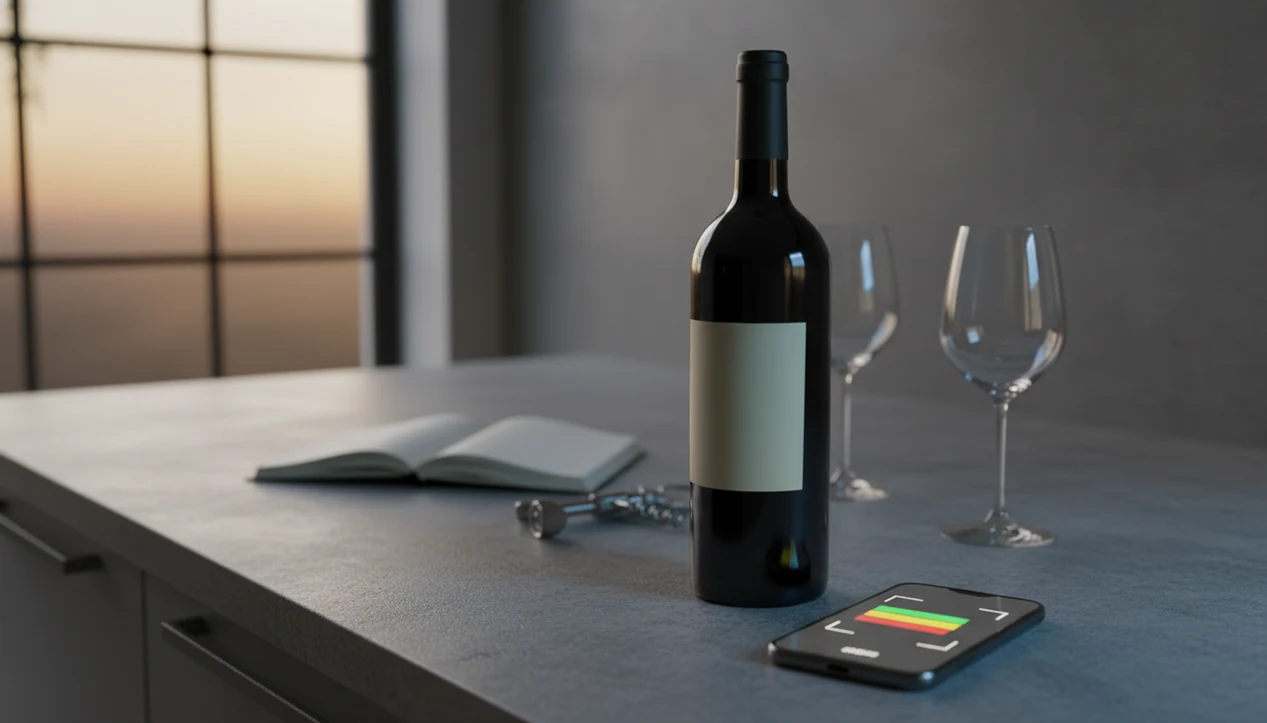
Yes, there is more than one app that checks wine value, and the useful ones let you scan a label or type a bottle name to see estimated market prices, critic scores, and merchant listings. However, every wine value app returns an approximate price range, not a guaranteed appraisal, because no app can assess your bottle's physical condition, storage history, or provenance.
A wine value app is a mobile tool that identifies a bottle by its label, vintage, and producer, then aggregates current retail listings, critic ratings, and auction data to estimate what that wine is roughly worth on the open market.
- Wine value apps estimate price ranges from merchant listings and databases; they do not guarantee a sale price.
- AI label scanning identifies the wine fast, but cannot detect storage damage, fill level, or provenance problems that can substantially change real-world value.
- DiVino combines label recognition, price context, food pairings, and cellar tracking in one app, making it useful for everyday drinkers and beginning collectors alike.
What a Wine Value App Actually Does
A wine value app estimates a bottle’s market value by matching its label details to price databases, critic scores, and current sale listings. It gives a price range, not a formal appraisal.
The usual path is simple. You scan the front label, or search by producer and vintage. The app tries to confirm the region, grape, bottle size, and sometimes the cuvée name. Then it compares that match with merchant prices and, in better cases, auction or cellar data. If you have two similar bottles side by side, the tiny vintage line can matter more than the grand château drawing.
The stakes are not tiny. The global wine market was valued at about $333 billion in 2020 and projected to reach $528 billion by 2028, according to Statista (https://www.statista.com/topics/1407/wine-market/). Pew also reported that 76% of U.S. adults had used a smartphone to research products while shopping in-store (https://www.pewresearch.org/internet/2016/12/19/online-shopping-and-e-commerce/).
Start with the label.
For casual buyers, a value app is often easier than manual searching because it turns producer, vintage, and region into a quick comparison set.
How Wine Value Estimation Works Behind the Scenes
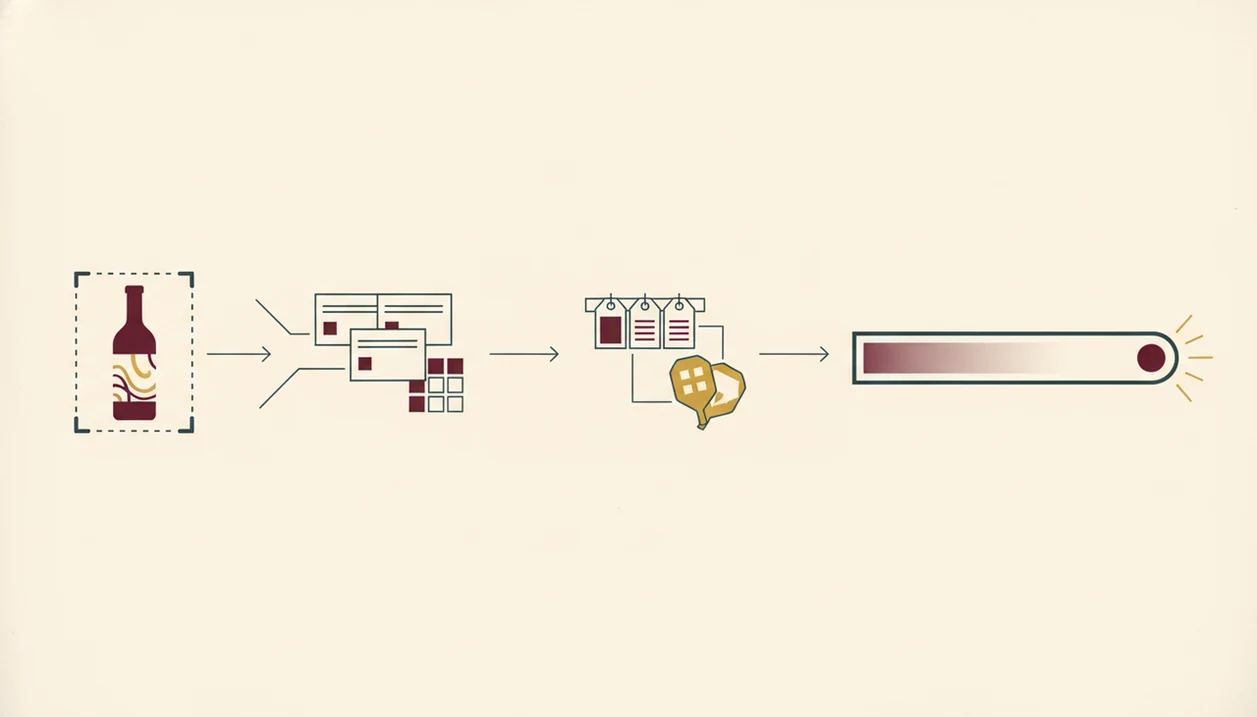
Wine value estimation works by combining label recognition, database matching, price aggregation, and score normalization. The weak point is physical condition; the camera sees the label, not the cellar.
Label Recognition and Data Matching
- AI label recognition uses OCR and image models to read producer names, appellations, vintages, and grape clues.
- Image matching helps when the text is curved, smudged, or partly hidden by an importer sticker on curved green glass.
- A correct match depends on small details, such as “Riserva,” vineyard name, or bottle format.
- Fraud and misrepresentation make cross-checking important, especially for expensive bottles; EU research has estimated that a small but real share of wine exports may be affected by fraud.
- A scanner can flag mismatched details, but it cannot authenticate glass, cork, capsule, or fill level.
Price Aggregation from Merchants and Auctions
A wine value app queries merchant feeds, auction results, community reviews, and critic databases. Some systems normalize scores from several critics onto a comparable scale, which helps avoid treating every 94-point rating as identical. For a deeper pricing workflow, a tool that can compare wine prices is useful when one listing looks unusually high.
How to Check Bottle Value With a Wine Identifier App
To check bottle value with a Wine Identifier App, scan the label, confirm the wine details, review the price context, and save the bottle for later tracking. Use a second source for anything you may sell, insure, or consign.
- Open your wine value app and launch the label scanner from the main screen.
- Scan the wine label in good lighting, ideally under a steady lamp rather than a dim dining room.
- Review the bottle details, including producer, region, vintage, grape, and format.
- Check the estimated price range and any critic scores shown with the match.
- Cross-reference high-value bottles with a merchant listing or auction source before making a sale decision.
- Save the bottle to your cellar tracker so future price checks, notes, and drinking-window reminders stay attached.
A flat label is easier. So is patience.
If the scan struggles, turn the bottle slowly and search the text manually. I often look for the small appellation line first, because “Rioja” is the place, not the grape. For a label-first method, the check wine value from label guide breaks that sequence down further.
Smartphone, Label, and Internet Requirements Before You Scan
You need a working smartphone camera, a readable label, and an internet connection before a wine value app can return useful data. Bottle format also matters because a magnum and a standard 750 mL bottle can price differently.
Make sure the front label is legible and not torn across the vintage or producer name. Partial labels reduce accuracy. If condensation has softened the back label paper, wipe the glass and wait a minute before scanning.
For higher-end bottles, note storage conditions and provenance before you trust any number. Loose receipts under a tasting notebook are not glamorous, but they can help establish where the bottle came from. Format, fill level, capsule condition, and storage history all belong in your notes.
Common Myths About Wine Value Apps
Wine value apps are useful shortcuts, not appraisal machines. They identify bottles and summarize market context, but they do not know what happened to your exact bottle.
- Myth: apps give a guaranteed sale price. Reality: they show approximate market ranges based on current listings and available records.
- Myth: the price already factors in your bottle’s condition. Reality: storage, fill level, seepage, cork position, and label damage are invisible to the app.
- Myth: if the app cannot find the bottle, it must be extremely rare or valuable. Reality: small producers and older vintages often have thin database coverage.
- Myth: AI apps fully replace sommeliers or auction specialists. Reality: expert judgment still matters for collectible, counterfeit-prone, or historically important wines.
- Myth: higher price always means better drinking. Reality: a wine can be valuable, mature, closed, tired, or simply not to your taste.
Good wine value tools deliver identification, price context, and cellar memory, not a guaranteed resale number or AI-powered wine magic.
Wine Value App vs. Professional Appraisal: When Each Matters
A wine value app is enough for everyday price checks, restaurant decisions, and casual cellar organization. A professional appraisal matters when money, insurance, provenance, or legal documentation is involved.
| Situation | Wine value app | Professional appraisal |
|---|---|---|
| Everyday store purchase | Useful | Usually unnecessary |
| Restaurant price-checking | Useful | Unnecessary |
| Casual curiosity about a gift bottle | Useful | Usually unnecessary |
| Building a cellar catalog | Useful | Optional |
| Selling collectible bottles | Starting point | Recommended |
| Insurance valuation | Not enough | Needed |
| Auction consignment | Not enough | Needed |
| Provenance verification | Limited | Needed |
Over 44% of U.S. adults report drinking wine, so most people checking a bottle are not handling museum-grade Burgundy. They want a fair range. Still, condition and provenance can change fine wine value sharply. A chalky young Nebbiolo might taste promising, but poor storage can erase that promise. The wine price lookup vs wine value distinction matters here.
Common Mistakes When Checking Bottle Value
The most common mistakes are bad scans, single-source trust, and confusing retail asking price with resale value. Each one can make the bottle look more valuable than it is.
Scanning in low light or at an angle can produce the wrong producer or vintage. That is how a basic regional wine becomes a single-vineyard bottling on your screen. Not good.
Do not trust one source for a serious decision. Cross-reference the exact vintage and format, especially for magnums, half bottles, and older releases. A restaurant bottle cradled in a napkin may look elegant, but the listed price includes service, storage, and margin.
Retail asking prices are not the same as achievable sale prices. Seller fees, buyer premiums, shipping rules, and discounts all affect the final number. For collectors, provenance should come before excitement. A high app estimate alone does not make a bottle investment-grade. If your real goal is saving money, it may be smarter to find cheaper similar wines by region, grape, and style.
Verifying Your Wine Value Estimate Before Selling or Insuring
Before selling or insuring wine, verify the app estimate against merchant listings, auction records, and your own documentation. For bottles above about $200, a specialist opinion is usually worth the extra step.
Compare the app’s range with at least two merchant listing sites. Then check recent auction hammer prices for the exact vintage, producer, cuvée, and format. Asking prices can sit online for months. Hammer prices show what buyers actually accepted on the day.
Photograph the bottle from several angles. Include front label, back label, capsule, fill level, and any receipts or cellar records. If you use a cellar tracker, save those notes beside the bottle so the history does not live in scattered photos.
For higher-value bottles, documented storage and provenance are often more persuasive than a screenshot.
Evidence Sources for Wine Value Estimates
Good wine value estimates come from several kinds of evidence, not one magic database. Use the market-size and smartphone-shopping sources already cited above as context for why these tools matter, then judge the bottle with sources that match your decision.
- Check merchant listings first when you need a quick retail benchmark for a current bottle. These are asking prices, so they may include optimistic margins, shipping limits, or stock that has sat unsold.
- Compare auction records when resale value matters. Completed hammer prices show what buyers actually paid, although fees and buyer premiums still affect the net result.
- Review critic databases for score history, vintage reputation, and drinking windows. Scores can support demand, but they are not a price by themselves.
- Use cellar platforms to see owner notes, inventory patterns, and community drinking feedback. These are useful for context, especially when a bottle is not widely listed.
- Escalate when fraud risk, provenance, or storage claims affect the number. A single merchant listing is fine for a Tuesday-night bottle; rare, old, insured, or consigned wine deserves cross-checking and, often, specialist confirmation.
Limitations
Wine value apps can make bottle research faster, but they have real limits. Treat the number as a starting estimate, not a final answer.
- Apps do not account for physical condition, provenance, or storage quality; estimates can be significantly off for older or poorly stored bottles.
- Price databases are strongest for widely traded wines. Niche producers, tiny allocations, and back-vintages may be missing or based on thin data.
- AI label recognition can misidentify look-alike brands, damaged labels, or special cuvées, returning the wrong wine and an incorrect value.
- Apps typically show retail asking prices, not finalized transaction prices or auction hammer prices, so they may overstate realistic resale value.
- No app can predict peak maturity or optimal drinking window with certainty. Algorithmic drink dates are educated approximations.
- Even advanced AI sommelier apps cannot replace professional appraisal for insurance, estate, legal, or auction purposes.
- Restaurant wine prices include service, location, storage, and markup, so they should not be compared one-to-one with retail listings.
Tools like Wine Identifier App, Wine-Searcher, Vivino, and CellarTracker are useful for orientation. The human check still matters when the bottle is rare, old, or expensive.
Read more
FAQ
Is there a free wine value app?
Yes, free options exist, including free tiers from DiVino, Vivino, and other wine apps. Some advanced features, such as deeper cellar tools or expanded market data, may require payment.
How accurate are wine value apps?
Wine value apps are most accurate for widely traded bottles with strong database coverage. Rare, old, or small-production wines often have thinner data and wider value ranges.
Can an app value old wine?
An app can look up older vintages if they exist in its database. It cannot judge storage damage, fill level, cork condition, or provenance from the label alone.
Do wine identifier apps show wine prices?
Yes, many wine identifier apps provide price context or estimated value alongside label identification, tasting information, and pairing suggestions. Treat the price as an estimate, not an appraisal.
Can I scan a wine menu for prices?
Yes, some apps can scan restaurant wine menus and compare listed bottles with typical retail value. This helps you spot relative value, but restaurant pricing includes service and markup.
Do wine apps detect counterfeit bottles?
Wine apps may flag mismatches between a label and known bottle data. They cannot physically authenticate glass, cork, capsule, paper, or provenance.
Should I insure wine based on app value?
No, formal insurance usually requires a professional appraisal or accepted documentation. App values are useful starting estimates only.
What if the app can't find my wine?
If an app cannot find your wine, it usually means a data-coverage gap. It does not automatically mean the bottle is rare, collectible, or highly valuable.