How To Write Wine Tasting Notes as a Beginner


Download App: how to write wine tasting notes
To write wine tasting notes, follow a six-part template: record the wine details, then describe appearance, aromas, taste and structure, finish length, and your overall rating. Learning how to write wine tasting notes consistently helps you remember which bottles you loved, compare wines side by side, and build a personal flavor library, especially when you save notes alongside a label photo.
Definition: Wine tasting notes are a structured, written record of a wine's appearance, aroma, palate, structure, finish, and your personal rating, designed so your future self can recall exactly why you liked or disliked a bottle.
TL;DR
- Follow a consistent six-step template: wine details → appearance → aromas → taste & structure → finish → rating.
- Use specific, simple descriptors, like “ripe black cherry, medium acidity, firm tannins,” instead of vague or poetic language.
- Save every note with a label photo so your tasting history is searchable, filterable, and always connected to the right bottle.
What Wine Tasting Notes Actually Are
Wine tasting notes are a practical memory system for wine. They turn a glass into a record: what it was, how it looked, what it smelled like, how it tasted, and whether you would buy it again.
Memory gets slippery fast. The tart cherry on the tongue feels obvious at dinner, then disappears three weeks later when you see the same label in a shop. A note fixes that moment before it blurs.
The audience is not small. Global wine consumption reached about 236 million hectoliters in 2021, according to the International Organisation of Vine and Wine: https://www.oiv.int/sites/default/files/documents/OIVStateoftheworldVineandWinesector_2022.pdf.
For beginners, a tasting note is not a performance. It is a recall tool.
5 Facts Every Beginner Needs Before Writing Tasting Notes
- Tasting notes follow a standard order: wine details, appearance, aromas, taste and structure, finish, then overall impression. The order keeps your senses from jumping around.
- A consistent tasting note template makes comparison easier: if every note uses the same fields, you can compare two Pinot Noirs or two Chiantis without rereading paragraphs.
- Simple descriptors beat poetic language: “lemon peel, green apple, high acidity” is more useful than “a silver beam of mountain air.” Your future self needs clarity.
- Structure terms can use a low, medium, high scale: body, acidity, tannin, sweetness, and finish are easier to track when you do not reinvent the scale each time.
- Tasting notes are personal: there is no single correct vocabulary. If “baked plum” is what you smell, write that, even if your friend says fig.
A tasting wheel beside a notepad helps at first, but it should not boss you around.
How a Structured Tasting Note Template Works
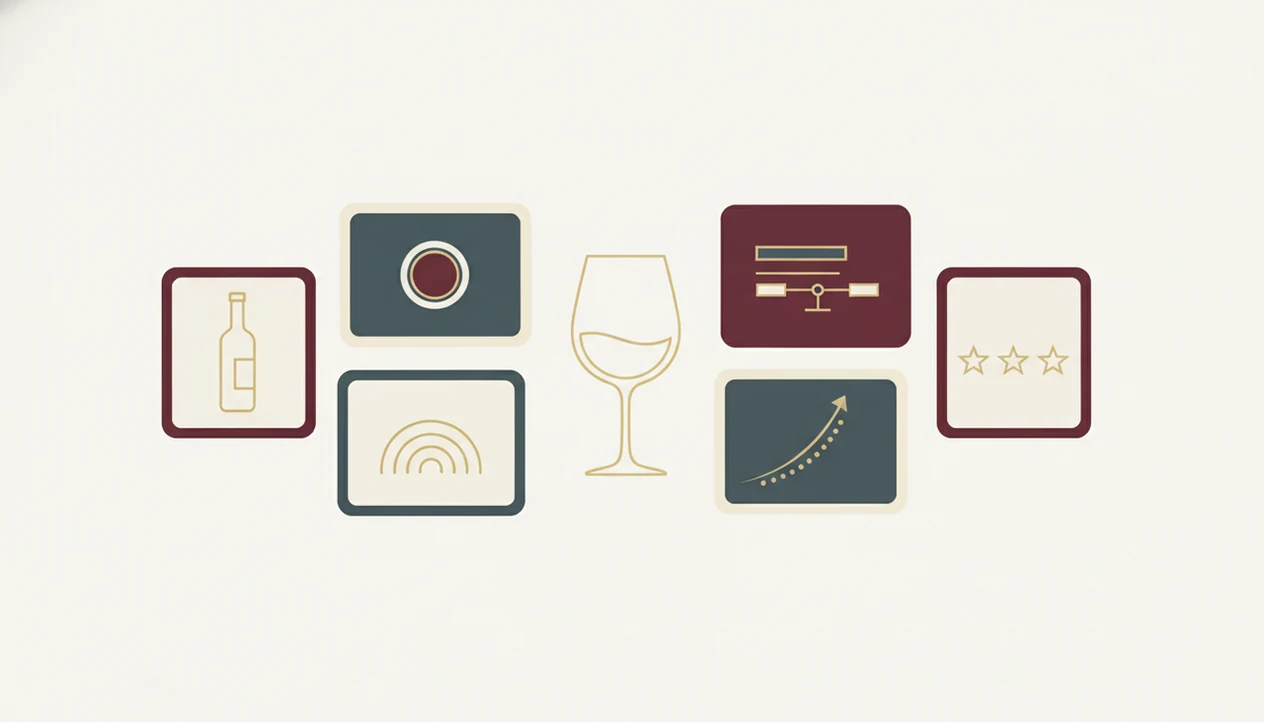
A structured tasting note template works by separating the wine into repeatable observations. Sight primes expectations, aroma expands them, and the palate confirms or challenges what your nose predicted.
That order matters. A pale white wine may lead you to expect freshness before you smell citrus or herbs. A deep red may suggest ripeness, but the palate might reveal high acidity instead of heaviness. The template forces you to check, not assume.
Formal tasting grids are used for the same reason: they make tasters evaluate appearance, aroma, palate, structure, and conclusion in a repeatable order. For example, the Wine & Spirit Education Trust's Systematic Approach to Tasting separates those observations into standardized fields: https://www.wsetglobal.com/knowledge-centre/wset-systematic-approach-to-tasting-sat/. In plain language, practice plus structure makes your notes less random.
Digital systems use the same logic. Tools like Wine Identifier App organize fields such as grape, region, aroma, acidity, and score so your notes can later support filters, cellar searches, and recommendation logic.
What You Need Before Writing Your First Tasting Note
You need a clean glass, decent light, and a place to record the same fields every time. A tulip-shaped wine glass helps concentrate aromas, but any clear wine glass is workable for a first note.
Use good lighting and a white background for judging color. A folded napkin or plain sheet of paper is enough. Serve the wine near its proper temperature, since warm whites and cold reds can both hide useful clues.
Choose a template before you pour: paper, PDF, notes app, or a wine tasting journal app. Optional tools include an aroma wheel or descriptor cheat sheet.
Keep it simple. The first goal is consistency, not elegance.
Step 1 — Record Wine Details and Label Information
Start by recording the bottle’s identity before tasting changes your focus. Write the producer, wine name, region, vintage, grape variety, and price if you know it.
Accurate details matter because “that Spanish red I liked” is almost useless later. “2019 Rioja Reserva, Tempranillo, around $24” gives you something to compare, search, and buy again.
If you use a label scanner, check the fields before saving. A user once cropped out the shelf price tag and accidentally lost a key vintage clue on the lower label. Small miss, big friction point.
Wine Identifier App can scan the label and help auto-fill core bottle details, then you can correct anything the photo angle or glare made uncertain.
Step 2 — Describe the Wine's Appearance
Tilt the glass over a white surface and describe what you see. Note color depth, hue, clarity, and any visible “legs” or tears on the glass.
For color, use plain terms: pale lemon, deep gold, ruby, garnet, purple, or tawny. For clarity, choose clear, slightly hazy, or cloudy. Legs can suggest alcohol or body, but they are only a rough cue.
Appearance does not prove quality. A brilliant, clear wine can still taste flat, and a slightly hazy natural wine may be balanced and expressive.
I like to write appearance quickly, before the aroma takes over. Ten seconds is usually enough.
Step 3 — Identify Aromas on the Nose
Swirl the wine gently, smell near the rim, then move your nose slightly deeper into the glass. Write the two to four aromas that stand out first.
Use broad categories if you get stuck: fruit, floral, herbal, spice, earthy, oak, or mineral. Then get more specific. “Red fruit” can become strawberry or cherry. “Oak” can become vanilla, toast, cedar, or coconut.
Say the words out loud if needed. If you would not say “sun-warmed orchard mist” at the table, do not write it. “Pear, honey, and almond” is stronger.
You do not need dozens of aromas. For a wine tasting notes beginner, two accurate descriptors and one confidence signal beat a crowded list of guesses.
Step 4 — Evaluate Taste, Structure, and Body
Take a small sip and let the wine coat your whole mouth. Notice the flavors first, then rate structure using a low, medium, or high scale.
Track acidity, tannin, sweetness, and body. Acidity feels like mouthwatering brightness. Tannin feels drying, especially on gums and cheeks. Sweetness is sugar, not fruitiness. Body is weight: skim milk, whole milk, or cream is a useful mental scale.
Then compare palate to aroma. Did the raspberry you smelled become tart cranberry? Did vanilla show up more strongly after sipping? That contrast is useful.
For beginners, a low/medium/high structure scale is often better than long prose because it creates comparable data across bottles. If you want a scoring setup built around this idea, a wine rating app for beginners can make the scale easier to repeat.
Step 5 — Judge the Finish and Add Your Rating
Finish means how long the wine’s flavor lasts after you swallow or spit. Mark it as short, medium, or long, then note any new flavor that appears.
A short finish fades in a few seconds. A medium finish lingers briefly but does not keep changing. A long finish stays with you and may reveal something new, like cocoa, citrus peel, smoke, or bitter almond.
Choose one rating system and keep it. Use 1 to 5 stars, a 100-point score, or thumbs up/down. The system matters less than consistency.
Add context too. Roast chicken resting on a cutting board can make a medium-bodied white feel more useful than it seemed alone.
How To Use DiVino To Save and Search Tasting Notes
A paper template teaches the habit; a digital system makes the note searchable. Structured fields become more useful when they connect to a bottle photo, grape, region, food pairing, and cellar record.
- Scan the wine label with Wine Identifier App and confirm the producer, region, vintage, and grape.
- Fill in the tasting note fields for aroma, acidity, tannin, body, finish, and rating.
- Save the note so it links to bottle details, food pairings, and cellar tracking.
- Search or filter past notes by grape, region, score, price, or occasion.
- Review preference patterns after several bottles, then adjust future buying decisions.
Good digital note tools deliver scan context, label matching, and preference feedback, not a replacement for your own palate. The system becomes more useful when your tasting inputs stay consistent over time.
Common Mistakes Beginners Make in Wine Tasting Notes
The most common mistake is writing “nice,” “smooth,” or “good” with no supporting detail. Those words feel clear in the moment, but they do not explain why the bottle worked.
Skipping wine details is another problem. Without vintage, producer, and region, a good note can become impossible to match later. A restaurant bottle cradled in a napkin may look memorable, but the name can vanish by morning.
Do not switch scoring systems every session. Three stars, then 88 points, then “would buy again” creates messy comparison. Pick one method and stick with it for at least a few months.
Also avoid chasing one correct aroma list. Your note should reflect what you perceived, not what you think a professional expected.
Context matters. Temperature, glassware, food pairing, mood, and even tiny print under flickering candlelight can affect what you notice.
Limitations
Wine tasting notes are useful, but they are not objective lab reports. They record perception, and perception moves.
- Two people can write different, valid notes for the same wine because aroma sensitivity varies.
- No template replaces gradual experience, guided tastings, or repeated practice with real bottles.
- Glassware, serving temperature, food, and mood make notes from different days imperfectly comparable.
- Digital tools organize your notes, but they cannot taste for you.
- Recommendation logic depends on consistent input; vague ratings create weak future suggestions.
- “Quality” and “enjoyment” are partly subjective, even when structure is described carefully.
- Label scans can miss details when glare, cropping, or damaged paper hides vintage or producer text.
Use notes as a learning record, not a verdict. The human correction loop still matters.
FAQ
What goes in a tasting note template?
A tasting note template usually includes wine details, appearance, aroma, taste and structure, finish, and rating. Some templates also add price, food pairing, and occasion.
How many aromas should I note?
Beginners only need two to four dominant aromas per glass. Accuracy is more useful than a long list.
Do I need fancy wine vocabulary?
No, simple everyday words are usually better. “Black cherry, vanilla, dry, medium body” is a useful note.
What scoring system works best?
The best scoring system is the one you use consistently because comparison depends on repetition. Stars, 100 points, and thumbs up/down can all work.
Can an app replace handwritten notes?
An app can replace handwritten notes if it lets you save label photos, bottle details, and tasting fields together. The advantage is search: you can later filter by grape, region, score, price, or occasion.
How does practice improve tasting notes?
Repeated guided tasting builds aroma memory and descriptor accuracy over time. Comparing notes across similar wines also sharpens your personal vocabulary.
Should I note food pairings too?
Yes, food pairing context makes tasting notes more useful for future meals. A wine that feels sharp alone may work well with oysters, curry, or roast chicken.
Is color a reliable quality indicator?
Color is only a minor clue, not proof of quality. Aroma, balance, structure, and finish matter more.
Why do my notes differ from a friend's?
People perceive aroma, acidity, tannin, and sweetness differently. Both notes can be valid if they describe real sensations clearly.