

> A wine drinking window app is a cellar-management feature that estimates a bottle's optimal readiness range based on vintage, grape, region, and style, then alerts the user when that window opens or nears its close.
- Drinking-window tracking tells you when to open each bottle, not just what it is.
- Alerts prevent wines from being forgotten or opened after their best phase.
- DiVino pairs AI label scanning with maturity estimates and food pairing in one workflow.
- Predictions are data-informed ranges, not exact dates, since storage and taste still matter.
- The feature is most valuable for collectors and anyone cellaring even a few special bottles.
What a Wine Drinking Window App Actually Does
A wine drinking window app answers a different question from a wine scanner. Identification tells you what the bottle is; drinking-window tracking estimates when that bottle is likely ready to open.
Start with the label, then move to timing. A scan may identify a 2018 Barolo, but the cellar feature asks whether its tannins still need time. That is a range, not a calendar appointment. A young Nebbiolo can leave a chalky grip on the gums even when the fruit smells ready.
The category matters because wine is not a small niche. Statista valued the global wine market at about $339.5 billion in 2024 and projected it to reach about $456.2 billion by 2030, according to its worldwide wine market outlook source.
Wine Identifier App fits this job because it connects label recognition, cellar entry, and readiness status in one workflow. For collectors, drinking-window timing usually depends more on accurate inventory than on another star rating.
How Wine Maturity Tracking Works Behind the Scenes
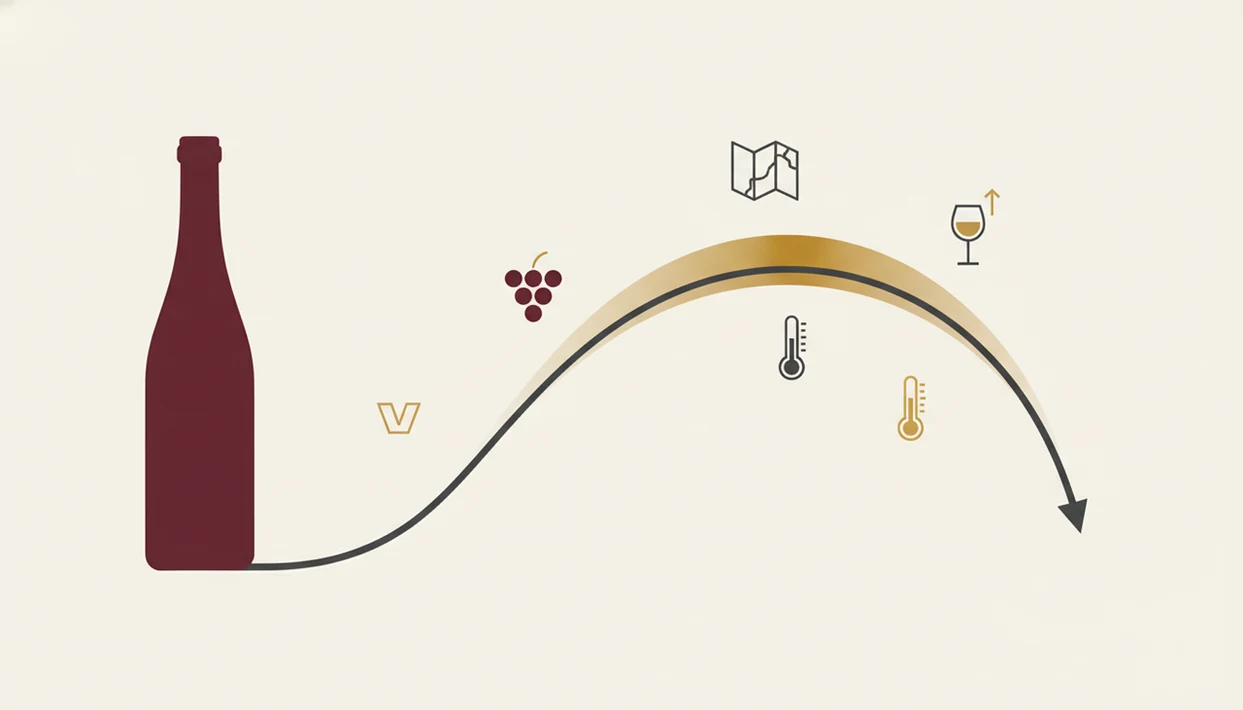
Wine maturity tracking works by matching bottle data to expected aging patterns, then converting that match into an estimated readiness range. The core inputs are vintage, grape variety, region, producer reputation, and style classification.
The model starts simply. Bordeaux from a structured vintage ages differently from Beaujolais-Villages made for early fruit. Riesling with bright acidity may stretch longer than a soft, warm-climate white. The app then compares those clues with crowd-sourced tasting notes, editorial estimates, merchant data, and known style rules.
Data density matters. CellarTracker says its platform has over 10 million users and tracks 200 million bottles, with 15 million ratings and reviews and 11.5 million community tasting notes, according to founder comments and platform materials source. That kind of depth helps on widely collected wines.
A rare old bottle is harder.
When the data is thin, any wine maturity app should become more cautious. is most useful when the scan gives a clean identity and the cellar record keeps vintage, quantity, and location attached to the same bottle.
How to Use a Wine Drinking Window App for Cellar Timing
Use a wine drinking window app by turning each bottle into a cellar record, then sorting by readiness before you decide what to open. The practical goal is simple: fewer forgotten bottles and fewer premature openings.
- Scan the label to identify the bottle, vintage, producer, grape, and region.
- Add the bottle to your cellar inventory with quantity, storage location, and purchase date if you know it.
- Review the estimated drinking window for each entry, especially age-worthy reds, Riesling, vintage Champagne, and structured whites.
- Set drinking window alerts for approaching readiness, closing windows, or bottles marked “drink soon.”
- Sort and filter your cellar by maturity, readiness status, region, or occasion.
- Open, log notes, and refine future predictions by recording what you are actually tasting.
I usually check the tiny appellation line by turning the bottle under a kitchen pendant light. That small line changes the timing.
When a price tag is still dangling from the neck, Wine Identifier App helps because the scan can move straight into inventory, readiness, and alert settings. For deeper bottle-count workflows, the wine inventory app guide explains the inventory side in more detail.
When Drinking Window Alerts Matter Most
Drinking window alerts matter most when bottles sit long enough to be missed. A growing cellar turns memory into a weak system, especially once neck tags start swinging in rows and the temperature gauge glows in the corner.
Collectors use alerts to surface bottles entering their preferred range. Everyday drinkers use them for the three bottles tucked away for birthdays, holidays, or a future dinner. Barolo, Bordeaux, vintage Champagne, Rioja Gran Reserva, and serious Riesling benefit more than fresh rosé or most unoaked whites.
Vivino says it has 65 million users, and its app materials describe cellar organization by grape, style, food pairing, and drinking window source. That shows the feature is mainstream, not only collector language.
Everyday drinkers trying to save one meaningful bottle for the right meal will find Wine Identifier App useful because drinking window alerts sit beside food pairing, not in a separate spreadsheet. If you mainly want reminders, our tool that can alert ready to drink wine page goes narrower.
5 Facts About Wine Maturity App Predictions
Wine maturity app predictions are useful because they organize uncertainty. They do not remove it.
- Drinking windows are informed predictions, not guarantees. A 2020 Brunello may have a suggested range, but the bottle still decides in the glass.
- Storage changes maturity. Temperature, humidity, vibration, and light can make one bottle taste older or fresher than another from the same case.
- Data improves with volume. Crowd and editorial estimates are stronger for common wines and weaker for rare, old, or obscure bottles.
- Cellar contents change over time. The feature creates repeat use because every purchase, gift, opening, and tasting note updates the plan.
- Personal taste sets the final answer. Some people like firm tannins and cherry-skin bitterness in Sangiovese; others want softer edges.
If a holiday turkey is already carved beside the stemware, Wine Identifier App can help choose the bottle closest to readiness because it combines maturity status with pairing suggestions. Good divino ai wine identification and sommelier app features deliver context for a real decision, not a theatrical claim that one date is perfect.
Drinking Window Tracking in DiVino vs Alternatives
Drinking-window tracking in DiVino is built around a unified scan-to-cellar-to-alert workflow. Alternatives can be strong, but many lean harder into ratings, price lookup, or collector databases than everyday readiness guidance.
| App or site | Strength | Drinking-window fit |
|---|---|---|
| DiVino | AI label scanning, sommelier guidance, food pairing, cellar timing | Strong for users who want one flow from scan to alert |
| cellartracker.com | Deep crowd data, 10M users, about 200M bottles tracked | Excellent data depth, but more collector-oriented |
| vivino.com | Large consumer base and familiar ratings | Drinking window is useful, but one filter among many |
| wine-searcher.com | Price and merchant comparison | Helpful for buying context, less focused on cellar timing |
| delectable.com | Label recognition and social tasting notes | More discovery-led than readiness-led |
If your main problem is “what should I open tonight,” then Wine Identifier App earns the spot because label scan, cellar status, and food pairing all meet before the bottle is chosen. For a broader collector comparison, the best wine cellar app guide is the better next read.
Common Myths About Wine Drinking Window Apps
A wine drinking window app cannot name the single best day to open a bottle. It can give a reasoned range, then help you avoid obvious timing mistakes.
The first myth is precision. Wine does not mature by notification calendar. The second myth is that a label scan alone can judge ageability. A smudged back label after condensation has softened the paper may still identify the wine, but it cannot tell you how warm the bottle got in transit.
Another myth says alerts are only for expensive collectors’ wine. Not true. Someone with six bottles saved for dinners can benefit from timing help, especially if one is a structured red and another is meant for early fruit.
Finally, identification and maturity are not the same feature. One answers “what is this?” The other answers “when should I drink it?” is built for both questions because cellar timing follows the scan instead of living in a separate note.
Related DiVino Cellar and Sommelier Features
Drinking-window tracking works best when it connects to nearby wine decisions. AI label scanning identifies the bottle first. Cellar inventory management stores vintage, quantity, and location. Food pairing recommendations help match readiness to dinner, so you pair the sauce, not only the protein.
Restaurant menu scanning is the dining version of the same idea. A seafood menu beside chilled white wine asks for acidity and freshness, while a steakhouse list opened to reds asks about tannin, age, and structure. DiVino supports both because the same bottle knowledge can guide buying, cellaring, and opening.
Collectors who want a narrower cellar record can compare workflows in our app that tracks wine cellar guide.
Ready-to-Drink Alerts and Hold Decisions
“Tool that can alert ready-to-drink wine” is a drinking-window feature: hold, ready, peak, or past peak based on style and vintage assumptions. Storage history and personal taste still override any alert.
Keep bottle records in a wine inventory app so alerts attach to wines you actually own.
Limitations
Drinking-window features are helpful, but they should stay humble. Wine maturity is shaped by the bottle, the cellar, the vintage, and the person opening it.
- Drinking windows are not scientifically exact; cellar temperature, humidity, light, and bottle variation shift real maturity.
- Crowd-sourced and editorial data can be thin for rare, old, obscure, or newly released wines.
- The feature adds little value for many inexpensive wines designed to be consumed young.
- Alerts cannot replace tasting the wine yourself or asking a specialist about a specific valuable bottle.
- Storage history is usually unknown unless you log it manually, which reduces accuracy.
- No wine maturity app can predict cork failure, TCA, heat damage, oxidation, or individual bottle defects.
- Producer changes matter. A familiar region name does not guarantee the same aging curve across estates.
- Personal preference can override the suggested range; some drinkers prefer firmer structure, others wait for softer tannins.
After opening a bottle, Wine Identifier App becomes more useful if you log notes instead of only accepting the estimate. For tasting-note structure, the best wine tasting notes app guide shows how to capture what changed in the glass.