Wine Learning Timeline: From First Label Scan to Confident Picks


Download App: wine learning timeline
A wine learning timeline typically moves through four stages: label recognition, style mapping, sensory training, and confident choosing, over roughly 3 to 12 months of intentional tasting. AI label-scanning tools can compress the early stages by identifying bottles, explaining tasting notes, and tracking your preferences so you build a reliable mental map faster than studying alone.
Definition: A wine learning timeline is the progressive path a beginner follows from scanning unfamiliar labels to independently selecting wines they enjoy based on grape, region, style, and food pairing knowledge.
TL;DR
- Most beginners reach noticeable confidence in 3–6 months of casual but intentional tasting and tracking.
- Organizing wines into 6–8 core styles, such as light white, full red, sparkling, and sweet wines, accelerates progress faster than memorizing regions.
- A wine label-scanning app can speed up each stage by scanning labels, saving ratings, and surfacing personalized recommendations.
Wine Learning Timeline Milestones for the First 12 Months
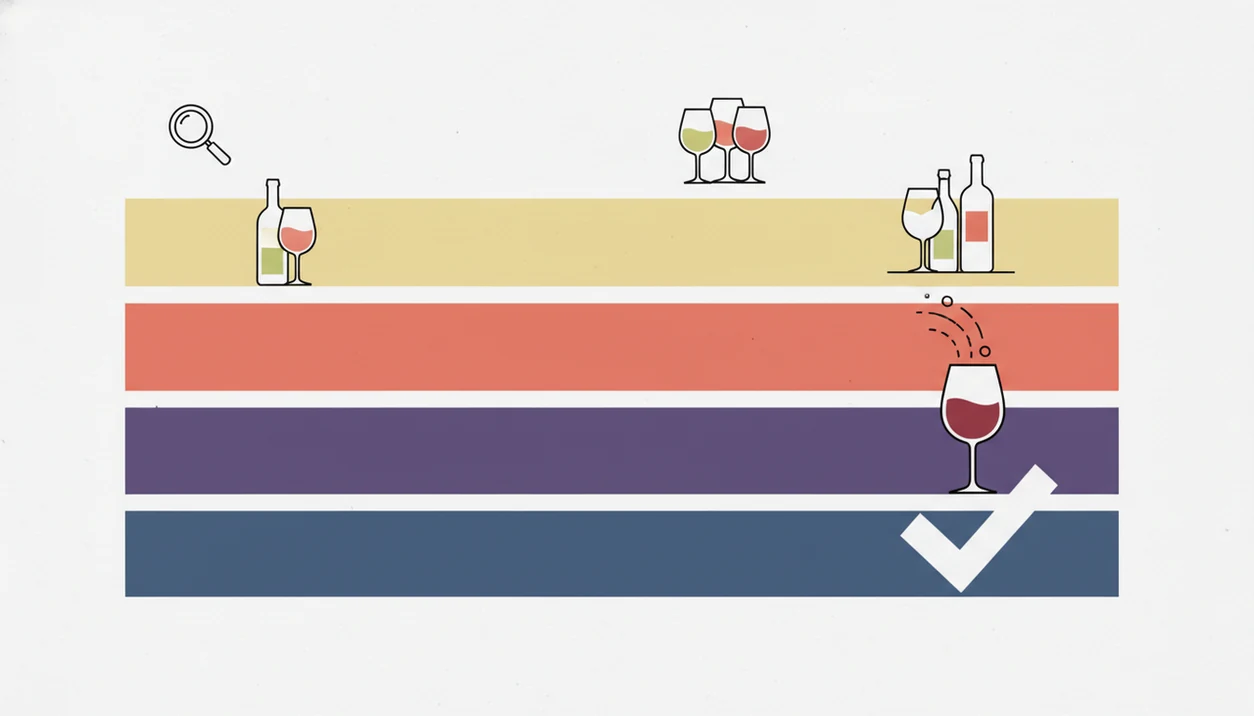
A realistic wine learning timeline starts with recognition, moves into style mapping, then sensory refinement, and finally confident choosing. Most casual learners can feel real progress within 3–6 months, but there is no fixed calendar because tasting frequency and attention matter more than elapsed time.
In weeks 1–4, you learn labels: grape names, country clues, sweet versus dry, and basic body. Months 2–3 are usually about grouping wines into styles, not memorizing every village in Burgundy. By months 3–6, smelling before sipping and logging notes starts to sharpen your palate. From months 6–12, you can usually choose from a shop shelf or restaurant list without freezing.
The scale is bigger than wine classes suggest. In the United States, 44.3% of adults drink wine, according to the Wine Market Council's 2023 consumer segmentation summary (https://www.winemarketcouncil.com/), and most start with no formal training at all. The dusty Bordeaux label under kitchen light is a normal beginning, not a failure.
For beginners, intentional comparison is often easier than wine theory because each bottle gives immediate feedback.
Four Wine Learning Stages From Weeks 1 to 52
Five practical facts define the first year of wine beginner progress:
- Stage 1, Weeks 1–4: Scan labels, recognize 5–8 major grapes, and separate sweet, dry, light, and full-bodied wines.
- Stage 2, Months 2–3: Map bottles into light white, full white, rosé, light red, medium red, full red, sparkling, and sweet or fortified styles.
- Stage 3, Months 3–6: Smell before sipping, name one or two aromas, and log what you actually liked.
- Stage 4, Months 6–12: Practice restaurant and shop decisions, basic food pairing, and region exploration.
- Sensory training can move quickly: One wine aroma study found significant improvement after 10 weeks of structured smell and tasting practice (https://www.sciencedirect.com/science/article/pii/S0950329313001113).
Stage 1: Label Recognition and Grape Basics
At this stage, your phone camera may hunt for focus on a glossy burgundy label under warm restaurant lighting. That small friction point matters because a clearer photo angle often means a better label match.
Stage 2: Core Wine Style Mapping
Style mapping is the first shortcut. It turns “I know nothing” into “I usually like crisp whites and medium reds.”
Stage 3: Intentional Tasting and Note-Taking
Use short notes. If you need a structure, a wine tasting journal app can keep the habit thumb-friendly.
Stage 4: Confident Choosing and Food Pairing
Confidence arrives when a new bottle feels like a variation, not a mystery.
Wine Sensory Skills: Aroma Memory, Categories, and Feedback Loops
How a wine learning timeline works: repeated smell exposure builds olfactory memory, while style categories reduce the mental load of choosing. In plain terms, your brain gets better at matching “that smell” to words like citrus, black cherry, oak, earth, or pepper.
Categorization theory explains why eight wine styles are easier than 800 bottle names. A beginner who groups Sauvignon Blanc with crisp whites learns faster than someone trying to memorize Sancerre, Marlborough, Loire, and Chile on day one. The tasting wheel beside a notepad helps, but only if you return to it after the glass.
Feedback loops do the real work: taste, rate, review, adjust, then taste again. Recommendation engines use scan history, ratings, menu text, and preference feedback to model what you tend to enjoy. Good divino ai wine identification and sommelier app experiences deliver explainable label matches and next-bottle suggestions, not magic certainty.
Passive drinking rarely teaches much. Intention is the mechanism.
Six DiVino Actions for Each Wine Learning Stage
How to use a wine learning timeline with an app is simple: scan, taste, rate, compare, and repeat with purpose. Tools like Wine Identifier App can help if you treat the result as a learning prompt, not a final answer.
- Scan your first label to get grape, region, vintage, and tasting note basics instantly.
- Rate each wine after tasting so your personal flavor profile starts with real preference feedback.
- Review style groupings and explore one new style each week, such as rosé, sparkling, or medium red.
- Use food pairing suggestions before meals so the pairing becomes a test, not a guess.
- Compare past ratings and recommendations to spot patterns, such as low scores for oaky whites.
- Scan restaurant menus to practice ordering when the wine list is cramped, dim, or full of unfamiliar producers.
A creased back label at the dinner table often contains the clue people miss: grape blend, sweetness note, importer, or region. Read it after the scan. That is where learning sticks.
Three Wine Beginner Progress Patterns
Wine beginner progress usually follows the same pattern at different speeds: intentional tracking beats drinking more wine. The learner who pauses for one sentence of reflection often advances faster than the person who opens three bottles and remembers none of them.
The Weekly Scanner: Confidence in Three Months
The weekly scanner tastes one or two bottles at dinner and scans labels before pouring. After about three months, they can usually say, “I like crisp whites, dry rosé, and softer reds,” which is enough to shop with less stress.
The Restaurant Explorer: Confidence in Six Months
The restaurant explorer learns from menu pressure. When Sancerre and Sangiovese sit two lines apart in tiny serif type, scanning menu text turns panic into comparison. By month six, ordering feels less like a test.
The Aspiring Collector: Confidence in One Year
The aspiring collector logs every bottle, tracks vintage, and notices producer differences. An auction bottle wrapped in tissue paper becomes a study object, not just a trophy.
Across all three patterns, reduced decision anxiety keeps beginners engaged. If your main gap is memory, an app to help remember wines I liked is often more useful than another beginner book.
Wine Style Mapping vs Region Memorization
You do not need to memorize regions and grape names before choosing wine well. The faster beginner route is mapping 6–8 core styles, then attaching grapes and places to those styles over time.
Formal education is growing. WSET reported more than 108,000 global candidates in the 2018–2019 academic year (https://www.wsetglobal.com/news-events/news/2019/october/21/wset-student-numbers-hit-record-high/), which shows strong interest in structured study. Most drinkers, however, learn informally at grocery shelves, dinner tables, and restaurant lists.
can mirror this style-first approach by grouping scanned bottles into practical categories. That matters when a seafood menu beside chilled white wine gives you five unfamiliar options and two minutes to decide.
Everyday-priced bottles across different styles usually teach beginners more than a few expensive bottles from one category. Range teaches contrast. Price does not guarantee clarity.
If you want better notes during that comparison work, the plain-language guide on how to write wine tasting notes is a useful next layer.
Blind Spots in a 12-Month Wine Learning Timeline
A 12-month wine learning timeline can organize progress, but it cannot do the tasting for you. AI apps accelerate recognition and recommendation logic, but learning stalls when you scan without reading the explanation or comparing it to your own palate.
Volume is not the same as skill. Americans consumed 1.1 billion gallons of wine in 2021, according to the USDA Economic Research Service wine availability tables (https://www.ers.usda.gov/data-products/food-availability-per-capita-data-system/), yet most of that drinking was not structured practice. A casual glass with dinner may be enjoyable, but it does not automatically build aroma memory.
The biggest blind spot is repetition. If you drink the same buttery Chardonnay every Friday, your confidence inside that style may rise while your overall map stays narrow. Guided tastings add texture, pacing, and aroma coaching that apps cannot fully reproduce.
Pencil graphite scent in red wine is easier to learn when someone points to it in the glass.
Limitations
No wine learning timeline predicts every learner accurately. Treat the months above as educated estimates, not a promise.
- People differ in tasting frequency, attention span, budget, and curiosity.
- AI recommendations depend on the data you provide; rare logging creates weaker suggestions.
- Sensory learning plateaus without exposure to new styles, producers, vintages, and regions.
- Apps cannot fully replace in-person tasting for aroma recognition, acidity, tannin, and texture.
- Scientific research on exact hours or tastings per stage is sparse.
- Cultural and regional wine availability affects what you can practically explore.
- Personal taste bias can slow progress if you avoid unfamiliar styles too aggressively.
- Label scans can miss context when a user crops out the shelf price tag and accidentally loses a key vintage clue.
Use tools, but keep correcting them. The human correction loop is where preference becomes knowledge.
Read more
FAQ
How long does it take to learn wine?
Most beginners can reach casual confidence in 3–12 months. Frequency and intentional tasting matter more than calendar time.
Can an app replace wine classes?
Apps like DiVino can compress early learning by identifying bottles, explaining styles, and saving ratings. In-person tasting still helps more for advanced aroma and texture skills.
How many wines should beginners taste weekly?
Two to three intentionally tasted wines per week is a practical starting point. More is not always better if you do not compare and record impressions.
Should I learn grapes or regions first?
Start with core style categories instead of memorizing grapes or regions in isolation. Grapes and regions become easier once you understand light, full, dry, sweet, sparkling, and fortified styles.
When should I start food pairing?
Basic food pairing can begin in Stage 2. Once you know sweet versus dry and light versus full body, you can test simple pairings with meals.
Do expensive wines teach you more?
Expensive wines do not automatically teach beginners more. Everyday-priced bottles across different styles usually build clearer comparison skills.
What if my wine learning plateaus?
Taste outside your comfort zone, attend a guided tasting, or explore a new region or style in DiVino. A plateau usually means your inputs have become too repetitive.