Wine Tasting Notes Timeline: Track Your Palate and Learn Faster
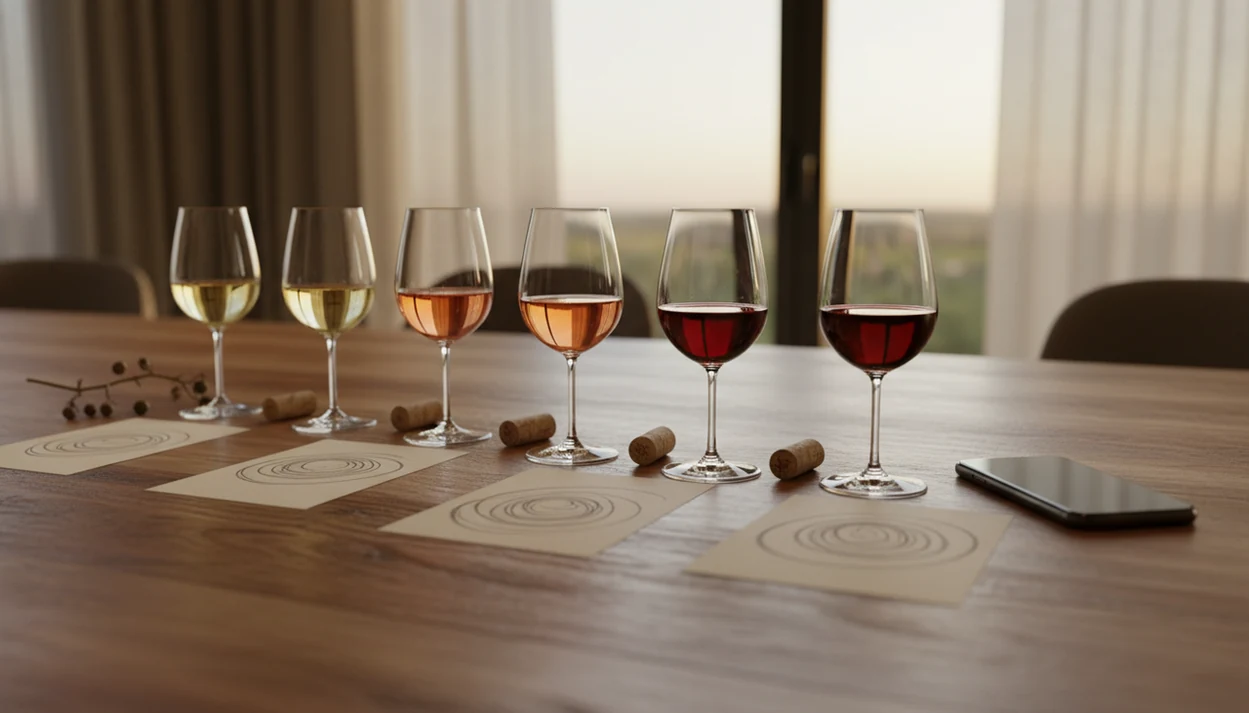
A wine tasting notes timeline is a chronological record of every wine you describe, score, and revisit, and it reveals exactly how your palate, vocabulary, and preferences evolve over weeks, months, and years. Tracking tasting note progress consistently is the single fastest way to move from vague impressions like “this is fruity” to precise, confident descriptors like “blackcurrant, plum, vanilla with medium-plus tannin.” A structured wine app can automate this timeline by logging each bottle you scan and surfacing patterns you would otherwise miss.
Definition: A wine tasting notes timeline is a dated, sequential log of structured tasting notes that tracks how a person's wine descriptions, scores, flavor vocabulary, and style preferences change as they taste more bottles over time.
TL;DR
- Your tasting notes shift measurably between your first 20 bottles and your first 200. Vocabulary expands, scores stabilize, and preference patterns emerge.
- Structured frameworks, such as appearance → aroma → palate → conclusion, make long-term comparison possible and accelerate wine learning progress.
- AI wine apps can auto-analyze your timeline to reveal flavor trends, regional biases, and smarter buying recommendations.
- Progress is non-linear. Plateaus, preference shifts, and seasonal changes are normal parts of tasting note progress.
- Honest, consistent logging matters more than fancy jargon. Gaps or copy-pasted critic language distort your real timeline.
What a Wine Tasting Notes Timeline Actually Tracks
A wine tasting notes timeline is not a list of scores. It is a dated sequence of structured notes that lets you compare what you noticed, how you described it, and whether your taste changed.
A useful timeline captures appearance, aroma descriptors, palate structure, personal score, food pairing, bottle photo, grape, region, producer, vintage, price, and setting. One note might say “ripe cherry, smooth, 88.” A timeline shows that you keep rating warm-climate Grenache higher with roast chicken resting on a cutting board, but your scores drop when oak feels sweet.
That pattern matters because wine confidence is a real friction point. Wine confidence is a documented consumer friction point, but exact intimidation rates vary by survey methodology; cite the original survey before using a percentage.
Your own words become the map.
For beginners, the structure in a wine tasting journal app can be easier than blank-page note-taking because the same fields repeat every time.
Five Facts About Wine Learning Progress Over Time
Wine learning progress usually shows up as small, repeated improvements rather than one sudden breakthrough. The timeline makes those changes visible because every note has a date and a comparable structure.
- Vocabulary expands with repetition. Many tasters move from “fruity” to named fruits somewhere around notes 30 to 80, especially when prompts separate red fruit, black fruit, citrus, spice, oak, and earth.
- Scores become less jumpy. Early ratings often swing wildly. Later ratings tend to cluster within 1 to 2 points for similar styles, especially when the taster rechecks old entries before scoring.
- Sensory training improves repeatability. Research on sensory learning shows trained assessors have higher repeatability and discrimination than untrained consumers. For background on structured sensory evaluation methods, see the WSET Systematic Approach to Tasting: https://www.wsetglobal.com/knowledge-centre/wset-systematic-approach-to-tasting-sat/, which supports structured tasting practice over time.
- Preference drift is normal. Sweetness tolerance, tannin comfort, oak sensitivity, and acidity preference can all shift as your palate calibrates.
- Many drinkers have enough volume to track. A national U.S. survey found that adults who drink alcohol choose wine at least once a week, which can build a meaningful timeline within a year.
The first cork sniff at the counter may feel silly. Log it anyway.
How a Wine Tasting Notes Timeline Works
A wine tasting notes timeline works by turning repeated sensory observations into a comparable dataset. The mechanism is simple: use the same note structure, attach each note to a date and bottle record, then review the sequence for patterns.
The most useful schema follows the WSET Systematic Approach: appearance, nose, palate, and conclusion. In plain terms, you look, smell, taste, judge, and record each step in the same order. Add context too. A glossy burgundy label under warm restaurant lighting may scan cleanly, but the tasting note still needs the dinner setting, temperature, and food.
After roughly 50 structured entries, clusters start to appear. You may notice high scores for Loire whites, low scores for heavy vanilla oak, or better ratings for sparkling wine in summer.
Tools like Wine Identifier App can add an AI layer by using label-scan data, bottle metadata, and note fields to create a machine-readable timeline. Good divino ai wine identification and sommelier app tools deliver traceable label matches and recommendation logic, not a replacement for your palate.
How to Build Your Wine Tasting Notes Timeline
Build your timeline with repeatable steps, not long essays. The goal is to make every entry easy to compare six months later.
- Scan the bottle or menu. Scan the label or wine list, then let the app pre-fill grape, region, producer, and vintage when the confidence signal is strong.
- Log the core note. Record appearance, aroma, palate, and conclusion using a structured template. If you need the basics first, the guide on how to write wine tasting notes covers the field order.
- Tag the context. Add food paired, occasion, price, purchase source, serving temperature, and who you tasted with.
- Review every 20 bottles. Look for repeated descriptors, score bands, and styles you keep buying.
- Adjust the next bottle. Use AI suggestions to fill gaps, such as untried grapes or regions you rarely choose.
- Compare after six months. Re-taste one previously logged wine and check whether your structure notes changed.
A user once cropped out a shelf price tag and lost the vintage clue. Small photo choices matter.
Tasting Note Progress Milestones: First 20 to First 200 Bottles
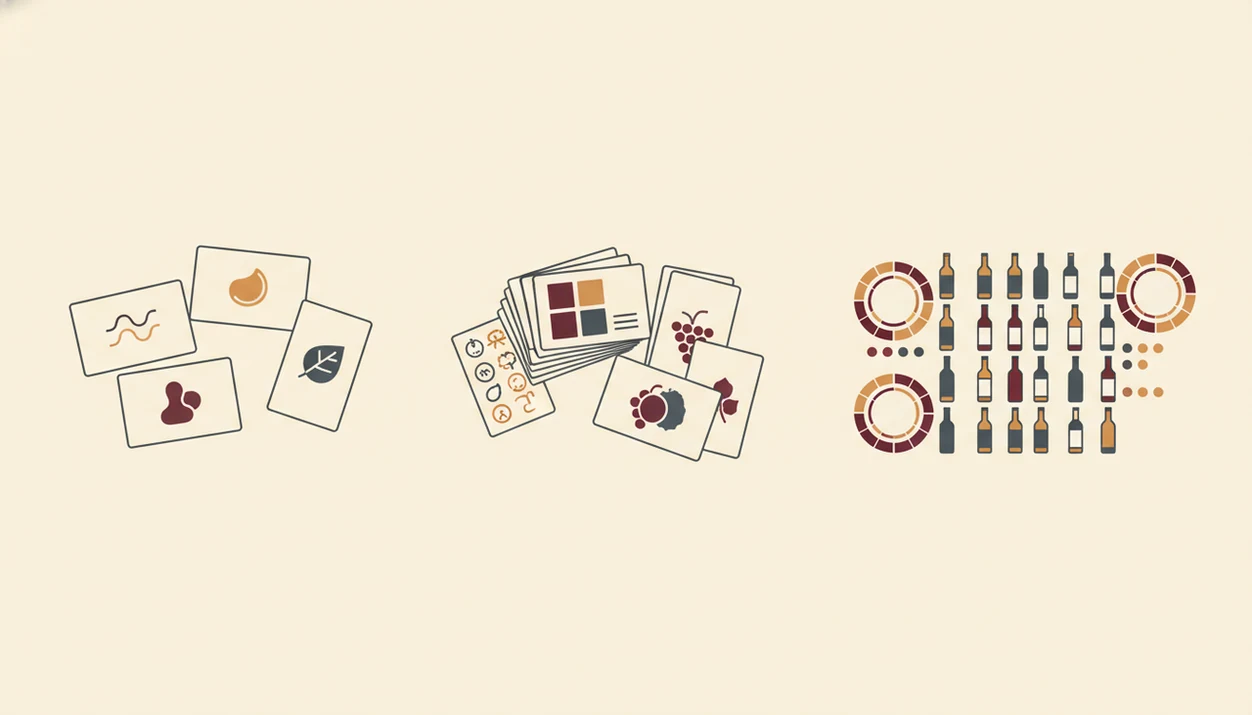
Tasting note progress has recognizable stages, even though no two palates develop on the same schedule. Milestones help you set expectations without pretending wine learning is linear.
Bottles 1–50: Building Your Baseline Vocabulary
In the first 1 to 20 notes, most entries use broad words: fruity, dry, smooth, strong, sweet, or sour. Scores can jump from 72 to 94 because there is no internal scale yet. By 20 to 50 notes, vocabulary often doubles. You start separating “light red” from “deep garnet,” and “fruit” becomes strawberry, plum, lemon peel, or apple.
Tiny wins count.
Bottles 50–200: Pattern Recognition and Preference Clarity
From 50 to 100 notes, score consistency tightens. Grape and region preferences become visible, especially if your timeline includes bottle metadata. From 100 to 200 notes, structural language improves: acidity, tannin, body, finish, oak, and alcohol become easier to name.
Many competitor guides stop at writing one note. That skips the real learning layer: seeing how your own scores, descriptors, and buying habits change across months. For most beginners, a 200-bottle timeline is more useful than memorizing critic language because it shows lived preference, not borrowed vocabulary.
Common Patterns Revealed by Long-Term Tasting Note Tracking
Long-term tasting note tracking reveals patterns that are hard to see bottle by bottle. The common ones are seasonal shifts, price recalibration, regional clustering, and descriptor refinement.
Summer notes often lean toward lighter whites, rosé, and sparkling wines. Winter entries may favor fuller reds, richer whites, or bottles with more spice and texture. Price patterns can be humbling. Early notes often over-rate expensive bottles, while later notes separate price from actual enjoyment.
Regional clustering is another repeat signal. Many timelines show two or three regions producing a large share of high scores. The same happens with descriptors. “Cherry” becomes “sour cherry, dried herb, cedar.” “Citrus” becomes “lime zest, grapefruit pith, wet stone.”
When a steakhouse list opens to reds, your old notes can stop the table debate from drifting. A timeline gives you evidence.
A structured wine app can surface these patterns automatically through cellar tracking, note analysis, and bottle metadata correlation.
Misconceptions That Stall Wine Learning Progress
“Should my notes match critic notes?” No. Matching critics is not the point of a wine tasting notes timeline.
The first misconception is that your notes should align with professional reviews within a few months. They usually won’t, and that does not mean your palate is failing. Critics often taste under controlled conditions, use calibrated language, and compare flights side by side.
Another misconception is that advanced jargon matters from day one. Simple, repeated language is better for tasting note progress than elegant words you would not use again. “Smells like canned peach” is more useful than copying “orchard fruit lift” if canned peach is what you actually noticed.
AI has a role, but it should structure your observations, not overwrite them. If someone asks, “Why did it suggest that bottle?” the answer should point back to your history: high scores for acidity, low tolerance for heavy oak, or repeated praise for mineral whites.
Casual drinkers benefit too. Avoiding a repeat disappointment is a legitimate learning outcome.
What Wine Tasting Note Data Does Not Show
Wine tasting note data does not prove palate accuracy by itself. It shows your recorded perception over time, which is useful, but incomplete.
A timeline cannot replace side-by-side tasting flights, where contrast makes structure easier to calibrate. It also misses context bias unless you log it carefully. Mood, food, company, glassware, serving temperature, and even the lighting at the table can change what you notice.
AI pattern detection also needs volume. Fewer than roughly 30 structured notes usually produces thin insights. One high score for Sancerre does not mean you prefer all Sauvignon Blanc.
People are not interchangeable datasets. Smell sensitivity differs, and cultural flavor references differ too. One person’s “guava” may be another person’s “tropical fruit.” Structured courses, guided tastings, and mentorship still matter for advanced sensory calibration.
For personal recall, an app to help remember wines I liked may be enough. For skill-building, the timeline needs structure.
Limitations
Wine tasting notes timelines are useful, but they are not neutral instruments. They reflect what you logged, how carefully you logged it, and what you were able to notice that day.
- Gaps, rushed entries, and copy-pasted critic language distort true tasting note progress.
- AI-driven insights depend on data quality and volume. New users get weaker recommendations because the timeline is still thin.
- Individual olfactory sensitivity varies, so there is no universal learning curve for wine learning progress.
- Peer-reviewed research specifically measuring app-based wine tasting timelines is limited.
- No app replaces tasting flights, professional mentorship, structured courses, or repeated comparison under similar conditions.
- Temporary factors, including illness, fatigue, allergies, medication, or a dull palate day, can skew individual notes.
- Self-reported scores are subjective. They can drift upward or downward because of mood, price expectations, or the people at the table.
- Label recognition can miss details when the photo angle is poor, the vintage is cropped out, or the back label is creased at the dinner table.
Use the timeline as evidence, not judgment.
Read more
FAQ
How many wine tasting notes do I need before patterns appear?
Most people need roughly 30 to 50 structured notes before meaningful preference and vocabulary patterns appear. Earlier notes are still useful as a baseline.
Do I need wine jargon to write useful tasting notes?
No. Simple, consistent everyday language is more useful for tracking progress than advanced terms you do not use naturally.
Can a wine tasting app replace a tasting course?
No. Apps like DiVino can track notes, structure learning, and reveal patterns, but they do not replace guided flights or formal sensory calibration.
What framework should my tasting notes follow?
Use the WSET-style structure of appearance, nose, palate, and conclusion. It is widely used because it makes notes comparable over time.
How often should I review my wine tasting notes timeline?
Review your timeline every 20 bottles or once a month, whichever comes first. That timing keeps trends visible while the tasting memories are still fresh.
Is it normal for my wine preferences to change over time?
Yes. Preference drift is normal as your palate calibrates, especially around sweetness, tannin, acidity, and oak.
Can an app analyze my tasting history?
Yes. A wine identifier app can correlate logged notes with grape, region, vintage, and bottle data to surface patterns and recommend new wines.