Check Wine Recommendation Fit Before You Buy a Single Bottle


Download App: check wine recommendation fit
To check wine recommendation fit, compare the recommendation against flavor style, food pairing, budget, confidence level, and similar bottles you already know you enjoy. A high score is useful, but it should feel like a reason to pause and verify, not a command to buy.
> A wine fit score is a numeric or labeled estimate, generated from your taste history, food context, and budget, that predicts how likely you are to enjoy a specific recommended wine.
- A wine fit score is a probability of enjoyment, not a guarantee. Treat it as a starting filter.
- Always confirm three dimensions before trusting a recommendation: flavor style, food pairing, and price range.
- The more wines you scan and rate, the sharper your wine recommendation confidence becomes over time.
Wine Recommendation Fit Checks Before a Bottle Purchase
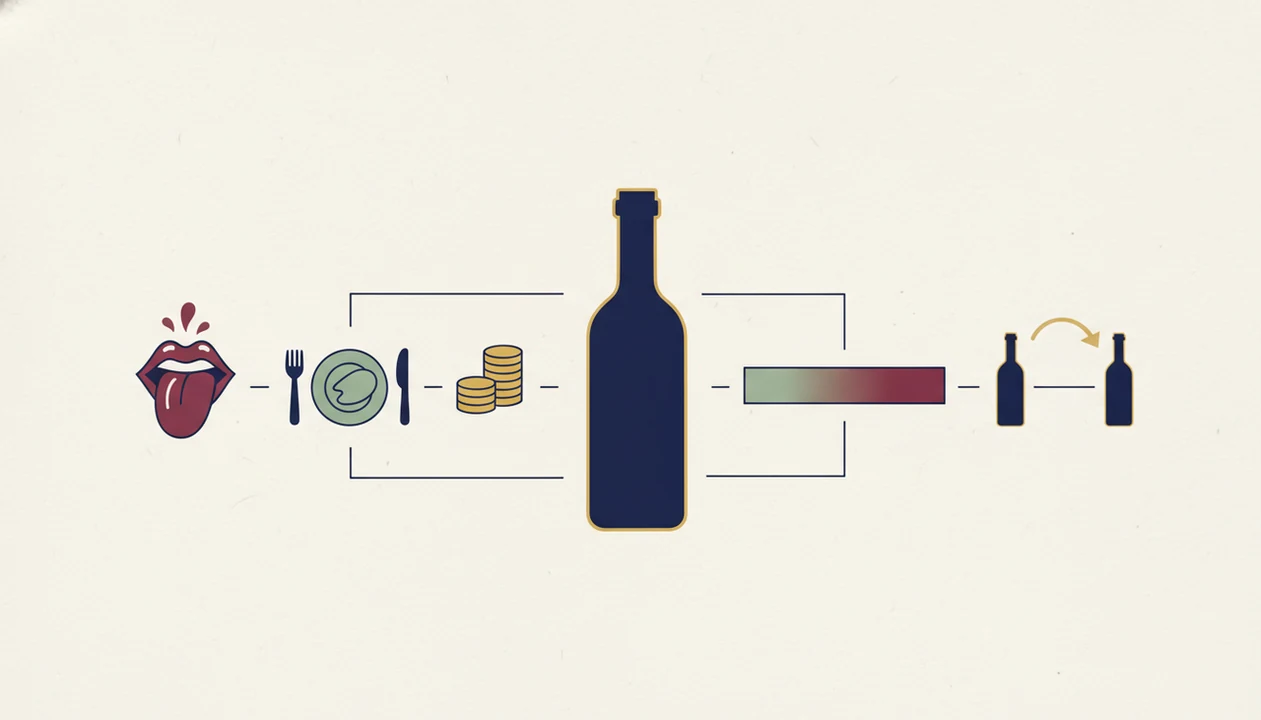
Checking wine recommendation fit helps you avoid buying a bottle that is technically good but wrong for your taste, meal, or budget. Wine choice is confusing for many buyers, and the cost of guessing is not small.
Wine buying is hard to benchmark, but the market is large enough that bad-fit purchases matter. U.S. wine sales reached about $78.4 billion in 2021, according to the Wine Institute source. Global wine consumption was about 232 million hectoliters in 2022, according to the OIV source, which means buyers face a huge spread of regions, grapes, vintages, and label styles.
That is why a fit check matters before the corkscrew appears.
A controlled experiment found that simple taste-based recommendation labels increased aligned choices by about 20 percentage points versus no guidance source. The point is not to remove judgment. It is to start with the label, then ask whether the bottle fits what you are actually tasting for tonight.
Five Facts About Wine Fit Scores Every Buyer Should Know
A wine fit score is most useful when you read it as a probability, not a verdict. The number can help, but the explanation behind it matters more than the badge.
- A wine fit score estimates likely enjoyment from past ratings, stated preferences, meal context, and price range.
- AI wine apps learn from scans, purchases, skipped bottles, and ratings, so regular feedback is essential.
- Food context can change the answer as much as flavor preference, especially with acidity, sweetness, body, and tannin.
- A proper fit check confirms flavor style, food pairing, and budget before treating a high score as a green light.
- Database gaps can tilt wine recommendation confidence toward famous regions, common grapes, and widely listed producers.
For a buyer, the practical question is simple: does this bottle match the moment? A crisp white may look right on paper, but lemon-zest acidity with goat cheese is a different test than the same wine beside spicy takeout. For everyday decisions, a fit score usually works best when it explains why the wine matches, while a plain star rating fits people who only want a quick popularity signal.
Wine Recommendation Confidence Mechanics Behind the Score
Wine recommendation confidence works by comparing what the app knows about the bottle with what it knows about you. The mechanism usually combines your direct preferences, the wine’s style data, and the context of the meal.
Data Inputs That Shape Your Score
The first layer is personal data: label scans, user ratings, and stated preferences such as sweet versus dry or light versus full-bodied. A useful system also looks at tannin level, acidity, grape, region, vintage, and price. If you turn a bottle around under a kitchen pendant light to find the tiny appellation line, that line can matter.
How Recommendation Apps Refine Confidence Over Time
Recommendation apps use collaborative filtering and content-based similarity. In plain language, the app compares your behavior with similar users, then checks whether the bottle resembles wines you have liked before. The contextual layer adds food pairing rules, occasion type, and budget ceiling.
Good results deliver explainable fit signals, not a promise that every glass will match your mood.
Six Steps to Check Wine Recommendation Fit in DiVino
Use a fit check as a short buying routine, especially when the label is unfamiliar. The goal is to slow the decision just enough to avoid a mismatch.
- Scan the label or menu listing to pull the producer, grape, region, vintage, and bottle details.
- Review the wine fit score, then tap the score to see the style and context breakdown.
- Confirm flavor-style alignment by checking body, sweetness, acidity, and tannin level.
- Set or verify the food pairing context, including sauce and spice level when possible.
- Compare the displayed price with your budget range before treating the recommendation as realistic.
- Check similar bottles you have rated highly, then decide whether the match feels familiar or worth exploring.
Tools like Wine Identifier App, Vivino, and Wine-Searcher can help with pieces of this process, but they do not all explain the recommendation in the same way. If you are comparing app categories, an AI wine recommendation app should make the “why” behind a suggestion visible.
Wine Fit Score Accuracy Tracking Method
Wine fit score accuracy improves when predicted enjoyment is compared with your actual rating after drinking the wine. Without that feedback loop, the score stays more like a guess based on incomplete evidence.
In Wine Identifier App, the post-purchase rating loop lets a user score the bottle after the meal or tasting. The system can then compare the original fit score with the satisfaction rating. If a “Strong Fit” red keeps earning low personal ratings, the model should adjust.
Small corrections matter.
This feedback can refine recommendations for the individual user and, in aggregated form, improve patterns across the broader community. Still, transparency is important. A score can consider taste history, pairing context, and budget, but it cannot know whether the bottle was served too warm or poured into thick banquet glasses.
Three Wine Fit Score Scenarios That Changed the Decision
Wine fit checks are easiest to understand in real buying moments. The score matters less as an abstract number and more as a practical interruption before a poor match.
Dinner-Party Host Dodges a Pairing Clash
A host planning creamy mushroom pasta nearly bought a young, tannic red. The fit breakdown flagged the tannin clash, so she switched to a white with bright acidity. Pair the sauce, not only the protein.
Beginner Finds a New Favorite Through High Fit
A beginner compared two similar bottles side by side and chose a Sauvignon Blanc with a high fit score. The citrus, grassy edge, and clean finish matched previous ratings. The next scan was less intimidating.
Collector Catches a Budget Mismatch
A collector scanning a case box marked with black marker noticed a moderate score caused by price, not flavor. The bottle fit his cellar style, but not that month’s buying limit. For collection decisions, our guide to whether an AI wine app is worth it covers when app checks save enough friction to matter.
Wine Recommendation Fit Patterns Buyers Notice
Buyers often learn the same lesson after a few scans: a high wine fit score is not the same as guaranteed enjoyment. It is a useful shortcut, not a rule.
Another common misconception is that fit only measures flavor. A serious recommendation should also consider food, price, and sometimes occasion. A bottle may match your preference for ripe fruit and soft tannins, but still fail beside vinegar-heavy salad or chili heat.
Two wines with similar scores can also taste very different. Rioja and Chianti might both fit a medium-bodied red preference, yet one may show vanilla and dried cherry, while the other leans toward cherry-skin bitterness and savory herbs. That difference matters at the table.
Restaurant checks behave differently from shop checks. Friends debating bottles over shared appetizers need faster tradeoffs, while a store buyer can compare labels more slowly. If menus are your main problem, a best wine menu scanner app can be more useful than a cellar-first tool.
Wine Fit Score Blind Spots Beyond the Algorithm
Wine fit scores cannot capture everything that changes enjoyment. Mood, company, setting, and timing sit outside the algorithm, even when the bottle data is correct.
Serving details also matter. A red poured too warm can feel heavy. A white served icy cold can hide aroma. Glassware changes how much fruit, acid, and alcohol you notice. No score sees the stemware in your cabinet.
Then there is the food problem. Complex dishes with heavy spice, smoke, sweetness, or layered sauces can defeat broad pairing rules. “Chicken” tells you very little if the real flavor is harissa, coconut, lemon, or cream.
There is also a quieter risk: over-reliance. If you only buy high-score bottles, you may stop learning from surprises. The awkward dinner-table question, “Is Rioja the grape or the place?” teaches more than another safe match sometimes.
Limitations
Wine fit scoring is helpful, but it has clear limits. Treat the score as decision support, not as a replacement for tasting, asking, and learning.
- New users with only a few ratings get less reliable scores because the app has little personal evidence.
- Niche styles, natural wines, and small producers may be underrepresented in wine databases.
- Food pairing logic often relies on broad rules, so cooking method, sauce, spice, and sweetness may be missed.
- Personal factors such as mood, company, room temperature, and serving temperature are invisible to the algorithm.
- Catalog gaps can bias recommendations toward mainstream regions, common grapes, and well-known labels.
- Similar scores do not mean similar wines; two bottles can match your pattern for different reasons.
- Over-reliance can shrink palate growth if you stop trying lower-score bottles outside your usual lane.
- Price data can be inconsistent across restaurants, shops, and online listings.
A fit score is strongest when it helps you ask better questions. If the bottle is expensive, rare, or meant for a specific dinner, use the score alongside a wine merchant, sommelier, or your own tasting notes. A broader tool that can recommend wines I like should still leave room for human judgment.
Read more
FAQ
What does a wine fit score mean?
A wine fit score is a probability that you will enjoy a wine based on taste history, food context, and budget. It is not a guarantee.
How accurate are AI wine recommendations?
AI wine recommendations usually improve as you scan and rate more bottles. They remain estimates because setting, serving, and mood affect enjoyment.
Does food pairing affect the fit score?
Yes, meal context can significantly change a wine fit score. Acidity, sweetness, body, and tannin can either support or clash with the dish.
Can beginners trust wine recommendation confidence?
Beginners can use wine recommendation confidence as a starting filter. Scores are less reliable until the user has rated enough wines.
Is there an app that checks wine fit?
Yes, Wine Identifier App can scan labels and calculate wine fit scores using taste, food, and budget context. Other apps may focus more on ratings or price lookup.
Should I ignore low fit score wines?
No, low-fit wines can still surprise you. Occasional exploration helps you learn your palate and improves future recommendations.
Does budget change the wine fit score?
Yes, budget can affect recommendation relevance. Setting the correct price range helps prevent attractive but unrealistic suggestions.
Is my wine rating data private in a recommendation app?
Wine apps may use scan history, ratings, and taste preferences to personalize recommendations. Review privacy settings before saving personal data.